
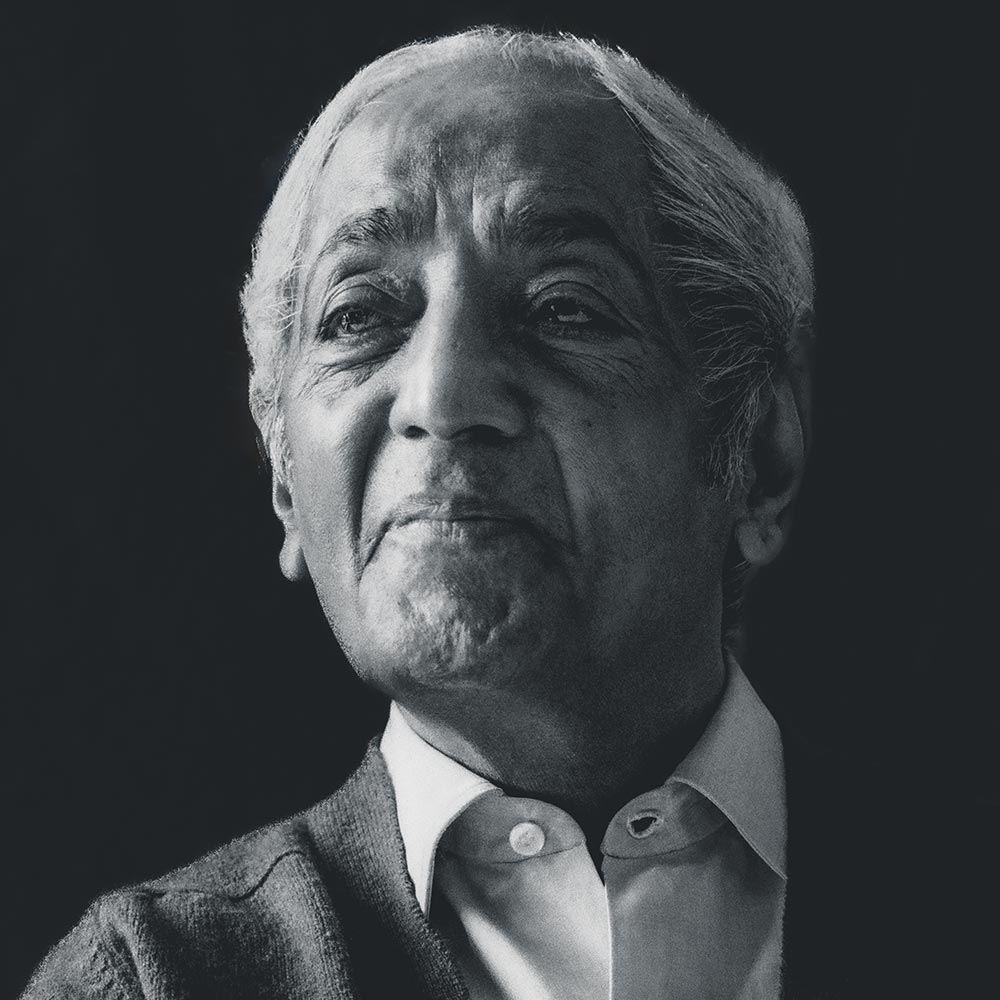
Photo of J. Krishnamurti

It is very important to smile, to be happy, because without a song in one’s heart, life becomes very dull.

Krishnamurti, Think on These Things

Read More

Have you ever really looked anybody in the face? Have you ever looked into the face of your teacher, your parent, the big official, the poor man, and seen what happens? Most of us are afraid to look directly into the face of another; others don’t want us to look at them that way because they too are frightened. Nobody wants to reveal themselves; we are all on guard, hiding behind layers of misery, suffering, longing and hope, and very few can look you straight in the face and smile. And it is very important to smile, to be happy, because without a song in one’s heart, life becomes very dull. One may go from temple to temple, from one husband or wife to another, or find a new teacher or guru, but without this inward joy, life has very little meaning.

Most people are unhappy because there is no love in their hearts. Love will arise in your heart when you have no barrier between yourself and another.

Krishnamurti, Think on These Things

Read More

Most people are unhappy because there is no love in their hearts. Love will arise in your heart when you have no barrier between yourself and another, when you meet and observe people without judging them, when you just see the boat on the river and enjoy the beauty of it. Don’t let your prejudices cloud your observation of things as they are; just observe, and you will discover that out of this simple observation, out of this awareness of trees, of birds, of people walking, working, smiling, something happens inside you. Without this extraordinary thing happening, without the arising of love in your heart, life has very little meaning. That is why it is so important to understand the significance of all these things.

To fill your heart with the things of the mind is to leave no room for love.

Read More

If you did not think of another, you would say that you did not love that person. But is it love when you do think of the person? If you did not think of a friend whom you think you love, you would be rather horrified, would you not? If you did not think of a friend who is dead, you would consider yourself disloyal, without love, and so on. You would regard such a state as callous and indifferent, and you would begin to think of that person; you would have photographs, images made by the hand or by the mind. But to fill your heart with the things of the mind is to leave no room for love. When you are with a friend, you do not think about them; only in their absence does thought begin to recreate scenes and experiences that are dead. This revival of the past is called love. So, for most of us, love is death, a denial of life; we live with the past, with the dead; therefore we ourselves are dead, though we call it love.

Love is a strange thing, and how easily we lose its warm flame! The flame is lost, and the smoke remains. The smoke fills our hearts and minds, and we spend our days in tears and bitterness.

Read More

Love is a strange thing, and how easily we lose its warm flame! The flame is lost, and the smoke remains. The smoke fills our hearts and minds, and we spend our days in tears and bitterness. The song is forgotten, and the words have lost their meaning; the perfume has gone, and our hands are empty. We never know how to keep the flame clear of smoke, and the smoke always smothers the flame. But love is not of the mind; it is not in the net of thought; it cannot be sought out, cultivated or cherished. It is there when the mind is silent, and the heart is empty of the things of the mind.

The man who is empty of heart writes a great deal about love; the man who is unhappy composes music on love and beauty.

Read More

Have all our feelings and deep passions been exhausted, wasted away, spent on things that are irrelevant? Have we become callous, having expended our energy, our sympathy, our affection, on things that have no value at all, and so now we are exhausted and worn out? Have our eyes never looked beyond our own little house, our own little concern, our own little protection? We have no faith anymore because we have given our faith, our trust, and it has been taken away and destroyed. So we are dull and indifferent. We are empty, and we have tried to fill that emptiness with trivialities such as belief, opinion, judgements, and political and so-called religious or artistic activities. The man who is empty of heart writes a great deal about love; the man who is unhappy, composes music on love and beauty. The artist, empty inwardly, has to express it, put it on canvas. This emptiness and the feeling of utter, complete loneliness, make us do things both outwardly and inwardly, and the result of all that is that we become weary, bitter, or live in great despair.

Although you apparently cry because your heart is touched, it is not touched, except by self-pity.

Krishnamurti, Meeting Life

Read More

Have you ever been concerned for another? Please answer this question for yourself, for we have become so worldly, so utterly callous. If you cry for another, then you do something. But if you cry for yourself, out of self-pity, you become callous. Although you apparently cry because your heart is touched, it is not touched, except by self-pity. Self-pity makes you hard, encloses you, makes you dull, stupid; that is what human beings have become because they have shed tears over themselves, over their lot, and their lot is always small compared to something else. The ending of sorrow is the beginning of wisdom. Wisdom comes naturally and easily when there is self-knowing.

Simplicity of heart is far more important and significant than simplicity of possessions.

Read More

Simplicity of heart is far more important and significant than simplicity of possessions. To be content with few things is comparatively easy. To renounce comfort, or to give up smoking and other habits, does not indicate simplicity of heart. To put on a loincloth in a world taken up with clothes, comforts and distractions does not indicate a free being. A man had given up the world and its ways, but his desires and passions consumed him; he had put on the robes of a monk, but he did not know peace. His eyes were everlastingly seeking, and his mind was riven by doubt and hope. Outwardly, you discipline and renounce; you chart your course, step by step, to reach the end. You measure the progress of your achievement according to the standards of virtue: how you have given up this or that, how controlled you are in your behaviour, how tolerant and kind you are, and so on. You have learnt the art of concentration, and you withdraw into a forest, a monastery or a darkened room to meditate; you pass your days in prayer and watchfulness. Outwardly, you have made your life simple, and through this thoughtful and calculated arrangement you hope to reach the bliss that is not of this world.

Total order in one’s being: order in the mind, order in one’s heart, order in one’s physical activities – the harmony between the three is goodness.

Read More

What is good? I feel that goodness is total order. Not only outwardly, but especially inwardly. That order can be absolute, as in mathematics, where I believe there is complete order. Disorder leads to chaos, destruction, anarchy and so-called evil. Whereas total order in one’s being: order in the mind, order in one’s heart, order in one’s physical activities – the harmony between the three is goodness.

Not to hurt and not to be hurt, that is the innocence of the heart.

Read More

Intelligence comes into being when the mind, the heart and the body are harmonious. Therefore, the body must be highly sensitive. Not gross, not overindulging in eating, drinking, sex, and all the things that make the body coarse, dull, heavy. You have to understand all that. The very seeing of the fact of that makes you eat less; it gives the body its own intelligence. If there is an awareness of the body, which is not being forced, then the body becomes very, very sensitive, like a beautiful instrument. The same with the heart – it is never hurt and can never hurt another. Not to hurt and not to be hurt, that is the innocence of the heart.

If you listen with your heart, with care, with attention, that very listening is like a flowering.

Krishnamurti, Meeting Life

Read More

There is a great miracle in listening when you don’t interpret what you hear, turn it into an idea, and pursue it, for then you are entirely off the mark. But if you listen with your heart, with care, with attention, that very listening is like a flowering. There is beauty in that listening. In the same way, to observe the world as it is, the outer world, with all the misery, poverty, degradation, vulgarity, the brutality and the appalling things that are going on in the scientific and technological world, in the world of religious organisations, the crookedness, ambition, money and power – to observe all this without bringing in your personal condemnation, acceptance or denial. Just to observe it without verbalising it, without wanting to see beauty, just to observe. Then to observe equally that which is going on inwardly, your thoughts, ambitions, greed, violence, vulgarity, sexuality – just observe, and then you will see, if you so observe, that all that flowers and dies, and there is an end to it.

Without meditation, the heart becomes a desert, a wasteland.

Read More

It is curious how all-important meditation becomes. There is no end to it, nor is there a beginning to it. It is like a raindrop: in that drop are all the streams, the great rivers, the seas and the waterfalls. That drop nourishes the earth and man; without it, the earth would be a desert. Without meditation, the heart becomes a desert, a wasteland. Meditation has its own movement; you can’t direct it, shape it or force it – if you do, it ceases to be meditation. This movement ceases if you are merely an observer, if you are the experiencer. Meditation is the movement that destroys the observer, the experiencer; it is a movement that is beyond all symbol, thought and feeling. Its rapidity is not measurable.

Meditation is the understanding of the heart. When the heart cleanses the mind of all its tricks and absurd devices, its conceits and stratagems, meditation flows as clearly as the fresh waters of a river.

Read More

Meditation is the most simple, natural thing, like the flow of water, continuous, persistent, whose depth is unknown. It is a living thing and cannot be put into the cage of thought with its schools of yoga, mantras and disciplines. If one would really meditate and know the beauty of it, one must set all this aside as one would put away all poison. This denial is not the action of will or decision but the simple observation of it. Just observe all this without any resistance. That very observation is the movement of meditation. You do not have to go to different countries or inquire from another to learn what it is. Meditation is the understanding of the heart. When the heart cleanses the mind of all its tricks and absurd devices, its conceits and stratagems, meditation flows as clearly as the fresh waters of a river. Meditation is the movement of enlightenment, whether at the beginning or the end, for in meditation there is no beginning and no ending.

Benediction doesn’t come to you because you lead a systematised life or follow a routine or morality. It comes only when your heart is really open.

Krishnamurti, The Only Revolution

Read More

Meditation is a never-ending movement. You can never say that you are meditating or set aside a period for meditation. It isn’t at your command. Its benediction doesn’t come to you because you lead a systematised life or follow a particular routine or morality. It comes only when your heart is really open. Not opened by the key of thought, not made safe by the intellect, but when it is as open as the skies without a cloud; then it comes without your knowing, without your invitation. But you can never guard it, keep it, worship it. If you try, it will never come again: do what you will, it will avoid you. In meditation, you are not important; you have no place in it; its beauty is not you, but in itself. And to this you can add nothing. Don’t look out of the window hoping to catch it unawares, or sit in a darkened room waiting for it; it comes only when you are not there at all, and its bliss has no continuity.

You were innocent, without striving and without thought. Everything about you was new; you had never seen them before. Your eyes were washed clean, and you had not a spot in your heart.

Read More

You were innocent, without striving, without thought. Everything about you was new; you had never seen them before. Your eyes were washed clean, and you had not a spot in your heart; you were so far away that nothing could touch you. You could never be polluted again for there was no ‘again’; there was no ‘in the meantime’, there was no past or future; there was only that vast empty space of now, of innocency whose immensity was blessedness.

If you are seeking the highest, you will not find it; it must come to you, if you are lucky – and luck is the open window of your heart.

Krishnamurti, The Only Revolution

Read More

Belief is one thing and seeing is another. Belief leads to darkness, as faith does. It leads you to the church, to the dark temples and to the pleasurable sensations of rituals. Along that way, there is no reality; there is only fancy, the imaginative furnishings that fill the church. If you deny fear, belief is unnecessary, but if you cling to belief and dogma, then fear has its way. Belief is not only according to the religious sanctions; it comes into being though you may not belong to any religion. You may have your own individualistic, exclusive belief, but it is not the light of clarity. Thought invests in belief to protect itself against fear which it has brought into being. The way of thought is not the freedom of attention which sees truth. Thought cannot seek the immeasurable, for thought always has a measure. The sublime is not within the structure of thought and reason, nor is it the product of emotion and sentiment. The negation of thought is attention; as the negation of thought is love. If you are seeking the highest, you will not find it; it must come to you, if you are lucky – and luck is the open window of your heart.

These quotes only touch on the many subjects Krishnamurti inquired into during his lifetime. His timeless and universal teachings can be explored using the Index of Topics where you will find texts, audio and video related on many themes. Another option is to browse our selection of curated articles or more short quotes. Krishnamurti’s reply when asked what lies at the heart of his teachings can be found here. Many Krishnamurti books are available, a selection of which can be explored here. To find out more about Krishnamurti’s life, please see our introduction and the biography. We also host a weekly podcast, and offer free downloads. Please visit our YouTube channel for hundreds of specially selected shorter clips. Below, you can learn more about Krishnamurti and our charity which he founded in 1968.
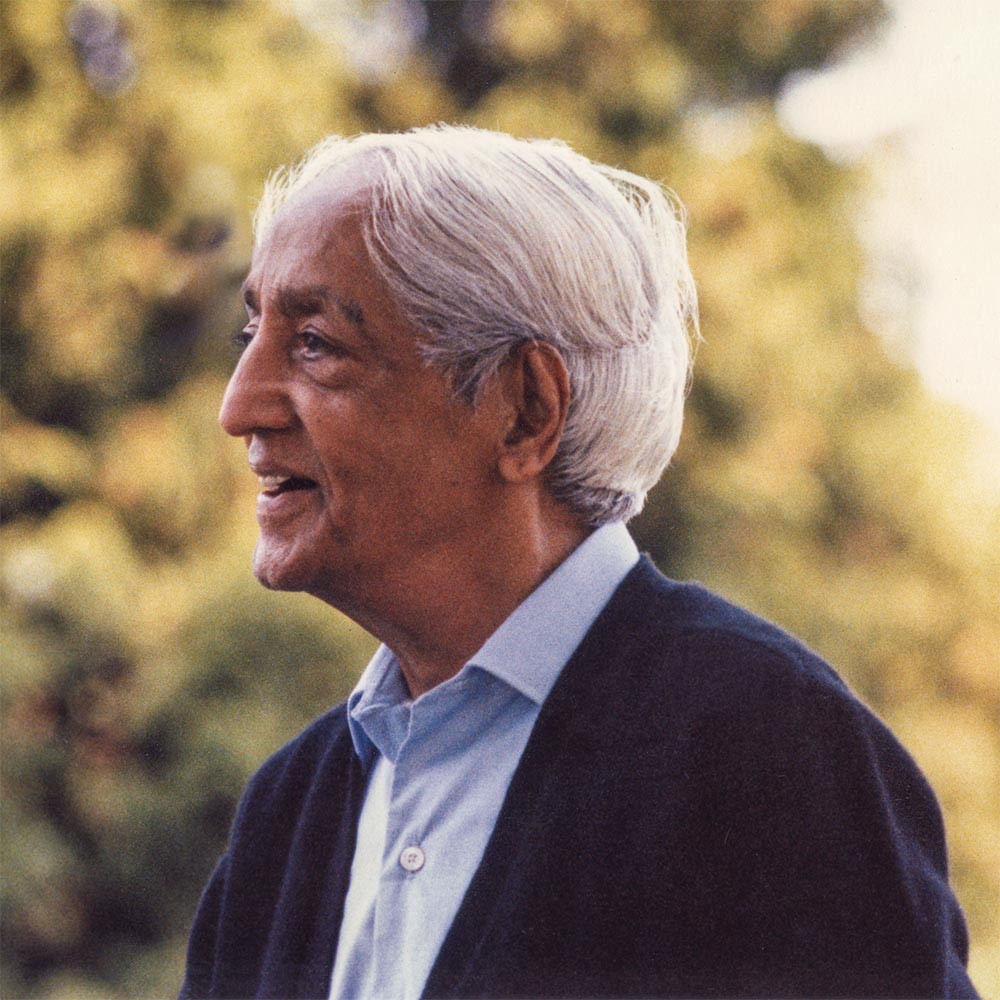
Krishnamurti outdoors smiling

Who Was Krishnamurti?

J. Krishnamurti (1895-1986) is widely regarded as one of the greatest thinkers and religious teachers of all time. He spoke throughout the world to large audiences and to individuals, including writers, scientists, philosophers and educators, about the need for a radical change in mankind. Referring to himself, Krishnamurti said:

He is acting as a mirror for you to look into. That mirror is not an authority. It has no authority, it’s just a mirror. And when you see it clearly, understand what you see in that mirror, then throw it away, break it up.

Krishnamurti was concerned with all humanity and held no nationality or belief and belonged to no particular group or culture. In the latter part of his life, along with continuing to give public talks, he travelled mainly between the schools he had founded in India, Britain and the United States, which educate for the total understanding of man and the art of living. He stressed that only this profound understanding can create a new generation that will live in peace.

Krishnamurti reminded his listeners again and again that we are all human beings first and not Hindus, Muslims or Christians, that we are like the rest of humanity and are not different from one another. He asked that we tread lightly on this earth without destroying ourselves or the environment. He communicated to his listeners a deep sense of respect for nature. His teachings transcend man-made belief systems, nationalistic sentiment and sectarianism. At the same time, they give new meaning and direction to mankind’s search for truth. His teaching is timeless, universal and increasingly relevant to the modern age.

I am nobody. It is as simple as that. I am nobody. But what is important is who you are, what you are.

Krishnamurti

Krishnamurti spoke not as a guru but as a friend. His talks and discussions are based not on tradition-based knowledge but on his own insights into the human mind and his vision of the sacred, so he always communicated a sense of freshness and directness, although the essence of his message remained unchanged over the years. When Krishnamurti addressed large audiences, people felt that he was talking to each of them personally, addressing their own particular problem. In his private interviews, he was a compassionate teacher, listening attentively to those who came to him in sorrow, and encouraging them to heal themselves through their own understanding. Religious scholars found that his words threw new light on traditional concepts. Krishnamurti took on the challenge of modern scientists and psychologists and went with them step by step, discussing their theories and sometimes enabling them to discern the limitations of their theories.

Krishnamurti left a large body of literature in the form of public talks, writings, discussions with teachers and students, scientists, psychologists and religious figures, conversations with individuals, television and radio interviews, and letters. Many of these have been published as books, in over 60 languages, along with hundreds of audio and video recordings.
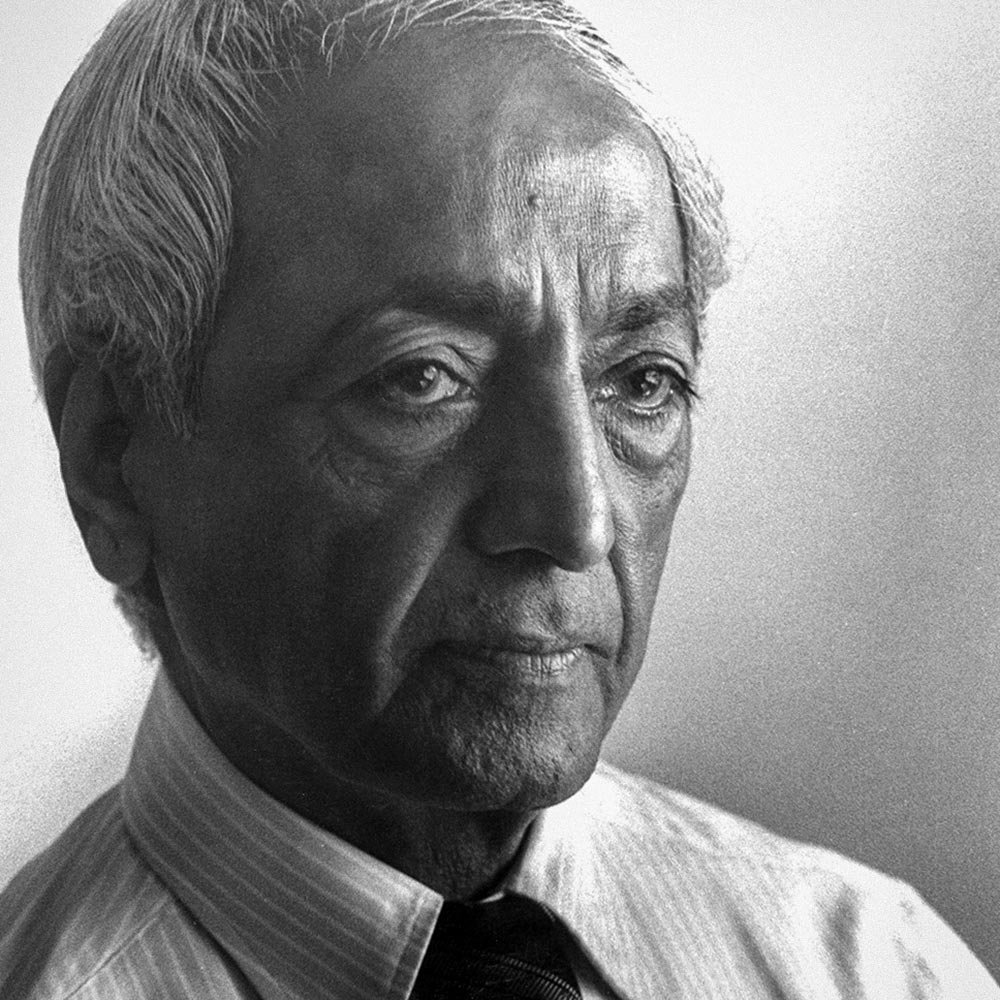
Three-quarters portrait photo of Krishnamurti

The Krishnamurti Foundation

Established in 1968 as a registered charity, and located at The Krishnamurti Centre, Krishnamurti Foundation Trust exists to preserve and make available Krishnamurti’s teachings.

The Foundation serves a global audience by providing worldwide free access to Krishnamurti videos, audio and texts to those who may be interested in pursuing an understanding of Krishnamurti’s work in their own lives.

In describing his intentions for the Foundations, Krishnamurti said: 

The Foundations will see to it that these teachings are kept whole, are not distorted, are not made corrupt.