
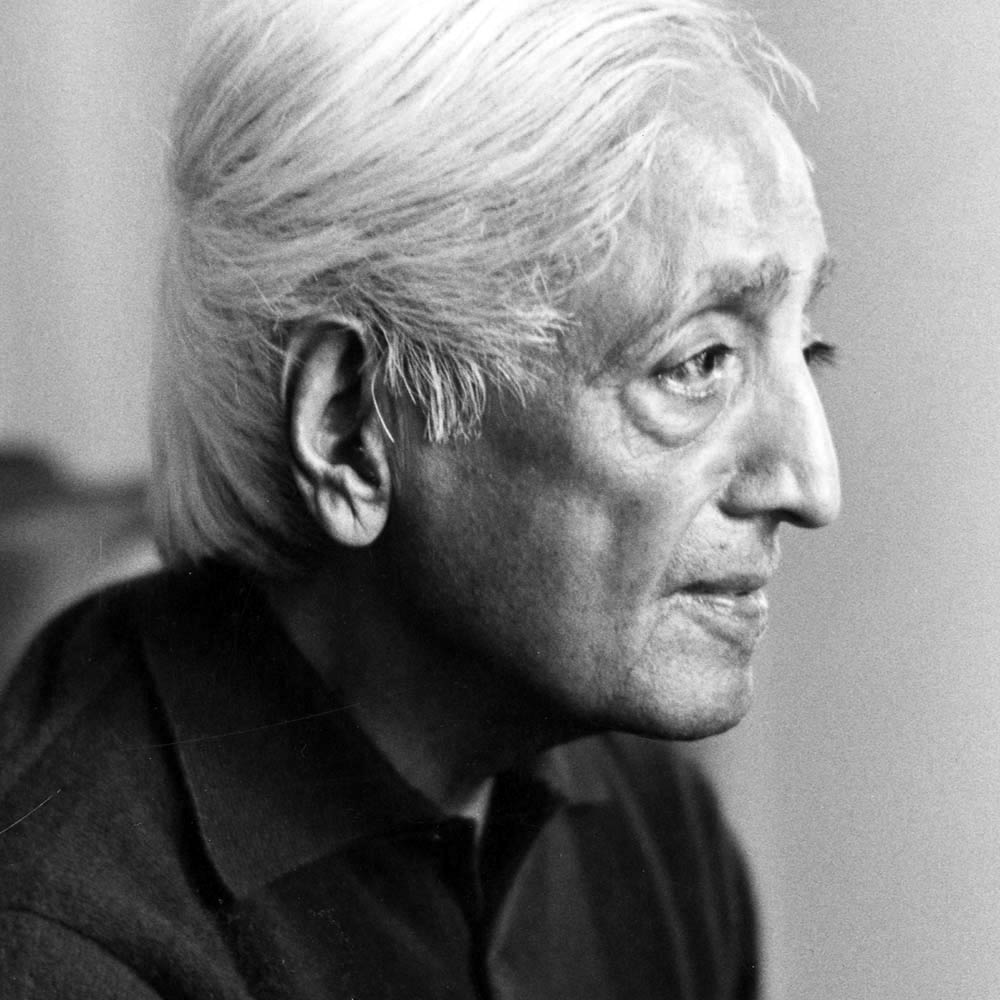
Photo of J. Krishnamurti

Do you ever sit quietly, with your back very straight, without movement, and know the beauty of silence?

Krishnamurti, Think on These Things

Read More

Happiness is not something you can seek; it is a result, a by-product. If you pursue happiness for itself, it will have no meaning. Happiness comes uninvited, and the moment you are conscious that you are happy, you are no longer happy. When you are suddenly joyous about nothing in particular, there is just the freedom of smiling, of being happy, but the moment you are conscious of it, you have lost it. Being self-consciously happy, or pursuing happiness, is the very ending of happiness. There is happiness only when the self and its demands are put aside. You are taught a great deal about mathematics, you give your days to studying history, geography, science, physics, biology and so on, but do you and your teachers spend any time at all thinking about these far more serious matters? Do you ever sit quietly, with your back very straight, without movement, and know the beauty of silence? Do you ever let your mind wander, not about petty things, but expansively, widely, deeply, and thereby explore, discover?

If you want to understand the beauty of a bird, a fly, a leaf, or a person with all their complexities, you have to give your whole attention, which is awareness.

Read More

Once in India I was travelling in a car. There was a chauffeur driving, and I was sitting beside him. There were three gentlemen behind discussing awareness very intently and asking me questions about awareness, and unfortunately at that moment the driver was looking somewhere else and ran over a goat. The three gentlemen were still discussing awareness, totally unaware that we had run over a goat. When this lack of attention was pointed out to those gentlemen who were trying to be aware, it was a great surprise to them. And with most of us, it is the same. We are not aware of outward things or of inward things. If you want to understand the beauty of a bird, a fly, a leaf, or a person with all their complexities, you have to give your whole attention, which is awareness. You can give your whole attention only when you care, which means you really love to understand – then you give your whole heart and mind to find out. Such awareness is like living with a snake in the room; you watch its every movement and are very, very sensitive to the slightest sound it makes. Such a state of attention is total energy; in such awareness, the totality of yourself is revealed in an instant.

Watching the river that evening, you felt you were going with it far away, and the heavens and earth were part of the river. The beauty of it made you completely silent.

Read More

You took another path past more ancient temples in ruins, mango groves, tamarind and green fields. There was poverty everywhere – the degradation of it; the utter callousness of people to their environment, to the beauty of the land and the extraordinary open sky. Just beyond was the river. One hesitates to call it a river – rivers are so common, there are so many of them all over the world, passing through towns, polluted, and every river has a name. This one is somehow the mother of all rivers. It should not have a name. It comes from the Himalayas, down through valleys, past towns and villages and open spaces. Here, as you watched it, as you saw the current go by, it had become completely anonymous. It is just water with a great depth, going by, flowing by. Watching it that evening, you felt you were going with it far away, and the heavens and earth were part of the river. The beauty of it made you completely silent.

Sound, like light, has a quality that silence brings; the deeper the silence, the more the beauty of the sound is heard.

Krishnamurti, The Only Revolution

Read More

The sound of the church bells came through the woods across the water and over the deep meadow. The sound was different according to whether it came through the woods, over the open meadows or across the fast-running, noisy stream. Sound, like light, has a quality that silence brings; the deeper the silence, the more the beauty of the sound is heard. That evening, with the sun riding just above the western hills, the sound of those church bells was quite extraordinary. It was as though you heard the bells for the first time. They were not as old as in the ancient cathedrals, but they carried the feeling of that evening. There wasn’t a cloud in the sky. It was the longest day of the year, and the sun was setting as far north as it ever would. We hardly ever listen to the sound of a dog’s bark or to the cry of a child or the laughter of a man as he passes by. We separate ourselves from everything, and from this isolation look and listen to all things. This separation is so destructive, for in it lies all conflict and confusion. If you listened to the sound of those bells with complete silence, you would be riding on it – or rather, the sound would carry you across the valley and over the hill. The beauty of it is felt only when you and the sound are not separate, when you are part of it. Meditation is the ending of the separation, not by any action of will or desire, or by seeking the pleasure of things not already tasted. Meditation is not a separate thing from life; it is the very essence of life, the very essence of daily living. To listen to those bells, to hear the laughter of that man as he walks by with his wife, to listen to the sound of the bell on the bicycle of the little girl as she passes by: it is the whole of life, and not just a fragment of it, that meditation opens.

Beauty includes beauty of form, but without inward beauty, the mere sensual appreciation of beauty of form leads to degradation and disintegration. There is inward beauty only when you feel real love for people and for all the things of the earth.

Krishnamurti, Think on These Things

Read More

What is beauty? Is it merely the appreciation that we feel, or is beauty a thing apart from perception? If you have good taste in clothes, if you use colours that harmonise, if you have dignified manners, if you speak quietly and hold yourself erect, all that makes for beauty. But that is merely the outward expression of an inward state, like a poem you write or a picture you paint. You can look at the green field reflected in the river and experience no sense of beauty, just pass it by. If, like the fisherman, you see the swallows flying low over the water every day, it probably means very little to you, but if you are aware of the extraordinary beauty of something like that, what is it that happens within you and makes you say, ‘How very beautiful’? What goes to make up this inward sense of beauty? There is the beauty of outward form: tasteful clothes, nice pictures, attractive furniture, or no furniture at all with bare, well-proportioned walls, windows that are perfect in shape, and so on. I am not talking merely of that, but of what goes to make up this inward beauty. To have this inward beauty, there must be complete abandonment; the sense of not being held, of no restraint, no defence, no resistance.

If there is no beauty with all its marvel in one’s heart, action becomes very superficial.

Read More

If there is no beauty with all its marvel in one’s heart, then action becomes very superficial. Your gods and your literature, the trees, the women, the men, are used for your own personal pleasure. Is love pleasure, desire? Without understanding this basically, sex becomes a problem. We never ask ourselves why civilisations, whether in the East or the West, have given to it such enormous meaning and importance both religiously and humanly. Pleasure becomes mechanical, as thought is mechanical – whatever it touches becomes routine, boring, or is used to sustain a particular form of pleasure. Pleasure is one thing and joy is another. Joy can never become mechanical. It happens and then thought, thinking about it, makes it into pleasure. It is the same with profound enjoyment; the moment thought captures it, it turns to envy.

Which IS important: to fight over conflicting opinions as to whether something is beautiful or ugly, or to be sensitive to both beauty and ugliness?

Krishnamurti, Think on These Things

Read More

Suppose you say that a certain arch is beautiful, and someone else says it is ugly. Now, which is important: to fight over conflicting opinions as to whether something is beautiful or ugly, or to be sensitive to both beauty and ugliness? In life there is filth, squalor, degradation, sorrow, tears, and there is also joy, laughter, the beauty of a flower in the sunlight. What matters is to be sensitive to everything, and not merely decide what is beautiful and what is ugly and remain with that opinion. If I say, ‘I am going to cultivate beauty and reject all ugliness,’ what happens? The cultivation of beauty makes for insensitivity. It is like a man developing his right arm, making it very strong, and letting his left arm wither. So you must be awake to ugliness as well as to beauty. You must see the dancing leaves, the water flowing under the bridge, the beauty of an evening, and also be aware of the beggar in the street; you must see the poor woman struggling with a heavy load and be ready to help her, give her a hand. All this is necessary, and it is only when you have this sensitivity to everything that you can begin to work, to help and not reject or condemn.

Why is it that in our lives there is so little beauty? Why are museums with their pictures and statues necessary? Why do you have to listen to music or read descriptions of scenery? Good taste can be taught, or perhaps one has it naturally, but good taste is not beauty.

Krishnamurti, The Only Revolution

Read More

Why is it that in our lives there is so little beauty? Why are museums with their pictures and statues necessary? Why do you have to listen to music or read descriptions of scenery? Good taste can be taught, or perhaps one has it naturally, but good taste is not beauty. Is it in the thing that has been put together – the sleek modern aeroplane, the modern hotel or the Greek temple, the beauty of line, of the complex machine, or the curve of a beautiful bridge across a deep cavern? When you look at the inside of a watch, it is really remarkably delicate, and there is a certain quality of beauty in it, and in the ancient pillars of marble, and in the words of a poet. But if that is all beauty is, then it is only the superficial response of the senses. When you see a palm tree, single against the setting sun, is it the colour, the stillness of the palm, the quietness of the evening that make you feel the beautiful, or is beauty, like love, something that lies beyond the touch and the sight?

Beauty is neither thought nor feeling; it has nothing whatsoever to do with emotion or sentiment.

Read More

It was a lovely morning, clear; every star was ablaze, and the valley was full of silence. The hills were dark, darker than the sky and cool air had a smell of rain, the scent of leaves and some strong-scented flowering jasmine. Everything was asleep and every leaf was still, and the beauty of the morning was magic; it was the beauty of the earth, heavens and of man, of the sleeping birds and the fresh stream in a dry riverbed; it was incredible that it was not personal. There is a certain austerity about it, the austerity of completeness, so utterly complete that it knew no corruption. There on the veranda, with Orion in the western sky, the fury of beauty wiped away the defences of time. Meditating there, beyond the limits of time, seeing the sky ablaze with stars and the earth silent, beauty is not the personal pursuit of pleasure, of things put together, of things known, or unknown images and visions of the brain with its thoughts and feelings. Beauty has nothing whatsoever to do with thought or sentiment or with the pleasurable feeling aroused by a concert or a picture or seeing a game of football; the pleasures of concert, poems, are perhaps more refined than football but they are all in the same field as the Mass or some puja in a temple. It is the beauty beyond time and beyond the aches and pleasures of thought. Thought and feeling dissipate energy and so beauty is never seen. Energy, with its intensity, is needed to see beauty. When there is a seer, an observer, then there is no beauty.

Everything was asleep and every leaf was still, and the beauty of the morning was magic; it was the beauty of the earth, heavens and of man, of the sleeping birds and the fresh stream in a dry riverbed.

Read More

The earth on which we live is our earth. It is not the British earth or the French, German, Russian, Indian or Chinese earth; it is our earth on which we are all living. That is a fact. But thought has divided it racially, geographically, culturally and economically. This division is causing havoc in the world. That cannot be denied; it is rational, objective. It is our earth on which we are all living, though politically and economically we have divided it for security and for various patriotic, illusory reasons, which eventually bring about war.

The beauty of truth and the beauty of stone are two different things. One opens the door to the immeasurable, the other to the imprisonment of man; one to freedom and the other to the bondage of thought.

Read More

Religion has become superstition and image-worship, belief and ritual. It has lost the beauty of truth; incense has taken the place of reality. Instead of direct perception, there is the image carved by the hand or mind. The only concern of religion is the total transformation of man. And all the circus that goes on around it is nonsense. That is why truth is not to be found in any temple, church or mosque, however beautiful they are. The beauty of truth and the beauty of stone are two different things. One opens the door to the immeasurable, the other to the imprisonment of man; one to freedom and the other to the bondage of thought. Romanticism and sentimentality deny the very nature of religion, nor is it a plaything of the intellect. Knowledge in the area of action is necessary to function efficiently and objectively, but knowledge is not the means of the transformation of man. Knowledge is the structure of thought, and thought is the dull repetition of the known, however modified and enlarged. There is no freedom through the ways of thought and the known.

There is no system, and so there is no direction to truth or to the beauty of meditation.

Read More

Any authority on meditation is the very denial of it. All the knowledge, concepts and examples have no place in meditation. The complete elimination of the meditator, the experiencer, the thinker, is the very essence of meditation. This freedom is the daily act of meditation. The observer is the past; his ground is time. His thoughts, images and shadows are time-binding. Knowledge is time, and freedom from the known is the flowering of meditation. There is no system, and so there is no direction to truth or to the beauty of meditation. To follow another’s example or word is to banish truth. Only in the mirror of relationship do you see the face of ‘what is’. The seer is the seen. Without the order which virtue brings, meditation and the endless assertions of others have no meaning whatsoever; they are totally irrelevant. Truth has no tradition; it cannot be handed down.

The fullness and beauty of life can only be understood through meditation.

Read More

To understand what meditation is, there must be questioning, inquiry; and mere acceptance destroys inquiry. You have to see for yourself the false as the false, and the truth in the false and the truth as the truth; for none can instruct you concerning it. Meditation is the way of life, it is part of daily existence, and the fullness and beauty of life can only be understood through meditation. Without understanding the whole complexity of life, and the everyday reactions from moment to moment, meditation becomes a process of self-hypnosis. Meditation of the heart is the understanding of daily problems. You can’t go very far if you don’t begin very near.

This is a marvellous world – the beauty of the world, the beauty of the earth, the extraordinary quality of a tree – and we are destroying the earth as we are destroying ourselves.

Krishnamurti, Meeting Life

Read More

The society in which we live is essentially based on relationship with each other. If in that relationship there is no love, just mutual exploitation, mutual comfort in various ways, it must inevitably bring about corruption. What will you do about all this? This is a marvellous world – the beauty of the world, the beauty of the earth, the extraordinary quality of a tree – and we are destroying the earth as we are destroying ourselves. So how will you, as a human being living here, act? Will we, each one of us, see that we are not corrupt? If our relationship with each other is destructive – constant battle, struggle, pain, despair – we will inevitably create an environment that will represent what we are. What are we going to do about it, each one of us? Is this corruption and lack of integrity an abstraction, an idea, or is it an actuality which we want to change? It is up to you.

It was a place of rare beauty, quiet, isolated, and people hadn’t spoiled it. It is strange how human beings desecrate nature with their killing, with their noise and vulgarity. But here, with the redwoods and the oak and all the spring flowers, it was really a sanctuary for the quiet mind, for a mind that is as stable and firm as those trees.

Krishnamurti, Meeting Life

Read More

There in that grove were several tall and massive redwoods, which must have been planted centuries ago. They were surrounded by rhododendrons, and in the springtime the grove was a sanctuary not only for birds and rabbits, pheasants and small animals, but also for human beings who cared to go there. You could sit by the hour quietly with the daffodils and azaleas and look at the blue sky through the leaves. It was an enchanting place, and all these massive trees were your friends, if you wanted friends. It was a place of rare beauty, quiet, isolated, and people hadn’t spoiled it. It is strange how human beings desecrate nature with their killing, with their noise and vulgarity. But here, with the redwoods and the oak and all the spring flowers, it was really a sanctuary for the quiet mind, for a mind that is as stable and firm as those trees – not from some belief, some dogma or in some dedicated purpose; the free mind doesn’t need these. Looking at those trees that were so extraordinarily still on that afternoon – for you couldn’t hear a machine; the road was far away, and the nearby house was quiet – there was an utter silence. Even the breeze had stopped, and not a single leaf stirred. The new spring grass was a delicate green; you hardly dared touch it. The earth, the trees and the pheasant that watched you were indivisible. It was all part of that extraordinary movement of life and living, the depth of which thought could never touch.

These quotes only touch on the many subjects Krishnamurti inquired into during his lifetime. His timeless and universal teachings can be explored using the Index of Topics where you will find texts, audio and video related on many themes. Another option is to browse our selection of curated articles or more short quotes. Krishnamurti’s reply when asked what lies at the heart of his teachings can be found here. Many Krishnamurti books are available, a selection of which can be explored here. To find out more about Krishnamurti’s life, please see our introduction and the biography. We also host a weekly podcast, and offer free downloads. Please visit our YouTube channel for hundreds of specially selected shorter clips. Below, you can learn more about Krishnamurti and our charity which he founded in 1968.
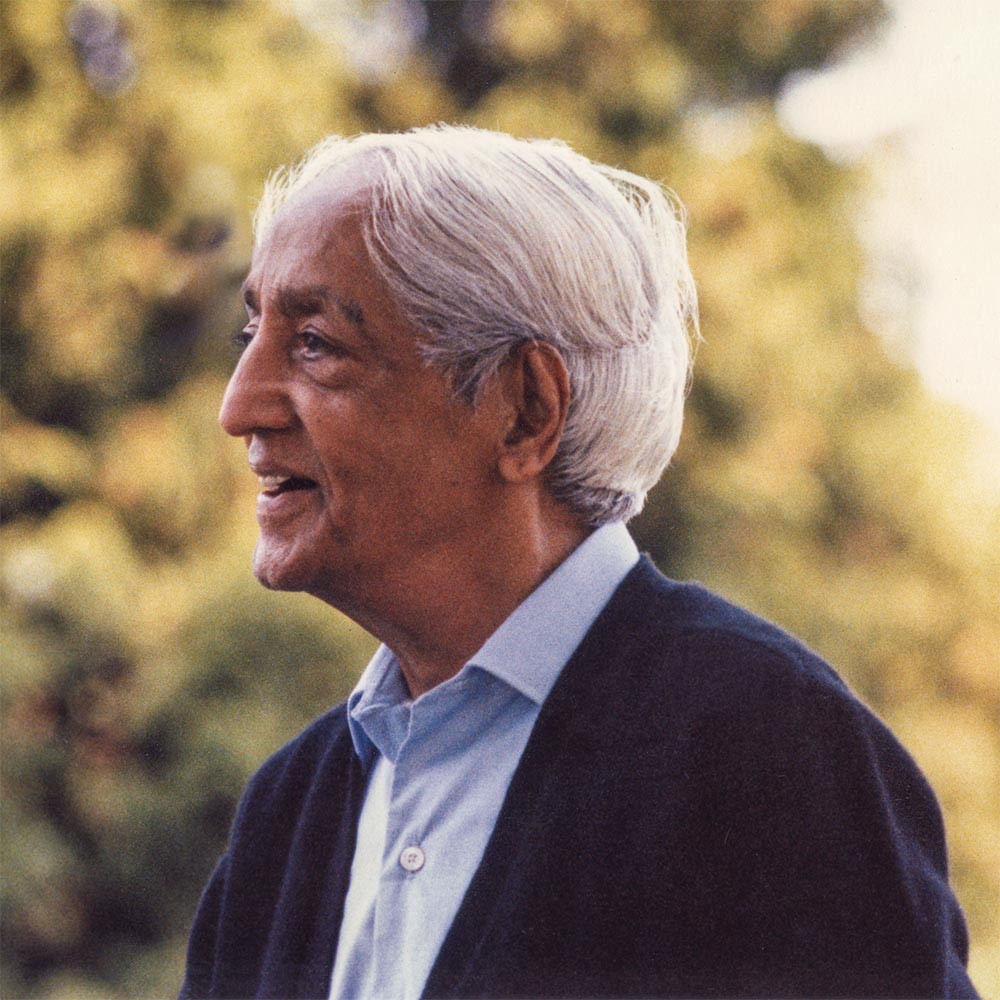
Krishnamurti outdoors smiling

Who Was Krishnamurti?

J. Krishnamurti (1895-1986) is widely regarded as one of the greatest thinkers and religious teachers of all time. He spoke throughout the world to large audiences and to individuals, including writers, scientists, philosophers and educators, about the need for a radical change in mankind. Referring to himself, Krishnamurti said:

He is acting as a mirror for you to look into. That mirror is not an authority. It has no authority, it’s just a mirror. And when you see it clearly, understand what you see in that mirror, then throw it away, break it up.

Krishnamurti was concerned with all humanity and held no nationality or belief and belonged to no particular group or culture. In the latter part of his life, along with continuing to give public talks, he travelled mainly between the schools he had founded in India, Britain and the United States, which educate for the total understanding of man and the art of living. He stressed that only this profound understanding can create a new generation that will live in peace.

Krishnamurti reminded his listeners again and again that we are all human beings first and not Hindus, Muslims or Christians, that we are like the rest of humanity and are not different from one another. He asked that we tread lightly on this earth without destroying ourselves or the environment. He communicated to his listeners a deep sense of respect for nature. His teachings transcend man-made belief systems, nationalistic sentiment and sectarianism. At the same time, they give new meaning and direction to mankind’s search for truth. His teaching is timeless, universal and increasingly relevant to the modern age.

I am nobody. It is as simple as that. I am nobody. But what is important is who you are, what you are.

Krishnamurti

Krishnamurti spoke not as a guru but as a friend. His talks and discussions are based not on tradition-based knowledge but on his own insights into the human mind and his vision of the sacred, so he always communicated a sense of freshness and directness, although the essence of his message remained unchanged over the years. When Krishnamurti addressed large audiences, people felt that he was talking to each of them personally, addressing their own particular problem. In his private interviews, he was a compassionate teacher, listening attentively to those who came to him in sorrow, and encouraging them to heal themselves through their own understanding. Religious scholars found that his words threw new light on traditional concepts. Krishnamurti took on the challenge of modern scientists and psychologists and went with them step by step, discussing their theories and sometimes enabling them to discern the limitations of their theories.

Krishnamurti left a large body of literature in the form of public talks, writings, discussions with teachers and students, scientists, psychologists and religious figures, conversations with individuals, television and radio interviews, and letters. Many of these have been published as books, in over 60 languages, along with hundreds of audio and video recordings.
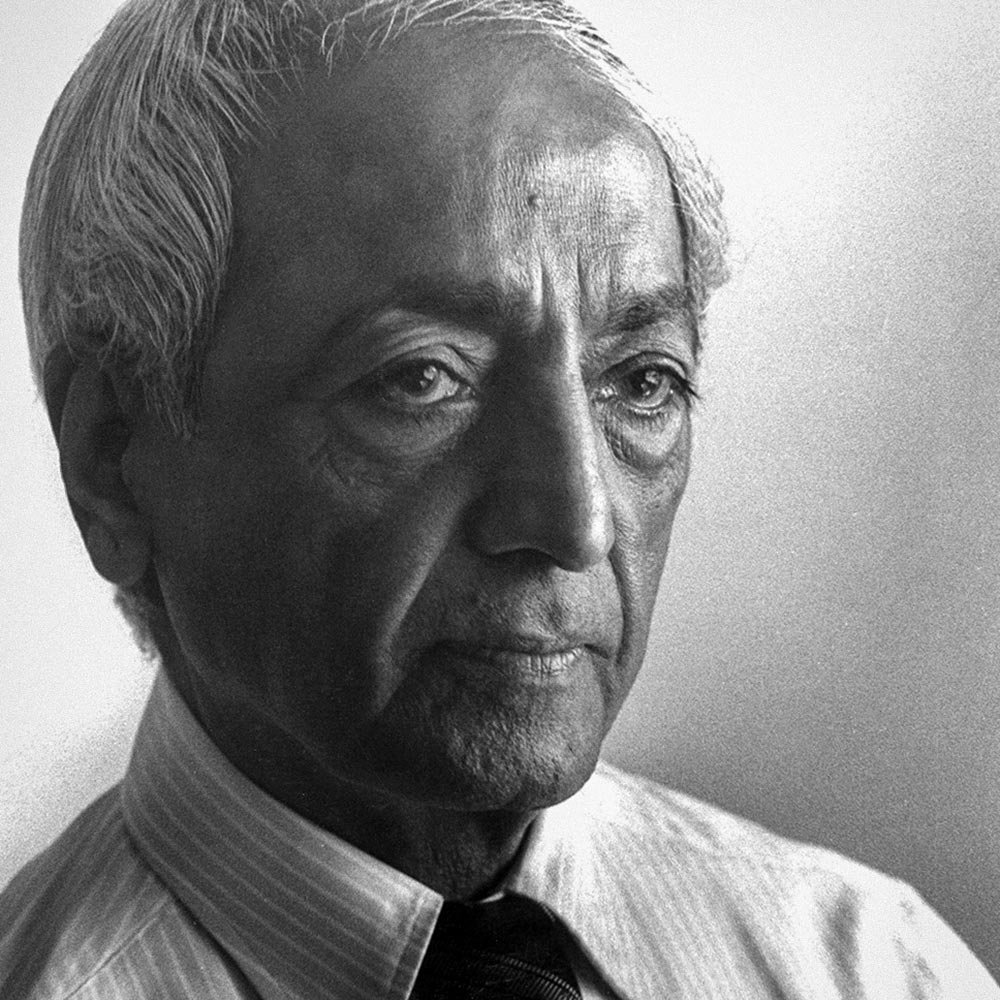
Three-quarters portrait photo of Krishnamurti

The Krishnamurti Foundation

Established in 1968 as a registered charity, and located at The Krishnamurti Centre, Krishnamurti Foundation Trust exists to preserve and make available Krishnamurti’s teachings.

The Foundation serves a global audience by providing worldwide free access to Krishnamurti videos, audio and texts to those who may be interested in pursuing an understanding of Krishnamurti’s work in their own lives.

In describing his intentions for the Foundations, Krishnamurti said: 

The Foundations will see to it that these teachings are kept whole, are not distorted, are not made corrupt.