
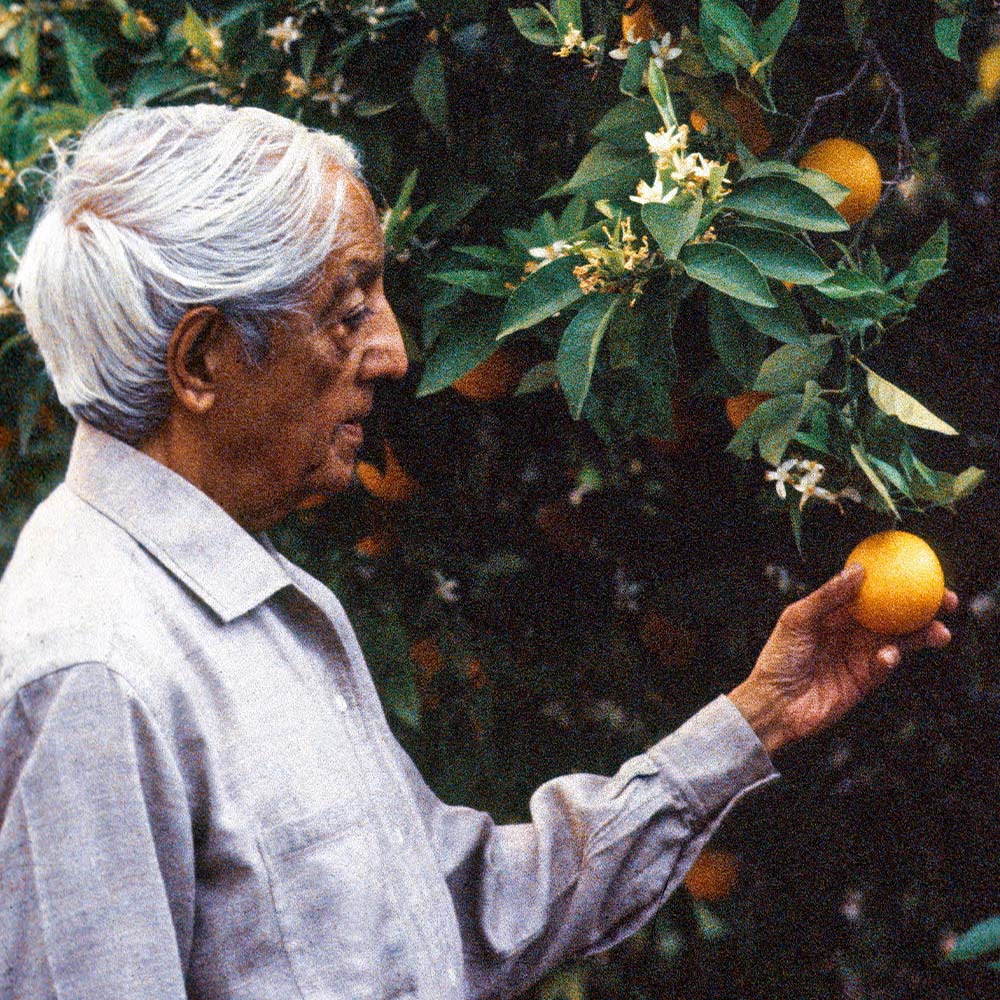
Photo of J. Krishnamurti

I feel terribly inferior because I have compared myself with somebody whom I think is superior, and therefore I suffer

Read More

There are all the psychological fears which are complex. The complexity is brought about through thought. I want to be a great man, and I am not a great man. And there is the pain of not being great. I feel terribly inferior because I have compared myself with somebody whom I think is superior and I feel I am inferior, and therefore I suffer from that, which is all the measurement of thought.

Comparison breeds self-pity, and then misfortune ensues.

Read More

Several people had come together, and as each one tried to state some problem, the others began to explain it and to compare it with their own trials. But sorrow is not to be compared. Comparison breeds self-pity, and then misfortune ensues. Adversity is to be met directly, not with the idea that yours is greater than another’s.

One of the things that prevents the sense of being secure is comparison. When you are compared with somebody else in your studies or in your looks, you have a sense of anxiety, a sense of fear, a sense of uncertainty.

Read More

One of the things that prevents the sense of being secure is comparison. When you are compared with somebody else in your studies or in your looks, you have a sense of anxiety, a sense of fear, a sense of uncertainty. So, it is very important to eliminate in our schools this sense of comparison, this giving grades or marks, and ultimately the fear of examinations. You study better when there is freedom, when there is happiness, when there is some interest. You all know this when you are playing a sport, when you are doing drama, when you are going out for walks, when you are looking at the river: when there are general happiness and good health, you learn much more easily. But when there is fear of comparison, of grades, of examinations, you do not study or learn so well. The teacher is concerned only that you should pass examinations and go to the next class, and your parents want you to get ahead. Neither of them is interested that you should leave the school as an intelligent human being without fear.

Most people think that learning is encouraged through comparison, whereas the contrary is the fact.

Krishnamurti, Life Ahead

Read More

Most people think that learning is encouraged through comparison, whereas the contrary is the fact. Comparison brings about frustration and merely encourages envy, which is called competition. Like other forms of persuasion, comparison prevents learning and breeds fear. Ambition also breeds fear. Ambition, whether personal or identified with the collective, is always antisocial. So-called noble ambition in relationship is fundamentally destructive. It is necessary to encourage the development of a good mind, a mind which is capable of dealing with the many issues of life as a whole, and which does not try to escape from them and so become self-contradictory, frustrated, bitter or cynical. And it is essential for the mind to be aware of its own conditioning, its own motives and pursuits.

Comparison is taught from childhood. In every school, child A is compared with child B, and A destroys himself in order to be like B.

Read More

We are always comparing what we are with what we should be. The ‘should be’ is a projection of what we think we ought to be. Contradiction exists when there is comparison, not only with something or somebody, but with what you were yesterday, and hence there is conflict between what has been and ‘what is’. There is ‘what is’ only when there is no comparison at all, and to live with ‘what is’ is to be peaceful. Then you can give your whole attention without any distraction to what is within yourself, whether it be despair, ugliness, brutality, fear, anxiety, loneliness, and live with it completely; then there is no contradiction and hence no conflict.

We are always comparing ourselves with somebody else. If I am dull, I want to be clever. If I am shallow, I want to be deep. If I am ignorant, I want to be more knowledgeable.

Read More

We are always comparing ourselves with somebody else. If I am dull, I want to be clever. If I am shallow, I want to be deep. If I am ignorant, I want to be more knowledgeable. I am always comparing myself, measuring myself against others – a better car, better food, a better home, a better way of thinking. Comparison breeds conflict. Do we understand through comparison? When you compare two pictures, two pieces of music, two sunsets, when you compare that tree with another tree, do you understand either? Or do you understand something only when there is no comparison at all? So, is it possible to live without comparison of any kind, never translating yourself in terms of comparison with another or with an idea or with a hero or with an example? When you are comparing, when you are measuring yourself with ‘what should be’ or ‘what has been’, you are not seeing ‘what is’. Please listen to this – it is very simple, and therefore you, being clever and cunning, will probably miss it. We are asking whether it is possible to live in this world without any comparison at all.

When I compare myself with you, who are much more that I am, that is violence.

Read More

As long as there is a duality – that is, violence and non-violence – there must be conflict and therefore more violence. As long as I impose on the fact that I am stupid the idea that I must be clever, there is the beginning of violence. When I compare myself with you, that is also violence. Comparison, suppression, control – all those indicate a form of violence. I am made like that. I compare, I suppress, I am ambitious. Realising this, how am I to live non-violently? I want to find a way of living without all this strife.

As long as the mind is comparing, there is no love.

Krishnamurti, Life Ahead

Read More

When I compare you with another, I do not understand you, I merely judge you. Stupidity arises when there is comparison, because in comparing you with somebody else there is a lack of human dignity. But when I look at you without comparing, my only concern is to understand you, and in that very concern is intelligence and dignity. As long as the mind is comparing, there is no love; and the mind is always comparing, weighing, judging, is it not? It is always looking to find out where the weakness is, so there is no love. When the mother and father love their children, they do not compare one child with another. But you compare yourself with someone better, nobler, richer; you are all the time concerned with yourself in relation to somebody else, so you create in yourself a lack of love. In this way the mind becomes more and more comparative, more and more possessive, more and more dependent, thereby establishing a pattern in which it gets caught. Because it cannot look at anything anew, afresh, it destroys the very perfume of life, which is love.

Our whole civilisation is based on hierarchical comparison both outwardly and inwardly which denies the sense of deep affection.

Read More

Our whole educational system is based on comparison. We say that child A is better than B, and so child B must conform to or imitate A. This in essence is cruelty, ultimately expressed in examinations. What is the responsibility of the educator who sees the truth of this? How will he teach any subject without using reward and punishment, knowing that there must be some kind of report indicating the capacity of the student? Can the teacher do this? Is it compatible with affection? If the central reality of affection is there, has comparison any place at all? Can the teacher eliminate in himself the pain of comparison? Our whole civilisation is based on hierarchical comparison both outwardly and inwardly, which denies the sense of deep affection. Can we eliminate from our minds the better, the more, the stupid, the clever, this whole comparative thinking? If the teacher has understood the pain of comparison, what is his responsibility in his teaching and in his action? A person who has really grasped the significance of the pain of comparison is acting from intelligence.

Comparison is the worship of authority, it is imitation, thoughtlessness. To compare is the very nature of a mind that is not awake to discover what is true.

Krishnamurti, Life Ahead

Read More

Comparison is the worship of authority, it is imitation, thoughtlessness. To compare is the very nature of a mind that is not awake to discover what is true. You say, ‘That is so, it is like what was said by the Buddha,’ and you think you have thereby solved your problems. But really to discover the truth of anything, you have to be extremely active, vigorous, self-reliant; and you cannot have self-reliance as long as you are thinking comparatively. If there is no self-reliance, you lose all power to investigate and find out what is true. Self-reliance brings a certain freedom in which you discover, and that freedom is denied to you when you are comparing.

When I cease to compare, am I then face to face with ‘what is’, and when I compare there is an escape from ‘what is’ and therefore a waste of energy.

Read More

Is it possible to live a life in which there is no comparison at all, and yet not be satisfied? When I cease to compare is there satisfaction with ‘what is’? Or when I cease to compare am I then face to face with ‘what is’, and when I compare there is an escape from ‘what is’, and therefore a waste of energy. And I need energy. There must be energy to face ‘what is’. So, are you dissipating energy through comparison? And if you are, and have an insight into all this, which is your insight, not mine, then you have energy that is not wasted through comparison, measurement, feeling inferior, superior, depressed, and all the rest of it. Therefore, you have energy to face what actually is, which is yourself.

Is it possible to live a daily life without any kind of comparison? You do compare two materials, one colour against another, but psychologically, inwardly, can you be free of comparison completely?

Krishnamurti, This Light in Oneself

Read More

Is it possible to live a daily life without any kind of comparison? You do compare two materials, one colour against another, but psychologically, inwardly, can you be free of comparison completely, which means be free of measurement? Measurement is the movement of thought. So, can thought come to an end? Most of us try to stop thinking, which is impossible. You may for a second say, ‘I have stopped thinking,’ but it is forced, it is compelled, it is a form of saying, ‘I have measured a second when I was not thinking.’ All those who went into this question deeply have asked if thought can come to an end. Thought is born from the known. Knowledge is the known, which is the past. Can that thought come to an end? Can there be freedom from the known? We are always functioning from the known, and we have become extraordinarily capable and imitative, comparing. We have a constant endeavour to be something. So, can thought come to an end?

When the mind is completely free of all comparison there is real freedom.

Read More

‘Yourself’ is the result of comparison. You are the comparative mind, and if you say, ‘When I don’t compare, I’ll be myself,’ what you will be is still the result of the conditioning of comparison. There can be no ‘being yourself’. Yourself is the result of the process of time, of comparison, of despair and sorrow, pleasure and fear. So what matters is not to be yourself but to live without comparison. When you do that, your mind has a different quality, it lives at a different dimension. Then you have enormous energy. The burden of the comparative spirit is put away; you are lighter, freer. Ah! I am using the words ‘lighter’, ‘freer’, which again is comparison; I don’t mean that. You are light, your whole being is free from the burden which has been accumulated for centuries. Can you live one day without ever comparing yourself with another, to have the non-comparative mind, a mind that observes without comparison, without measurement? For there is great illusion in measurement, in the mind that says, ‘I have been, and I will be something more.’ This measurement leads to every form of deception, hypocrisy and strife. When the mind is completely free of all comparison, there is real freedom.

There is no comparison between the false and the true; violence and love cannot be compared.

Read More

When the false has dropped away, there is freedom for that which is not false to come into being. You cannot seek the true through the false; the false is not a stepping stone to the true. The false must cease wholly, not in comparison to the true. There is no comparison between the false and the true; violence and love cannot be compared. Violence must cease for love to be. The cessation of violence is not a matter of time. The perception of the false as the false is the ending of the false. Let the mind be empty and not filled with the things of the mind. Then there is only meditation, and not a meditator who is meditating.

Why do we compare? We compare for the simple reason that measuring is the way of thought and the way of our life. We are educated in this corruption.

Read More

We rarely look at a painting for itself, or at a man or a woman for themselves. There is always this quality of comparison. Is love comparison? Can you ever say you love this one more than that one? When there is this comparison, is that love? When there is this feeling of ‘the more’, which is measurement, then thought is in operation. Love is not the movement of thought. This measurement is comparison. We are encouraged throughout our life to compare. When in your school you compare B with A, you are destroying both of them. So, is it possible to educate without any sense of comparison? Why do we compare? We compare for the simple reason that measuring is the way of thought and the way of our life. We are educated in this corruption. The better is always nobler than ‘what is’, than what is actually going on. The observation of ‘what is’, without comparison, without measure, is to go beyond ‘what is’.

These quotes only touch on the many subjects Krishnamurti inquired into during his lifetime. His timeless and universal teachings can be explored using the Index of Topics where you will find texts, audio and video related on many themes. Another option is to browse our selection of curated articles or more short quotes. Krishnamurti’s reply when asked what lies at the heart of his teachings can be found here. Many Krishnamurti books are available, a selection of which can be explored here. To find out more about Krishnamurti’s life, please see our introduction and the biography. We also host a weekly podcast, and offer free downloads. Please visit our YouTube channel for hundreds of specially selected shorter clips. Below, you can learn more about Krishnamurti and our charity which he founded in 1968.
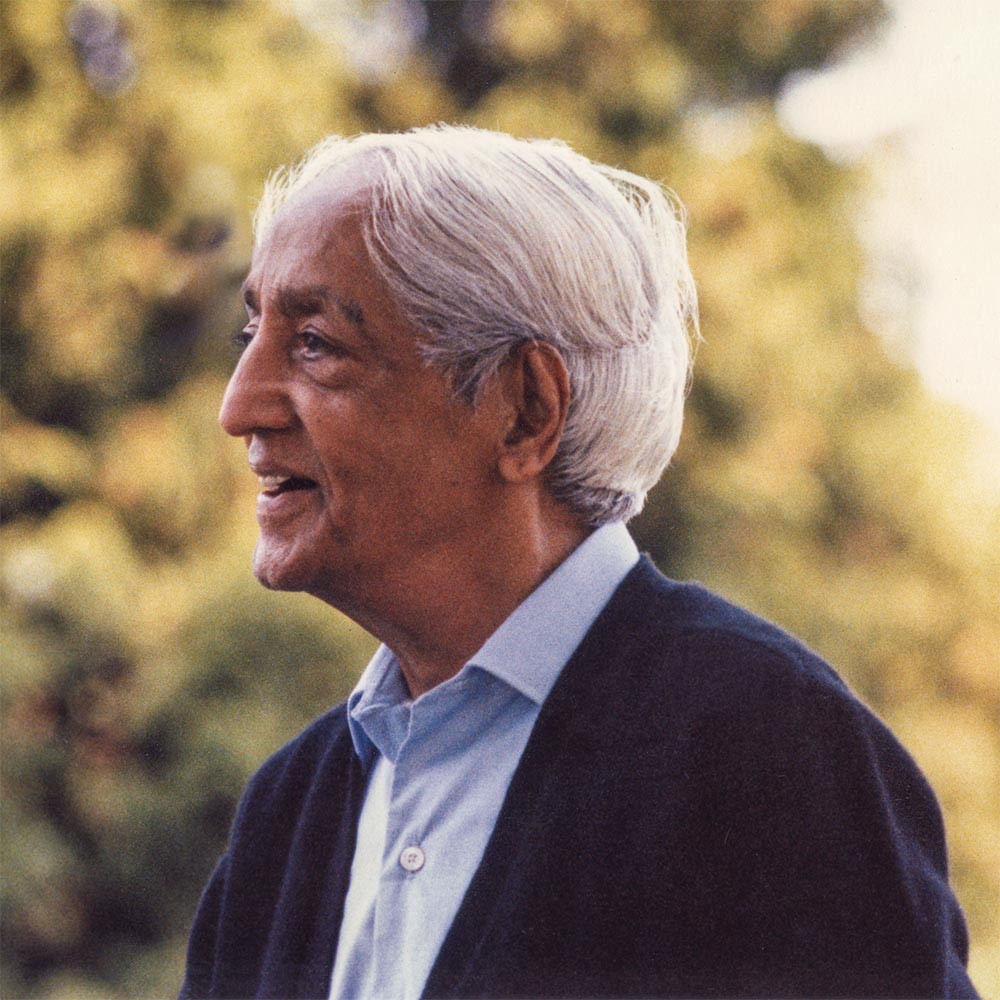
Krishnamurti outdoors smiling

Who Was Krishnamurti?

J. Krishnamurti (1895-1986) is widely regarded as one of the greatest thinkers and religious teachers of all time. He spoke throughout the world to large audiences and to individuals, including writers, scientists, philosophers and educators, about the need for a radical change in mankind. Referring to himself, Krishnamurti said:

He is acting as a mirror for you to look into. That mirror is not an authority. It has no authority, it’s just a mirror. And when you see it clearly, understand what you see in that mirror, then throw it away, break it up.

Krishnamurti was concerned with all humanity and held no nationality or belief and belonged to no particular group or culture. In the latter part of his life, along with continuing to give public talks, he travelled mainly between the schools he had founded in India, Britain and the United States, which educate for the total understanding of man and the art of living. He stressed that only this profound understanding can create a new generation that will live in peace.

Krishnamurti reminded his listeners again and again that we are all human beings first and not Hindus, Muslims or Christians, that we are like the rest of humanity and are not different from one another. He asked that we tread lightly on this earth without destroying ourselves or the environment. He communicated to his listeners a deep sense of respect for nature. His teachings transcend man-made belief systems, nationalistic sentiment and sectarianism. At the same time, they give new meaning and direction to mankind’s search for truth. His teaching is timeless, universal and increasingly relevant to the modern age.

I am nobody. It is as simple as that. I am nobody. But what is important is who you are, what you are.

Krishnamurti

Krishnamurti spoke not as a guru but as a friend. His talks and discussions are based not on tradition-based knowledge but on his own insights into the human mind and his vision of the sacred, so he always communicated a sense of freshness and directness, although the essence of his message remained unchanged over the years. When Krishnamurti addressed large audiences, people felt that he was talking to each of them personally, addressing their own particular problem. In his private interviews, he was a compassionate teacher, listening attentively to those who came to him in sorrow, and encouraging them to heal themselves through their own understanding. Religious scholars found that his words threw new light on traditional concepts. Krishnamurti took on the challenge of modern scientists and psychologists and went with them step by step, discussing their theories and sometimes enabling them to discern the limitations of their theories.

Krishnamurti left a large body of literature in the form of public talks, writings, discussions with teachers and students, scientists, psychologists and religious figures, conversations with individuals, television and radio interviews, and letters. Many of these have been published as books, in over 60 languages, along with hundreds of audio and video recordings.
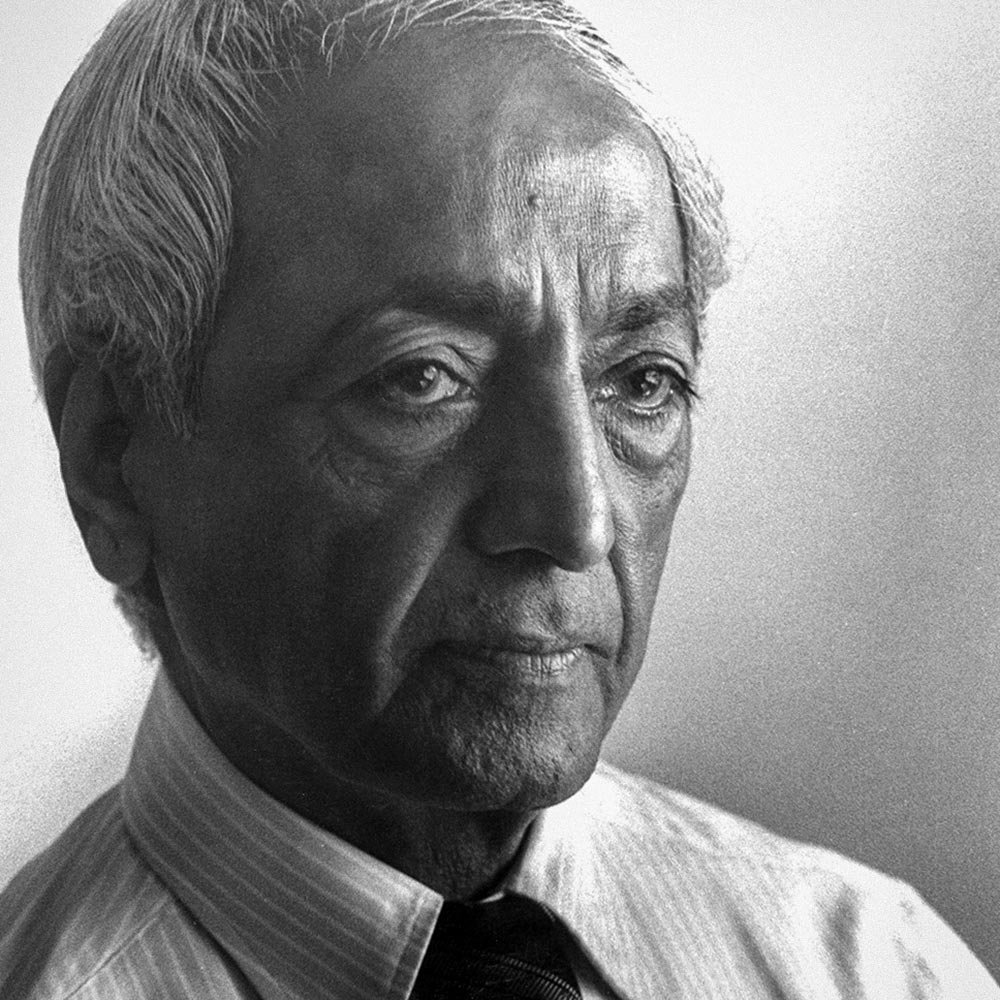
Three-quarters portrait photo of Krishnamurti

The Krishnamurti Foundation

Established in 1968 as a registered charity, and located at The Krishnamurti Centre, Krishnamurti Foundation Trust exists to preserve and make available Krishnamurti’s teachings.

The Foundation serves a global audience by providing worldwide free access to Krishnamurti videos, audio and texts to those who may be interested in pursuing an understanding of Krishnamurti’s work in their own lives.

In describing his intentions for the Foundations, Krishnamurti said: 

The Foundations will see to it that these teachings are kept whole, are not distorted, are not made corrupt.