
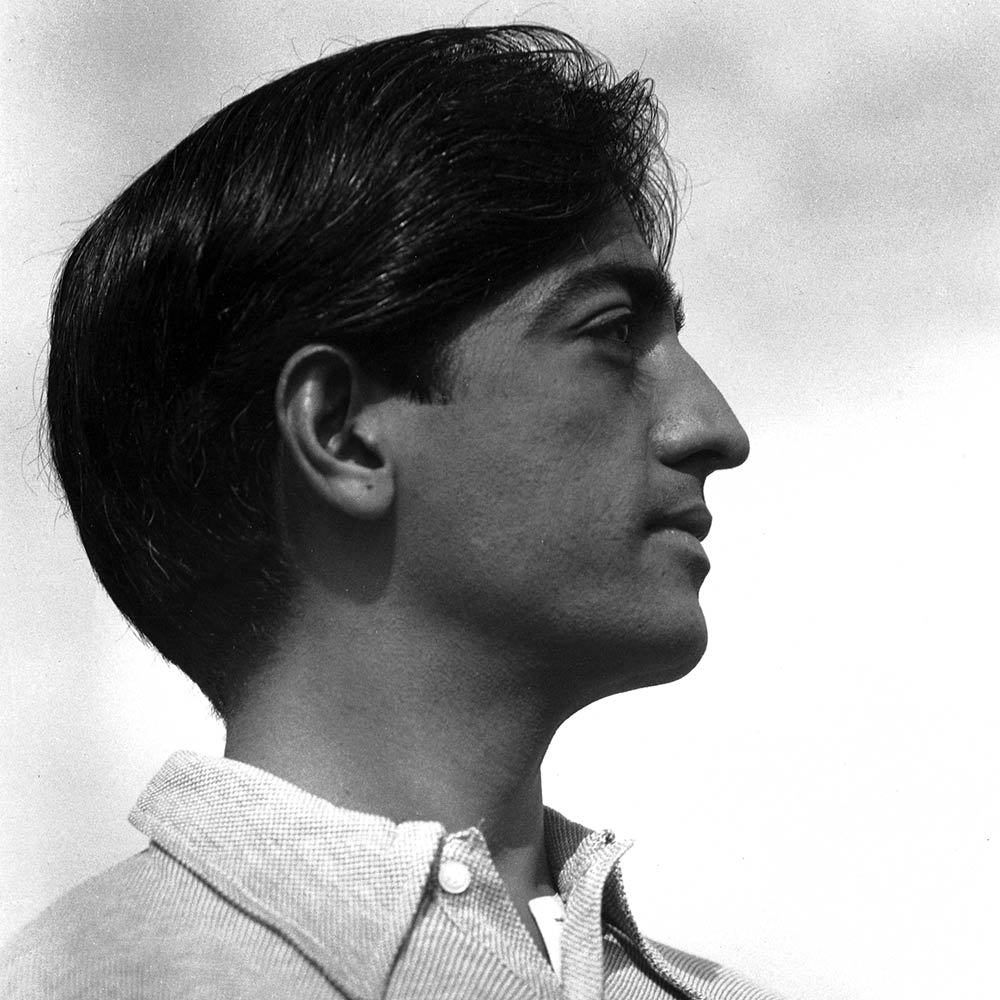
Photo of J. Krishnamurti

How simple it is to be innocent! Without innocence, it is impossible to be happy. The pleasure of sensations is not the happiness of innocence.

Read More

How simple it is to be innocent! Without innocence, it is impossible to be happy. The pleasure of sensations is not the happiness of innocence. Innocence is freedom from the burden of experience. It is the memory of experience that corrupts, and not the experiencing itself. Knowledge, the burden of the past, is corruption. The power to accumulate, the effort to become, destroys innocence, and without innocence, how can there be wisdom? The merely curious can never know wisdom; they will find, but what they find will not be truth. The suspicious can never know happiness, for suspicion is the anxiety of their own being, and fear breeds corruption. Fearlessness is not courage but freedom from accumulation.

Innocence is not lack of experience, but being free of experience.

Read More

It is strange that one can never say, ‘I don’t know’. To really say it and feel it, there must be humility. But one never admits to the fact of never knowing; it is vanity that feeds the mind with knowledge. Vanity is a strange disease, ever hopeful and ever dejected. But to admit to not knowing is to stop the mechanical process of knowing. There are several ways of saying I don’t know: pretence and all its subtle and underhand methods, to impress, to gain importance, and so on. There is the ‘I don’t know’ which is really marking time to find out, and the ‘I don’t know’ which is not searching out to know. The former state never learns; it only gathers and so never learns, and the latter is always in a state of learning, without ever accumulating. There must be freedom to learn, and so the mind can remain young and innocent; accumulation makes the mind decay, grow old and wither. Innocence is not the lack of experience but to be free of experience; this freedom is to die to every experience and not let it take root in the soil of the enriching brain.

The mind can discover only when it is young, fresh and innocent; but innocence is not a matter of age.

Krishnamurti, Think on These Things

Read More

What is age? Is it the number of years you have lived? That is part of age: your body grows old, and so does your mind when it is burdened with all the experiences, miseries and weariness of life. Such a mind can never discover what truth is. The mind can discover only when it is young, fresh and innocent; but innocence is not a matter of age. It is not only the child that is innocent – they may not be – but the mind that is capable of experiencing without accumulating the residue of experience. The mind must experience: that is inevitable. It must respond to everything, otherwise it is already dead; but it must be capable of responding without being held by the experience. It is tradition, the accumulation of experience, the ashes of memory, that make the mind old. The mind that dies every day to the memories of yesterday, to all the joys and sorrows of the past, such a mind is fresh, innocent; it has no age. Without that innocence, whether you are 10 or 60, you will not find God.

Thought can never bring about innocence and humility, yet it is innocence and humility that keep the mind young, sensitive and incorruptible.

Read More

A life based on thought and its activities becomes mechanical. However smoothly it may run, it is still mechanical action. Action with motive dissipates energy, so disintegration sets in. All motives generate from the known. A life of the known, though projected into the future as the unknown, is decay; in that life there is no renewal. Thought can never bring about innocence and humility, yet it is innocence and humility that keep the mind young, sensitive and incorruptible. Freedom from the known is the ending of thought. To die to thought, from moment to moment, is to be free from the known. It is this death that puts an end to decay.

Thought is never innocent.

Krishnamurti, The Only Revolution

Read More

The mind can never be made innocent through experience. It is the negation of experience that brings about that positive state of innocence which cannot be cultivated by thought. Thought is never innocent. Meditation is the ending of thought, not by the meditator, for the meditator is the meditation. If there is no meditation, you are like a blind man in a world of great beauty, light and colour. Wander by the seashore and let this meditative quality come upon you. If it does, don’t pursue it. What you pursue will be the memory of what it was – and ‘what was’ is the death of ‘what is’. Or when you wander among the hills, let everything tell you the beauty and the pain of life, so that you awaken to your own sorrow and to the ending of it. Meditation is the root, the plant, the flower and the fruit.

Innocence means to have no resistance of any kind. This innocence is destroyed when there is will, desire and the pleasure that comes about when the mind is a slave to the verb ‘to be’.

Read More

Meditation is the setting aside of all the conditioning imposed on the mind for centuries. It is freeing the heart of all the wounds of many years. Then only one begins to understand the true nature of meditation, which brings about innocence. Innocence means to be utterly incapable of being wounded. Innocence means to have no resistance of any kind. This innocence is destroyed when there is will, desire and the pleasure that comes about when the mind is a slave to the verb ‘to be’. ‘To be’ is to have; ‘to be’ has conditioned the mind; the word itself has forced the mind and brain to conform to the pattern set by the word. Meditation is freeing the mind of the past and the future, and this is not possible when the mind is caught in the verb ‘to be’, that is, when there is the emphasis of the ‘I am’ or the rule of the past over the present, which shapes the future. All this is the outcome of the word and the verb ‘to be’, which establishes the ‘I am’. When there is ‘I am’ there is no meditation.

The word ‘innocence’ means an inability to be hurt.

Krishnamurti, Meeting Life

Read More

As the crisis is extraordinary, you must have a new mind, a new heart, a new quality in the mind, a new freshness, an innocence. The word ‘innocence’ means an inability to be hurt. It is not a symbol, it is not an idea; it is actually to find out if your mind is capable of not being hurt by any event, by any psychological strain, pressure or influence, so that it is completely free. If there is any form of resistance, it is not innocence. It must be a mind that is capable of looking at this crisis as though for the first time, with a fresh mind, a young mind, yet not a mind that is in revolt.

Not to hurt and not to be hurt, that is the innocence of the heart.

Read More

Intelligence comes into being when the mind, the heart, and the body are harmonious. Therefore, the body must be highly sensitive. Not gross, not overindulging in eating, drinking, sex, and all the rest that makes the body coarse, dull, heavy. The very seeing the fact of that makes you eat less and gives the body its own intelligence. If there is an awareness of the body, which is not being forced, then the body becomes very, very sensitive, like a beautiful instrument. The same with the heart; that is, it is never hurt and can never hurt another. Not to hurt and not to be hurt, that is the innocence of the heart. A mind which has no fear, which demands no pleasure – not that you cannot enjoy the beauty of life, the beauty of trees, a beautiful face, the flow of water, the mountains and the green pastures – there is great delight in that, but that delight, when pursued by thought, becomes pleasure. The mind has to be empty to see clearly.

To be free of all authority, your own and that of another, is to die to everything of yesterday, so that your mind is always fresh, always young, innocent, full of vigour and passion.

Read More

You had an experience yesterday which taught you something. What it taught you becomes a new authority – and that authority of yesterday is as destructive as the authority of a thousand years. To understand ourselves needs no authority, either of yesterday or of a thousand years, because we are living things, always moving, flowing, never resting. When we look at ourselves with the dead authority of yesterday, we will fail to understand the living movement and the beauty and quality of that movement. To be free of all authority, your own and that of another, is to die to everything of yesterday, so that your mind is always fresh, always young, innocent, full of vigour and passion. It is only in that state that one learns and observes. And for this, a great deal of awareness is required, actual awareness of what is going on inside yourself.

When the mind renews itself without forming new patterns, habits or falling into the groove of imitation, it remains fresh, young, innocent, and is therefore capable of infinite understanding.

Krishnamurti, Think on These Things

Read More

The mind is the result of habit. It is the result of tradition, the result of time – time being repetition, a continuity of the past. Can the mind, your mind, stop thinking in terms of what has been and of what will be? Can your mind be free from habits and from creating habits? If you go into this problem very deeply, you will find that it can; and when the mind renews itself without forming new patterns, habits or falling into the groove of imitation, it remains fresh, young, innocent, and is therefore capable of infinite understanding. For such a mind there is no death because there is no longer a process of accumulation. It is the process of accumulation that creates habit and imitation, and for the mind that accumulates there is deterioration and death. But a mind that is not accumulating, not gathering, that is dying each day, each minute, for such a mind there is no death. It is in a state of infinite space.

Innocence alone can be passionate.

Krishnamurti, Meeting Life

Read More

Innocence alone can be passionate. The innocent have no sorrow, no suffering, though they have had a thousand experiences. It is not the experiences that corrupt the mind but what they leave behind, the residue, the scars, the memories. These accumulate, pile up one on top of the other, and then sorrow begins. This sorrow is time. Where time is, innocence is not. Passion is not born of sorrow. Sorrow is experience, the experience of everyday life, the life of agony and fleeting pleasures, fears and certainties. You cannot escape from experiences, but they need not take root in the soil of the mind. These roots give rise to problems, conflicts and constant struggle. There is no way out of this but to die each day to every yesterday. The clear mind alone can be passionate. Without passion, you cannot see the breeze among the leaves or the sunlight on the water. Without passion there is no love.

It is only the innocent mind – in spite of its thousand experiences – that can see what truth is.

Krishnamurti, The Only Revolution

Read More

You are quite young. Don’t ever lose your innocence and the vulnerability that it brings. That is the only treasure that you can have, and must have. You can’t be vulnerable without innocence, and though you have a thousand experiences, a thousand smiles and tears, if you don’t die to them, how can the mind be innocent? It is only the innocent mind – in spite of its thousand experiences – that can see what truth is. And it is only truth that makes the mind vulnerable, that is, free. Innocence can only be with the death of yesterday. But we never die to yesterday. We always have a remnant, a tattered part of yesterday remaining, and it is this that keeps the mind anchored, held by time. So time is the enemy of innocence. One must die every day to everything that the mind has captured and holds on to. Otherwise, there is no freedom. In freedom is vulnerability. It is not one thing after the other – it is all one movement, both the coming and the going. It is really the fullness of heart that is innocent.

The innocent mind implies that whole in which are the body, heart, brain and mind. This innocent mind, which is never touched by thought, can see what truth is.

Read More

If you watch the movement of thought in action during the day, you realise that it is breeding problems. Problems are things that are incomplete, which have to be carried over. But if you watch with a brain that is fairly quiet, you will see that action becomes complete, instantaneous; there is no carrying over of a problem, no carrying over of the insult or the praise – it is finished. Then, during sleep, the brain is no longer carrying on the old activities of the day; it has complete rest. As the brain is quiet in sleep, there takes place a rejuvenation of its whole structure. A quality of innocence comes into being—and the innocent mind can see what is true; not the complicated mind, not that of the philosopher or the priest. The innocent mind implies that whole in which are the body, heart, brain and mind. This innocent mind, which is never touched by thought, can see what truth is; it can see if there is something beyond measure. That is meditation.

Only the innocent mind knows what love is, and the innocent mind can live in the world which is not innocent.

Read More

Love is something new, fresh, alive. It has no yesterday and no tomorrow. It is beyond the turmoil of thought. Only the innocent mind knows what love is, and the innocent mind can live in the world which is not innocent. To find this extraordinary thing which man has sought endlessly through sacrifice, through worship, through relationship, through sex, through every form of pleasure and pain, is only possible when thought comes to understand itself and comes naturally to an end. Then love has no opposite, then love has no conflict.

Meditation cannot be learnt from another. You must begin without knowing anything about it and move from innocence to innocence.

Krishnamurti, Meditations

Read More

A peculiar thing takes place in meditation, which no drug or self-hypnosis can bring about. It is as though the mind enters into itself, beginning at the surface and penetrating ever more deeply, until depth and height have lost their meaning and every form of measurement ceases. In this state is complete peace – not contentment which has come about through gratification, but a peace that has order, beauty and intensity. It can all be destroyed, as you can destroy a flower, and yet because of its very vulnerability it is indestructible. This meditation cannot be learnt from another. You must begin without knowing anything about it and move from innocence to innocence. The soil in which the meditative mind can begin is the soil of everyday life, the strife, the pain and the fleeting joy. It must begin there, and bring order, and from there move endlessly.

These quotes only touch on the many subjects Krishnamurti inquired into during his lifetime. His timeless and universal teachings can be explored using the Index of Topics where you will find texts, audio and video related on many themes. Another option is to browse our selection of curated articles or more short quotes. Krishnamurti’s reply when asked what lies at the heart of his teachings can be found here. Many Krishnamurti books are available, a selection of which can be explored here. To find out more about Krishnamurti’s life, please see our introduction and the biography. We also host a weekly podcast, and offer free downloads. Please visit our YouTube channel for hundreds of specially selected shorter clips. Below, you can learn more about Krishnamurti and our charity which he founded in 1968.
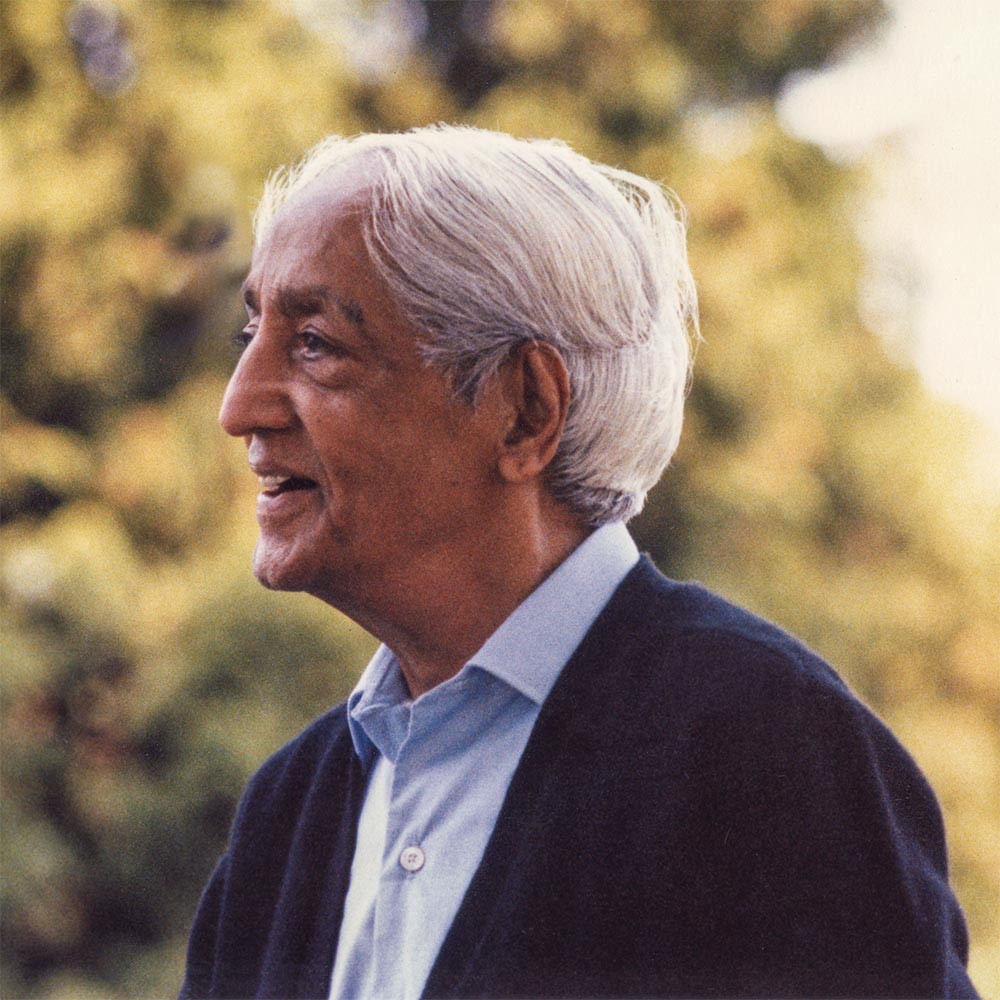
Krishnamurti outdoors smiling

Who Was Krishnamurti?

J. Krishnamurti (1895-1986) is widely regarded as one of the greatest thinkers and religious teachers of all time. He spoke throughout the world to large audiences and to individuals, including writers, scientists, philosophers and educators, about the need for a radical change in mankind. Referring to himself, Krishnamurti said:

He is acting as a mirror for you to look into. That mirror is not an authority. It has no authority, it’s just a mirror. And when you see it clearly, understand what you see in that mirror, then throw it away, break it up.

Krishnamurti was concerned with all humanity and held no nationality or belief and belonged to no particular group or culture. In the latter part of his life, along with continuing to give public talks, he travelled mainly between the schools he had founded in India, Britain and the United States, which educate for the total understanding of man and the art of living. He stressed that only this profound understanding can create a new generation that will live in peace.

Krishnamurti reminded his listeners again and again that we are all human beings first and not Hindus, Muslims or Christians, that we are like the rest of humanity and are not different from one another. He asked that we tread lightly on this earth without destroying ourselves or the environment. He communicated to his listeners a deep sense of respect for nature. His teachings transcend man-made belief systems, nationalistic sentiment and sectarianism. At the same time, they give new meaning and direction to mankind’s search for truth. His teaching is timeless, universal and increasingly relevant to the modern age.

I am nobody. It is as simple as that. I am nobody. But what is important is who you are, what you are.

Krishnamurti

Krishnamurti spoke not as a guru but as a friend. His talks and discussions are based not on tradition-based knowledge but on his own insights into the human mind and his vision of the sacred, so he always communicated a sense of freshness and directness, although the essence of his message remained unchanged over the years. When Krishnamurti addressed large audiences, people felt that he was talking to each of them personally, addressing their own particular problem. In his private interviews, he was a compassionate teacher, listening attentively to those who came to him in sorrow, and encouraging them to heal themselves through their own understanding. Religious scholars found that his words threw new light on traditional concepts. Krishnamurti took on the challenge of modern scientists and psychologists and went with them step by step, discussing their theories and sometimes enabling them to discern the limitations of their theories.

Krishnamurti left a large body of literature in the form of public talks, writings, discussions with teachers and students, scientists, psychologists and religious figures, conversations with individuals, television and radio interviews, and letters. Many of these have been published as books, in over 60 languages, along with hundreds of audio and video recordings.
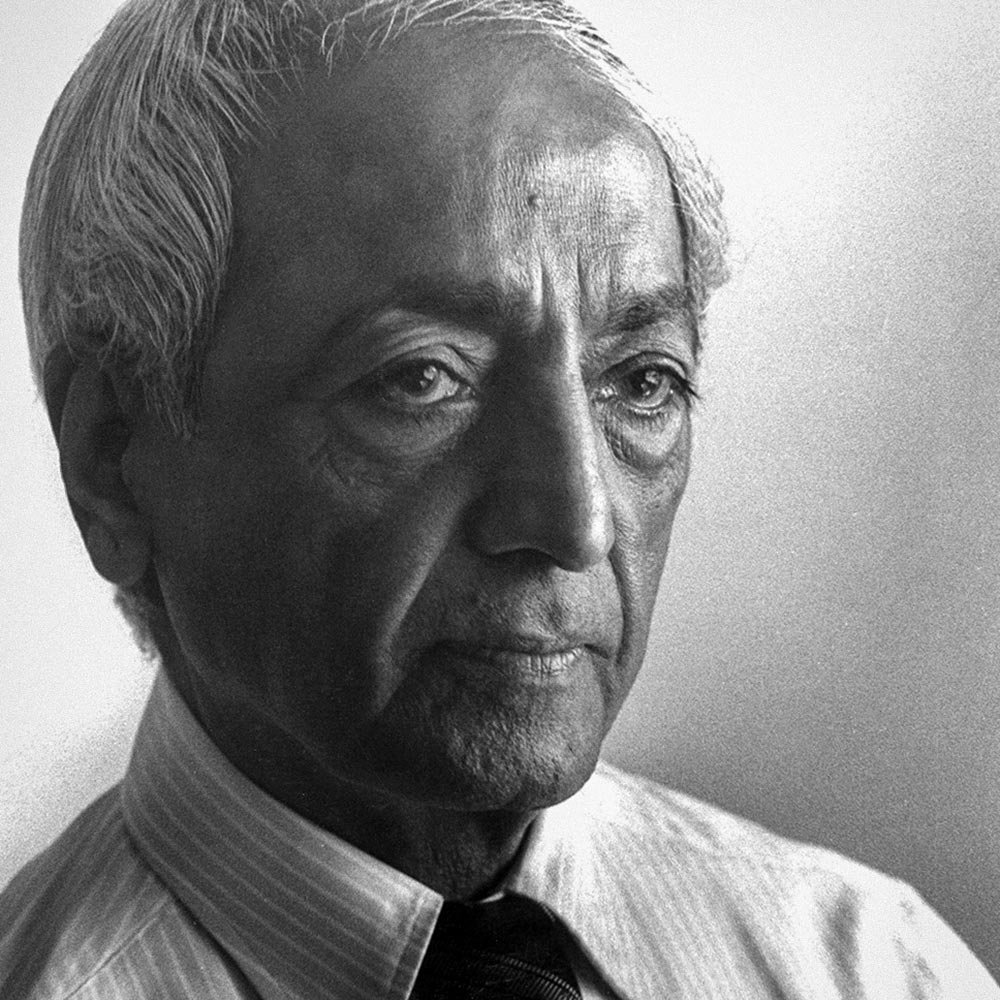
Three-quarters portrait photo of Krishnamurti

The Krishnamurti Foundation

Established in 1968 as a registered charity, and located at The Krishnamurti Centre, Krishnamurti Foundation Trust exists to preserve and make available Krishnamurti’s teachings.

The Foundation serves a global audience by providing worldwide free access to Krishnamurti videos, audio and texts to those who may be interested in pursuing an understanding of Krishnamurti’s work in their own lives.

In describing his intentions for the Foundations, Krishnamurti said: 

The Foundations will see to it that these teachings are kept whole, are not distorted, are not made corrupt.