
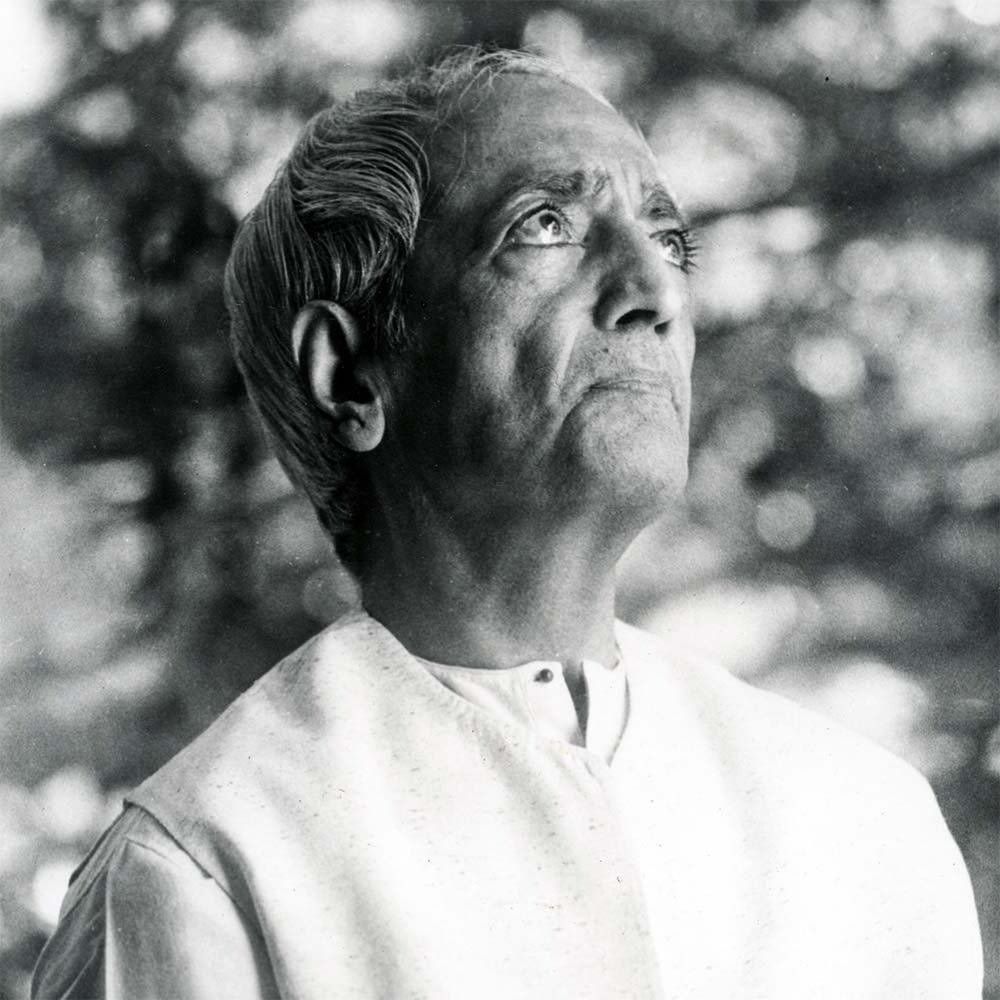
Photo of J. Krishnamurti

We never see the world as a whole because we are so fragmented, so terribly limited, so petty. We never have the feeling of wholeness, where the things of the sea, the things of the earth, nature, the sky, the universe, are part of us.

Krishnamurti, This Light in Oneself

Read More

We never see the world as a whole because we are so fragmented, so terribly limited, so petty. We never have the feeling of wholeness, where the things of the sea, the things of the earth, nature, the sky, the universe, are part of us. Not imagined – you can go off into some kind of fancy and imagine that you are the universe, and then you become cuckoo. But break down this small, self-centred interest, have nothing of that, and from there you can move infinitely. And meditation is this, not sitting cross-legged, or standing on your head, or doing whatever one does, but having the feeling of the complete wholeness and unity of life. And that can come only when there is love and compassion.

There is the ceaseless pursuit of fulfilment, in whose very shadow is frustration; so we never know or experience wholeness of being.

Read More

One part of the mind struggles against another part, one desire against another desire. The hidden mind is in conflict with the open; violence is attempting to become non-violent. Frustration is followed by hope, fulfilment and another frustration. That is all we know. There is the ceaseless pursuit of fulfilment, in whose very shadow is frustration; so we never know or experience wholeness of being. The body is against feeling; feeling is against thought; thought is pursuing ‘what should be’, the ideal. We are broken up into fragments, and by bringing the various fragments together, we hope to make the whole. Is it ever possible to do this?

Thought is incomplete and can never become complete. It can think about completeness; it can think about wholeness, but thought itself is not whole.

Krishnamurti, Questions and Answers

Read More

Thought is always particular, limited, divisive. In itself, it is incomplete and can never become complete. It can think about completeness; it can think about wholeness, but thought itself is not whole. Whatever thought creates, philosophically or religiously, is still partial, limited, fragmentary and is part of ignorance. Knowledge can never be complete; it must always go hand in hand with ignorance. If you understand the nature of thought and understand what concentration is, you will realise that thought cannot attend because attention is the giving of all your energy without any limitation or restraint of thought.

The brain has been trained for thousands of years to inhibit, to control, and now it never operates with the wholeness of itself.

Read More

The brain has been trained for thousands of years to inhibit, to control, and now it never operates with the wholeness of itself. See for yourself what your brain is doing; watch it in operation, rationally. Critically examine it in a way in which there is no deception or hypnosis. Most of the meditations that have been put forward involve control: control thought so that you have a mind that is at peace, that is quiet, that is not eternally chattering. Silence, quietness and the absolute stillness of the mind and brain are necessary in order to perceive. To achieve this, these forms of meditation, however subtle, have control as their basis. Alternatively, you hand yourself over to a guru, or to an ideal and you forget yourself because you have given yourself over to something and therefore you are at peace. But again it is the movement of thought, desire and the excitement of attaining something you have been offered.

There is neither the outer nor the inner but only the whole. The experiencer is the experienced. Fragmentation is insanity. This wholeness is not merely a word; it is when the division as the outer and the inner utterly ceases.

Read More

The word is not the thing; the image, the symbol is not the real. Reality, truth, is not a word. To put it into words wipes it away and illusion takes its place. The intellect may reject the whole structure of ideology, belief and all the trappings and power that go with them, but reason can justify any belief, any ideation. Reason is the order of thought, and thought is the response of the outer. Because it is the outer, thought puts together the inner. No man can ever live only with the outer, and the inner becomes a necessity. This division is the ground on which the battle of ‘me’ and ‘not me’ takes place. The outer is the god of religions and ideologies; the inner tries to conform to those images, and conflict ensues. There is neither the outer nor the inner but only the whole. The experiencer is the experienced. Fragmentation is insanity. This wholeness is not merely a word; it is when the division as the outer and the inner utterly ceases. The thinker is the thought.

We are the whole of humanity; we are the rest of mankind.

Read More

You are the rest of humanity, psychologically, deeply. Your reactions are shared by all humanity. Your brain is not yours; it has evolved over centuries. You may be conditioned as a Christian, believe in various dogmas and rituals; another has their own god, their own rituals, but all this is put together by thought. Question deeply whether there is an individual at all. We are the whole of humanity; we are the rest of mankind.

When you know how to love one, you know how to love the whole.

Read More

Love is not quantitative but qualitative. You do not say, ‘I love the whole world,’ but when you know how to love one, you know how to love the whole. Because we do not know how to love one, our love for humanity is fictitious. When you love, there is neither one nor many: there is only love. It is only when there is love that all our problems can be solved.

Everything on this beautiful earth lives, dies, comes into being and withers away. To grasp this whole movement of life requires the intelligence of love and compassion.

Read More

Everything on this beautiful earth lives, dies, comes into being and withers away. To grasp this whole movement of life requires intelligence, not the intelligence of thought, books or knowledge, but the intelligence of love and compassion with its sensitivity. If the educator understands the significance of death and the dignity of it, the extraordinary simplicity of dying, they may be able to convey to the student that dying, the ending, is not to be avoided, is not something to be frightened of, for it is part of one’s whole life. So as the student grows up, they will never be frightened of the ending. If all the human beings who have lived before us, past generations upon generations, still lived on this earth, how terrible it would be. The beginning is not the ending.

The activity of wholeness is intelligence.

Read More

Krishnamurti: We are trying to find out what is the relationship, in action, of thought and intelligence. Because everything is action or inaction. And what is the relationship of all that to intelligence? Thought does produce chaotic action, fragmentary action.
David Bohm: When it is not ordered by intelligence.
Krishnamurti: Of course. And it is not ordered by intelligence in the way we all live. It is fragmented activity, therefore it is not an activity of a wholeness. The activity of wholeness is intelligence.

Sanity means health, wholeness and also holiness. In this state, there is no imbalance. This is freedom.

Read More

Freedom is a word that is so loosely used that it no longer has real significance. Though we talk about it endlessly in school and college, politically and religiously, we really don’t want freedom. What we want is complete security in all our ways of life. We revolt against authority, but we are really rebelling to express our demand for identity and action. Freedom is really a dangerous thing. It is freedom from the total misery and confusion that exists both inwardly and outwardly. The total denial of the structure of ideas and action based on those ideas is freedom. It is not an expression of rampant individual selfishness. The denial of that too, not verbally but actually, is freedom. To stand alone without isolating oneself is sanity. Sanity means health, wholeness and also holiness. In this state there is no imbalance. This is freedom.

In freedom is the movement of learning, acting and meditation as a harmonious whole. The word ‘whole’ means not only healthy but holy.

Read More

Learning is far more important than meditation or action. To learn, there must be freedom, complete freedom, not only consciously but deeply, inwardly, a total freedom. And in freedom is the movement of learning, acting and meditation as a harmonious whole. The word ‘whole’ means not only healthy but holy. So learning is holy, acting is holy, meditation is holy. This is really a sacred thing, and the beauty of it is in itself, not beyond it.

Meditation is the sense of total comprehension of the whole of life, and from that comes right action.

Krishnamurti, What is Meditation?

Read More

Meditation is the sense of total comprehension of the whole of life, and from that comes right action. Meditation is the absolute silence of the mind, not a relative silence or a silence that thought has projected and structured. It is the silence of order, which is freedom. Only in that total, complete, unadulterated silence is truth, which is everlasting from everlasting. This is meditation.

Wholeness of the mind is infinite capacity and total emptiness in which there is immeasurable energy.

Read More

Thought may be the central factor of the degeneration of the mind, whereas insight opens the door to the wholeness of action. We must consider whether thought is destructive to the wholeness of the mind. We have made the statement that it is; but do not accept it until you have thoroughly, freely examined it. What we mean by wholeness of the mind is infinite capacity and total emptiness in which there is immeasurable energy.

That which is eternally timeless, sacred, comes about only when the brain is totally free to function in wholeness.

Read More

Meditation, love and compassion are the operation of the whole of the brain. When there is the operation of the whole, there is integral order. When there is integral, inward order, there is total freedom. It is only then that there can be something which is timelessly sacred. That is not a reward, not something to be achieved. That which is eternally timeless, sacred, comes about only when the brain is totally free to function in wholeness.

Apparently, it is one of the most difficult things to have an abiding, intense passion given over to the understanding of the wholeness of life.

Read More

One wonders why human beings throughout the world lack passion. They lust after power, position and various forms of entertainment, both sexual and religious, and have other forms of lustful cravings. But apparently few have that deep passion which dedicates itself to the understanding of the whole process of living, not giving their whole energy to fragmentary activity. The bank manager is tremendously interested in banking, and the artist and the scientist are given over to their own special interests, but apparently it is one of the most difficult things to have an abiding, intense passion given over to the understanding of the wholeness of life.

These quotes only touch on the many subjects Krishnamurti inquired into during his lifetime. His timeless and universal teachings can be explored using the Index of Topics where you will find texts, audio and video related on many themes. Another option is to browse our selection of curated articles or more short quotes. Krishnamurti’s reply when asked what lies at the heart of his teachings can be found here. Many Krishnamurti books are available, a selection of which can be explored here. To find out more about Krishnamurti’s life, please see our introduction and the biography. We also host a weekly podcast, and offer free downloads. Please visit our YouTube channel for hundreds of specially selected shorter clips. Below, you can learn more about Krishnamurti and our charity which he founded in 1968.
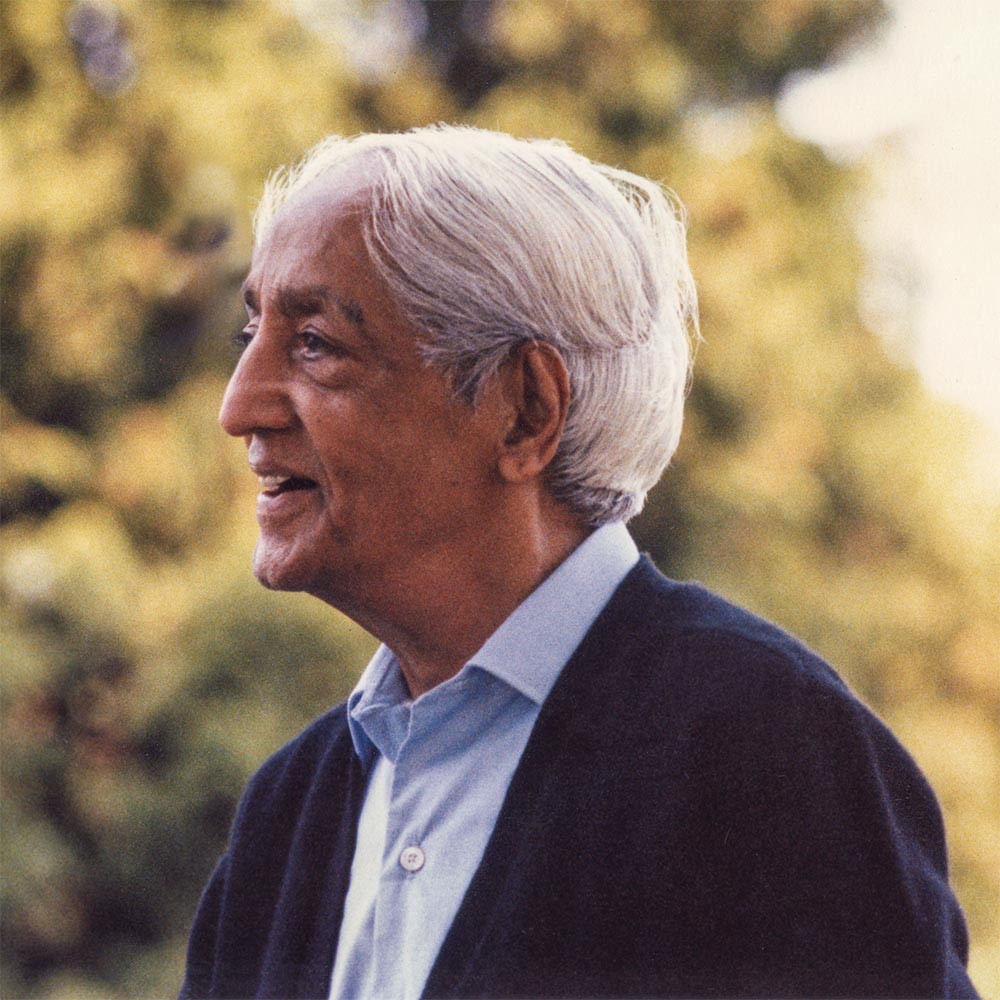
Krishnamurti outdoors smiling

Who Was Krishnamurti?

J. Krishnamurti (1895-1986) is widely regarded as one of the greatest thinkers and religious teachers of all time. He spoke throughout the world to large audiences and to individuals, including writers, scientists, philosophers and educators, about the need for a radical change in mankind. Referring to himself, Krishnamurti said:

He is acting as a mirror for you to look into. That mirror is not an authority. It has no authority, it’s just a mirror. And when you see it clearly, understand what you see in that mirror, then throw it away, break it up.

Krishnamurti was concerned with all humanity and held no nationality or belief and belonged to no particular group or culture. In the latter part of his life, along with continuing to give public talks, he travelled mainly between the schools he had founded in India, Britain and the United States, which educate for the total understanding of man and the art of living. He stressed that only this profound understanding can create a new generation that will live in peace.

Krishnamurti reminded his listeners again and again that we are all human beings first and not Hindus, Muslims or Christians, that we are like the rest of humanity and are not different from one another. He asked that we tread lightly on this earth without destroying ourselves or the environment. He communicated to his listeners a deep sense of respect for nature. His teachings transcend man-made belief systems, nationalistic sentiment and sectarianism. At the same time, they give new meaning and direction to mankind’s search for truth. His teaching is timeless, universal and increasingly relevant to the modern age.

I am nobody. It is as simple as that. I am nobody. But what is important is who you are, what you are.

Krishnamurti

Krishnamurti spoke not as a guru but as a friend. His talks and discussions are based not on tradition-based knowledge but on his own insights into the human mind and his vision of the sacred, so he always communicated a sense of freshness and directness, although the essence of his message remained unchanged over the years. When Krishnamurti addressed large audiences, people felt that he was talking to each of them personally, addressing their own particular problem. In his private interviews, he was a compassionate teacher, listening attentively to those who came to him in sorrow, and encouraging them to heal themselves through their own understanding. Religious scholars found that his words threw new light on traditional concepts. Krishnamurti took on the challenge of modern scientists and psychologists and went with them step by step, discussing their theories and sometimes enabling them to discern the limitations of their theories.

Krishnamurti left a large body of literature in the form of public talks, writings, discussions with teachers and students, scientists, psychologists and religious figures, conversations with individuals, television and radio interviews, and letters. Many of these have been published as books, in over 60 languages, along with hundreds of audio and video recordings.
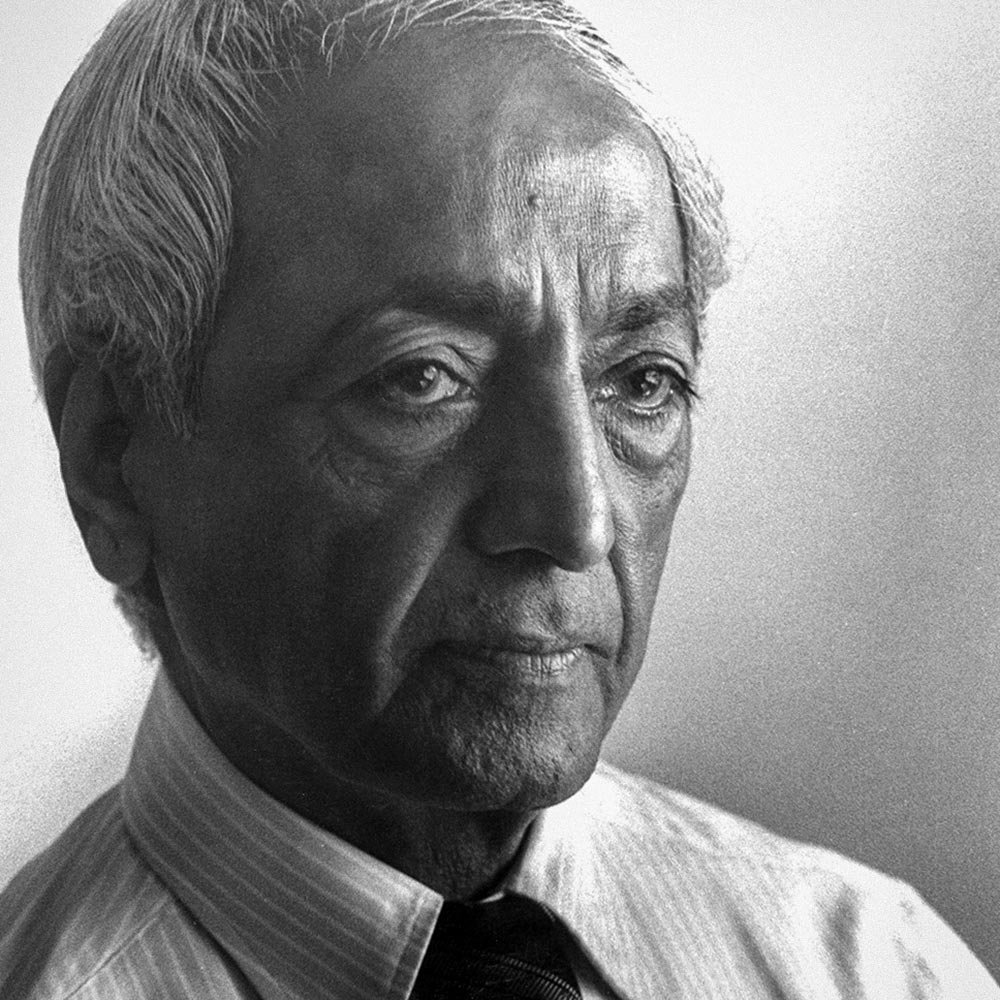
Three-quarters portrait photo of Krishnamurti

The Krishnamurti Foundation

Established in 1968 as a registered charity, and located at The Krishnamurti Centre, Krishnamurti Foundation Trust exists to preserve and make available Krishnamurti’s teachings.

The Foundation serves a global audience by providing worldwide free access to Krishnamurti videos, audio and texts to those who may be interested in pursuing an understanding of Krishnamurti’s work in their own lives.

In describing his intentions for the Foundations, Krishnamurti said: 

The Foundations will see to it that these teachings are kept whole, are not distorted, are not made corrupt.