
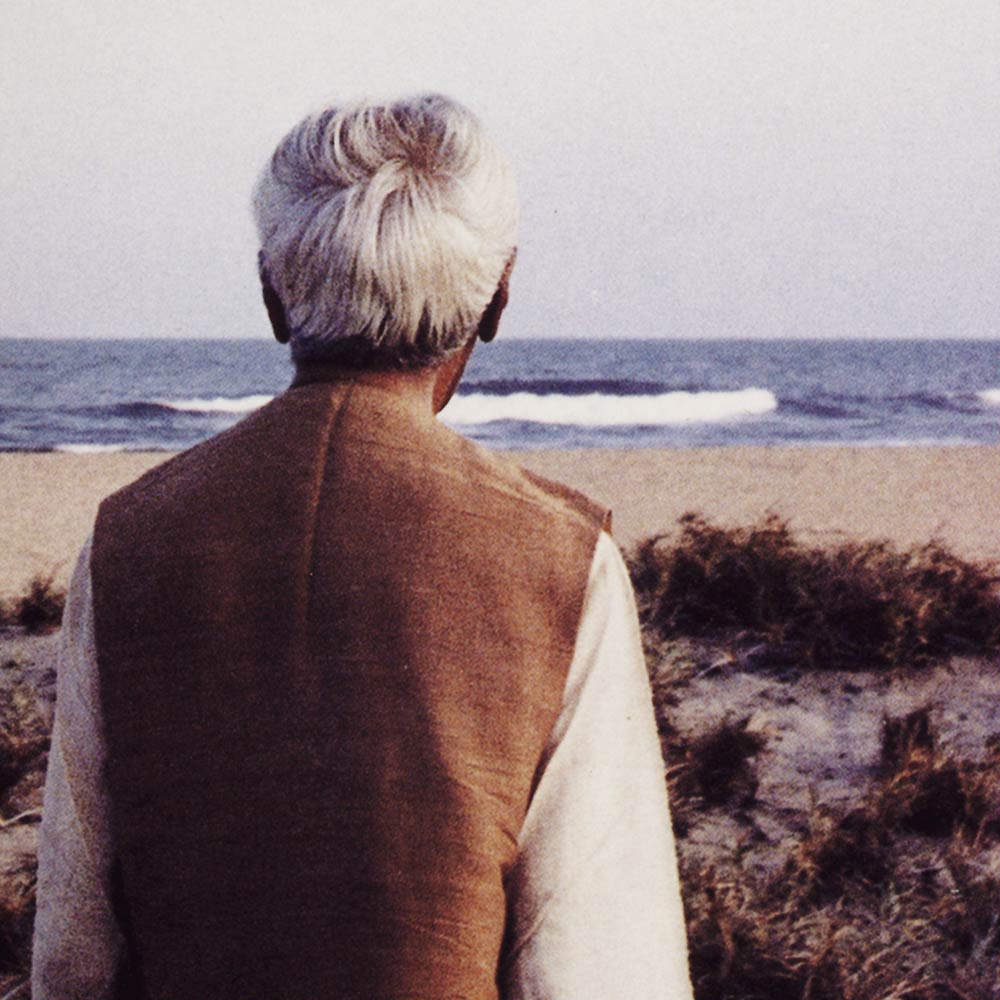
Photo of J. Krishnamurti

Yoga also means skill in action, not just doing a few exercises.

Read More

We worship the intellect. The clever person who passes exams brilliantly is the most respected. Intellectually they are sharp, alive, good at their subject; playing games and doing anything in the garden is a bore to them. See how important it is that we should not only have a good brain but also that we should be able to do things – to garden, cook, wash up – not be one-sided. Intelligence implies being able to do things, not to say, ‘I don’t like gardening, it bores me, I only like to study’ – that is a lopsided way of living. I propose that we should not only have really first-class brains – be able to think logically, sanely, dispassionately, not personally – but also have skill in action. You know yoga? That word also means skill in action, not just doing a few exercises. How are you going to have that skill in action, through practice? That means doing things. I would like to suggest that everyone here – I have done a great deal of it in my life – should do some kind of work with the earth: gardening, planting, tending it, looking after it, caring for it. That gives you an opportunity to care for something. Have you ever dug the soil? You get in touch with the earth. I propose that there should be not only intellectual activity of the highest order, but also a great deal of intense, active, clear thinking, working, studying at the highest level. And also to have skill in action.

I generally do two hours of yoga every day, but this morning I was tired. I had prepared the mat and everything to do yoga exercises, and the body said, ‘No, sorry.’ I said, ‘All right,’ and went back to bed. That is not laziness.

Read More

The body has its own intelligence; it knows when it is tired and should rest. I generally do two hours of yoga every day, but this morning I was tired. I had prepared the mat and everything to do yoga exercises, and the body said, ‘No, sorry.’ I said, ‘All right,’ and went back to bed. That is not laziness. The body said, ‘Leave me alone because you talked yesterday, you saw many people, you walked yesterday and you are tired.’ Thought then says, ‘You must get up and do the exercises because it is good for you, you have done it every day, it has become a habit; don’t relax, you will get lazy, keep at it.’ Which means thought is making me lazy, not the body.

Yoga exercises were invented to keep the body healthy and thereby to have a very active, clear mind. The practice of certain exercises – asanas and so on – does keep the glands healthy.

Read More

Hatha yoga was invented about 3,000 years ago. I was told this by a man who had studied the whole thing very carefully. At that time, the rulers of the land had to keep their brains and their thoughts very clear, so they chewed some kind of leaf from the Himalayan mountains. As time went on, the plant died out, so they had to invent a method by which the various glands in the human system could be kept healthy and vigorous. So they invented yoga exercises to keep the body healthy and thereby to have a very active, clear mind. The practice of certain exercises – asanas and so on – does keep the glands healthy and active. They also found that the right kind of breathing helps, not to achieve enlightenment, but to keep the mind, the brain cells, supplied with sufficient air so they function well. Then all the exploiters came along and said: If you do all these things, you will have a quiet, silent mind. Their silence is the silence of thought, which is corruption and therefore death. They said: this way you will awaken various centres and you will experience enlightenment. Of course, our minds are so eager, so greedy, wanting more experiences, wanting to be better than somebody else, better looking, to have a better body, so we fall into that trap.

The word ‘yoga’ means to join together. The very words ‘join together’ are wrong; they imply duality.

Read More

Find out whether one’s body can sit or lie completely still, without any movement, not forced. Can the body and the brain be still? – for they are interrelated psychosomatically. There are various practices to make the body still, but they imply suppression: the body wants to get up and walk, and you insist that it must sit quietly, and the battle begins – wanting to go out and wanting to sit still. The word ‘yoga’ means to join together. The very words ‘join together’ are wrong; they imply duality. Probably yoga, as a particular series of exercises and breathing, was invented in India many thousands of years ago. Its intent is to keep the glands, nerves and whole system functioning healthily, without medicine, and highly sensitive. The body needs to be sensitive, otherwise you cannot have a clear brain.

Yoga exercises are excellent to keep the body healthy, but through them you can never come upon an area where there is no movement of thought – never!

Krishnamurti, Total Freedom

Read More

Yoga exercises are excellent to keep the body healthy, but through them you can never come upon an area where there is no movement of thought – never! Because if you give them all importance, you are not giving importance to the understanding of yourself, which is to be watchful, to be aware, to give attention to what you are doing, every day of your life. That is, to give attention to how you speak and what you say, to what you think, how you behave, whether you are attached, whether you are frightened, whether you are pursuing pleasure, and so on – to be aware of the whole movement of thought. If you are really serious about it, you will have established right relationship. When all things about us are chaotic, when the world is going to pieces, as it is, relationship becomes extraordinarily important. When there is the establishing of total relationship, whole relationship – not between you and me, but human relationship with the whole of the world – then you have the basis for meditation.

Yoga,  drugs, drink, all the various stimulants, produce their own results, but they cannot possibly make the mind into that astonishing instrument of inquiry, search and discovery.

Krishnamurti, Collected Works, Vol. 10

Read More

There are new kinds of drugs that give all the things yoga promises. You can take these drugs and become very happy, have a mind that is very quiet, intensely aware of things, people and nature. But surely those are all tricks; they do not help the mind to discover what is true. By taking a drink or one of these pills, or by doing yoga, you can have a certain temporary alleviation, satisfaction, peace, but you will have to keep on taking your drug. Please, those of you who practise yoga, do not merely brush this aside, saying I am prejudiced. This is a very important question: whether you can, through any trick, by taking a pill or practising some method to make the mind quiet, bring about that state of deep comprehension of what is true. I say it cannot be done. Yoga, drugs, drink, all the various stimulants, produce their own results, but they cannot possibly make the mind into that astonishing instrument of inquiry, of search and discovery. We want methods, systems, pills, to make us immediately happy; it is the immediacy we are after. But if we are alert to the whole issue, we shall see that merely to go on asserting that yoga is useful indicates a very shallow mind. The problem is not whether yoga is right or wrong, but whether the mind can be freed from creating a habit and living in that habit. A mind that seeks peace and establishes itself in the routine of peace, is not a peaceful mind; it has merely disciplined itself, compelled itself to conform to a pattern, and such a mind is not a living mind, it is not innocent, fresh. Only the mind that is innocent, fresh, free to discover, is creative.

Yoga has now become a business affair like everything else.

Krishnamurti, Meeting Life

Read More

Yoga has now become a business affair like everything else. There are teachers of yoga all over the world, and they are coining money, as usual. Yet yoga at one time was only taught to the very, very few. Yoga does not mean merely keeping your body healthy, normal, active and intelligent. The word ‘yoga’ in Sanskrit means ‘join together’ – joining the higher and the lower. That is the tradition. There are various forms of yoga, of which the highest form is called raja yoga, the king of yogas. That way of living was concerned not merely with physical wellbeing but also, and much more, with the psyche. There was no discipline, no system, nothing to be repeated day after day. It was to have a brain that was in order, always active, but not chattering: active. It was to have a very deeply ordered moral, ethical and disciplined life, not based on the taking of various vows. Thereby, although the body was kept healthy, it was not of primary importance. What was of primary importance was to have a brain, a mind, a state of wellbeing that was clear and active; not active in the sense of physical movement, but a brain in itself active, alive, full of vitality. But now yoga has become rather shallow, a source of profit, mediocre. The highest yoga is not to be taught to the casual; it is something that you do, perhaps every day, to have perfect awareness of your body.

You can play with it, go to the Himalayas to learn how to breathe and sit properly, do a little bit of yoga and think you have learnt meditation, but that is all rather childish.

Krishnamurti, Beyond Violence

Read More

Meditation requires the highest form of sensitivity, a tremendous quality of silence, not induced, disciplined or cultivated. And that can only come about when we understand, psychologically, how to live, because our life as we live it daily is in conflict; it is a series of conformities, controls, suppressions, and the revolt against all that. There is the question of how to live a life without violence of any kind, for without really understanding and being free from violence, meditation is not possible. You can play with it, go to the Himalayas to learn how to breathe and sit properly, do a little bit of yoga and think you have learnt meditation, but that is all rather childish. To come upon that extraordinary thing called meditation, the mind must be completely free of all sense of violence.

A mind that is hoping, inviting, expecting, can never under any circumstances reach that which is beyond the mind. No path, no yoga, no discipline will lead you to it.

Krishnamurti, Collected Works, Vol. 10

Read More

A mind that is hoping, inviting, expecting, can never under any circumstances reach that which is beyond the mind. No path, no yoga, no discipline will lead you to it. All that the mind can do is to know itself. It must know its own limitations, its motives, feelings, passions, cruelties, the lack of love, and be aware of all its many activities. One must see all that and remain silent, not asking, not begging, not putting out a hand to receive something. If you stretch out your hand, you will remain empty-handed forever. But to know yourself, the unconscious as well as the conscious, is the beginning of wisdom; and knowing yourself in that sense brings freedom – which is not freedom for you to experience reality; the man who is free is not free for something, or from something, he is just free. Then, if that state of reality wishes to come, it will come. But for you to go seeking, it is like a blind man seeking light – you will never find it. The man who understands himself seeks nothing; his mind is limitless, undesirous, and for such a mind the immeasurable can come into being.

No swami, no system of yoga, no religious organisation, no doctrine or belief can lead you to the discovery of truth. Only the free mind can discover.

Krishnamurti, Collected Works, Vol. 10

Read More

Freedom implies harder work than most of us are willing to undertake. We would rather be led than discover, but one cannot be led to truth. Do please understand this very simple fact: no swami, no system of yoga, no religious organisation, no doctrine or belief can lead you to the discovery of truth. Only the free mind can discover. You cannot discover the truth of anything merely by being told what it is, because then the discovery is not yours. If you are told what happiness is, is that happiness? To find out what this life is all about, to know the whole content of it and not just the superficial layers which we call living, to be aware of its joy, its extraordinary depths, its width and beauty, which includes the squalor, misery, strife and degradation – to understand the significance of all that, your mind must be free. If that is clearly understood, your relationship with me and my relationship with you is not based on authority. I cannot lead you to truth, nor can anyone else; you have to discover it every moment of the day as you are living.

Can the unnamable, the unknowable be discovered through knowledge, through a system or method, through yoga, through a path, through various philosophical ideas?

Krishnamurti, Collected Works, Vol. 12

Read More

There is increasing knowledge, facts, how to do things better, and greater insistency on capacity and function. This is all based on knowledge, and so human beings are becoming more and more mechanical. Is that the way of realising or unfolding human freedom? Is that the way to discover something not measured by the mind, the unnameable, the unknowable, to discover that thing man has been seeking for centuries and centuries? Can that be discovered through knowledge, through a system or method, through yoga, through a path, through various philosophical ideas? For me, knowledge has nothing whatever to do with the other. And to discover the other, for the other to be, for the other to come, there must be an innocence of the mind. The mind is not innocent when it is crowded with knowledge. And yet knowledge is worshipped as well as the one who has an astonishing capacity, gift and talent. So it is essential to find out whether knowledge is essential, and to free the mind from knowledge so that it can move, it can fly, it can be in a state of innocence.

Meditation is the most simple, natural thing, like the flow of water, continuous, persistent, whose depth is unknown. It is a living thing and cannot be put into the cage of thought with its schools of yoga, mantras and disciplines.

Read More

The effort, the practice, the gaining of visions, having some powers and collecting a lot of followers – this outward exhibition has nothing to do with meditation. In all this is danger, a hidden ugliness and the coil of secret conceit. Meditation is the most simple, natural thing, like the flow of water, continuous, persistent, whose depth is unknown. It is a living thing and cannot be put into the cage of thought with its schools of yoga, mantras and disciplines. If one would really meditate and know the beauty of it, one must set all this aside as one would put away all poison. This denial is not the action of will or decision but the simple observation of it. Just observe all this without any resistance. That very observation is the movement of meditation.

You may be very learned, quote all the religious books, practise a great many systems of yoga, expound this or that philosophy, show off your erudition, but your mind will still be very small and petty.

Krishnamurti, Collected Works, Vol. 16

Read More

Life is not something outside, something flowing by that we look at. Life is the movement in ourselves, of which we are a part; it is that which we have to understand, unravel, comprehend, love, pursue. We have to imbibe deeply the full significance of it all. Otherwise, our minds remain extraordinarily shallow. You may be very learned, quote all the religious books of the world, practise a great many systems of yoga, expound this or that philosophy, show off your erudition, but your mind will still be very small and petty. And it is that pettiness that has to be understood. In the very understanding of that pettiness, the thing is broken.

When there is no sun, there is darkness, and then the candle and the light of the candle become very important. But when there is the sun, the light, the beauty, the clarity, all these powers, siddhis, chakras, kundalini are like candlelight; they have no value at all. When you have that light, there is nothing else.

Krishnamurti, Inward Revolution

Read More

There are various powers, like clairvoyance, reading somebody’s thought – which is the most disgusting thing to do; it is like reading private letters. There are various powers – you know what I am talking about; you call them siddhis. All these things are like candlelight in the sun. When there is no sun, there is darkness, and then the candle and the light of the candle become very important. But when there is the sun, the light, the beauty, the clarity, then all these powers, siddhis, chakras, kundalini are like candlelight; they have no value at all. When you have that light, there is nothing else. Do realise one thing. You need a good, sane, logical, reasoning mind, not a stupid mind. A dull mind can sit breathing, concentrating on various chakras, playing with kundalini, but it will never come upon that which is timeless, which is real beauty, truth and love. So put aside the candlelight all the gurus and books offer you, and don’t repeat a word that you yourself have not seen the truth of, which you have not tested. Not other people’s sayings, but test your own thinking, question it and find out the truth of it. Then you won’t be a second-hand human being.

One morning, doing some kind of yoga, there was a large shadow at the window. It was a large wild monkey, black-faced with a long, curved tail, its body covered with soft grey hairs. It was probably wondering why that human was so still.

Read More

One morning doing some kind of yoga, there was a large shadow at the window. It was a large wild monkey, black-faced with a long, curved tail, its body covered with soft grey hairs. It was probably wondering why that human was so still. It stretched out a long arm with an open hand. We held hands together for some time, looking at each other in wonderment, without any sense of fear. It was the most wonderful hand that one held, long-fingered, extraordinarily soft, pliable, narrow and warm. Only the palm was rough. It didn’t want to let go, but time intervened and it vanished over the roof, not saying a word of goodbye.

These quotes only touch on the many subjects Krishnamurti inquired into during his lifetime. His timeless and universal teachings can be explored using the Index of Topics where you will find texts, audio and video related on many themes. Another option is to browse our selection of curated articles or more short quotes. Krishnamurti’s reply when asked what lies at the heart of his teachings can be found here. Many Krishnamurti books are available, a selection of which can be explored here. To find out more about Krishnamurti’s life, please see our introduction and the biography. We also host a weekly podcast, and offer free downloads. Please visit our YouTube channel for hundreds of specially selected shorter clips. Below, you can learn more about Krishnamurti and our charity which he founded in 1968.
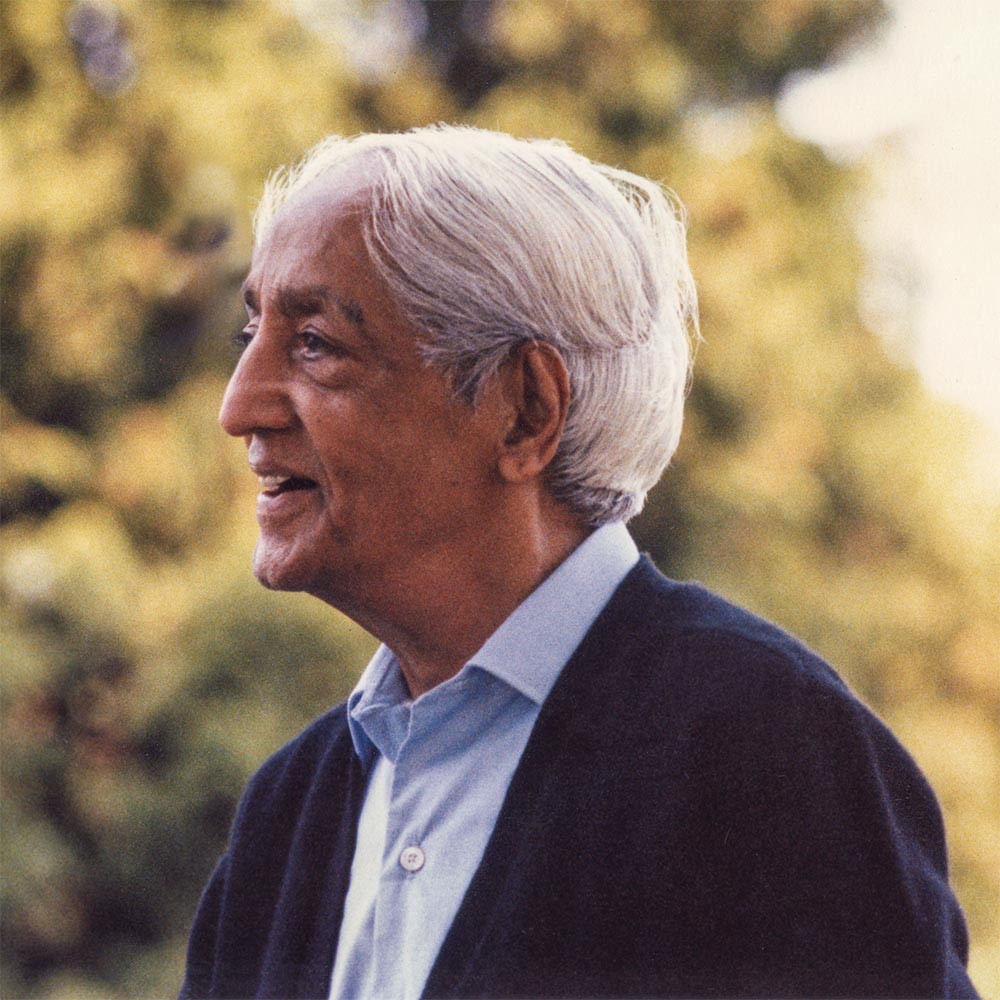
Krishnamurti outdoors smiling

Who Was Krishnamurti?

J. Krishnamurti (1895-1986) is widely regarded as one of the greatest thinkers and religious teachers of all time. He spoke throughout the world to large audiences and to individuals, including writers, scientists, philosophers and educators, about the need for a radical change in mankind. Referring to himself, Krishnamurti said:

He is acting as a mirror for you to look into. That mirror is not an authority. It has no authority, it’s just a mirror. And when you see it clearly, understand what you see in that mirror, then throw it away, break it up.

Krishnamurti was concerned with all humanity and held no nationality or belief and belonged to no particular group or culture. In the latter part of his life, along with continuing to give public talks, he travelled mainly between the schools he had founded in India, Britain and the United States, which educate for the total understanding of man and the art of living. He stressed that only this profound understanding can create a new generation that will live in peace.

Krishnamurti reminded his listeners again and again that we are all human beings first and not Hindus, Muslims or Christians, that we are like the rest of humanity and are not different from one another. He asked that we tread lightly on this earth without destroying ourselves or the environment. He communicated to his listeners a deep sense of respect for nature. His teachings transcend man-made belief systems, nationalistic sentiment and sectarianism. At the same time, they give new meaning and direction to mankind’s search for truth. His teaching is timeless, universal and increasingly relevant to the modern age.

I am nobody. It is as simple as that. I am nobody. But what is important is who you are, what you are.

Krishnamurti

Krishnamurti spoke not as a guru but as a friend. His talks and discussions are based not on tradition-based knowledge but on his own insights into the human mind and his vision of the sacred, so he always communicated a sense of freshness and directness, although the essence of his message remained unchanged over the years. When Krishnamurti addressed large audiences, people felt that he was talking to each of them personally, addressing their own particular problem. In his private interviews, he was a compassionate teacher, listening attentively to those who came to him in sorrow, and encouraging them to heal themselves through their own understanding. Religious scholars found that his words threw new light on traditional concepts. Krishnamurti took on the challenge of modern scientists and psychologists and went with them step by step, discussing their theories and sometimes enabling them to discern the limitations of their theories.

Krishnamurti left a large body of literature in the form of public talks, writings, discussions with teachers and students, scientists, psychologists and religious figures, conversations with individuals, television and radio interviews, and letters. Many of these have been published as books, in over 60 languages, along with hundreds of audio and video recordings.
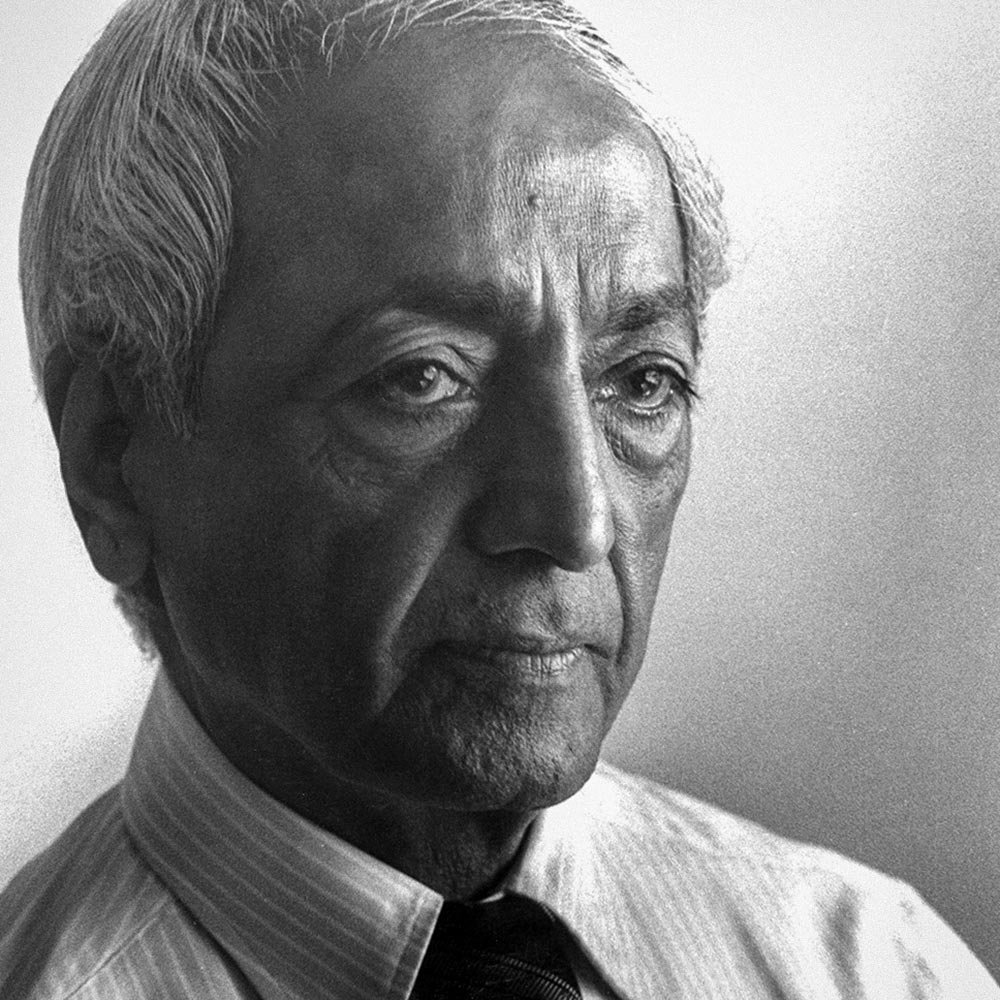
Three-quarters portrait photo of Krishnamurti

The Krishnamurti Foundation

Established in 1968 as a registered charity, and located at The Krishnamurti Centre, Krishnamurti Foundation Trust exists to preserve and make available Krishnamurti’s teachings.

The Foundation serves a global audience by providing worldwide free access to Krishnamurti videos, audio and texts to those who may be interested in pursuing an understanding of Krishnamurti’s work in their own lives.

In describing his intentions for the Foundations, Krishnamurti said: 

The Foundations will see to it that these teachings are kept whole, are not distorted, are not made corrupt.