
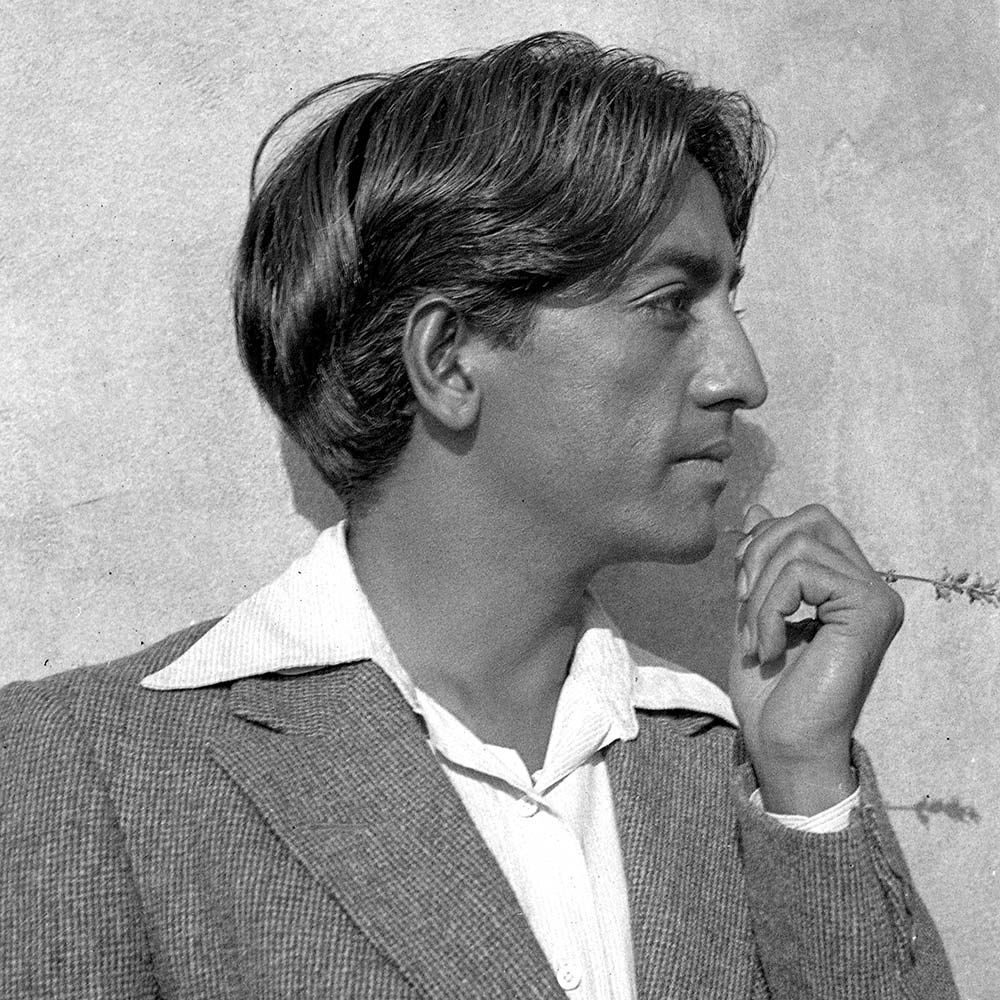
Photo of J. Krishnamurti

Perception is action.

Read More

There is an instant when the mind is completely quiet, but it cannot sustain that sense of absolute stillness. That stillness can be produced by a shock. Most of us know this sense of absolute stillness when there is a great shock. Either it can be produced outwardly by some incident, or it can be brought about artificially, inwardly, by a series of impossible questions, as in a Zen school, or by some imaginative state, or some formula which forces the mind to be quiet – which is obviously rather childish and immature. We are saying that for a mind that is capable of perception, that very perception is action. To perceive, the mind must be completely still, otherwise it cannot see.

The first step is the step of clear perception, and that clear act of clear perception is the last act.

Krishnamurti, Inward Revolution

Read More

The first step is the last step. The first step is the step of clear perception, and that clear act of clear perception is the last act. When you see danger, a serpent, that very perception is complete action. The first step is the last step. The first step is to perceive – perceive what you are thinking, perceive your ambition, perceive your anxiety, your loneliness, your despair, the extraordinary sense of sorrow – perceive it without any condemnation, justification, without wishing it to be different, just perceive it as it is. When you perceive it as it is, there is a totally different kind of action taking place, and that action is the final action. That is, when you perceive something as being false or as being true, that perception is the final action, which is the final step.

The very perception of the false is the true.

Krishnamurti, This Light in Oneself

Read More

Can the mind see its own limitation? Can the very perception of that limitation be the ending of that limitation? Can it not ask how to empty the mind, but see totally the content that makes up consciousness, and perceive, listen to, all the movement of that consciousness, so that the very perception of it is the ending of it? If I see something false, the very perception of the false is the true. The very perception of my telling a lie is the truth. The very perception of my envy is freedom from envy. That is, you can only see very clearly, observe very clearly, when there is no observer.

The very perception of danger is the discarding of that danger.

Read More

If I have a conclusion, I cannot look. If I am a moralist, if I am a respectable person, or a Christian, a Vedantist, an ‘enlightened one’, or this or that – that prevents me from looking. Therefore, I must be free of it all. I am watching to see if I have a conclusion of any kind. So the mind has become extraordinarily clear, and it says, ‘Is there fear?’ I watch it and I say, ‘There is fear, there is a desire for security, there is the urge for pleasure,’ and so on. I see that I cannot look if there is any kind of conclusion, any kind of pleasurable movement taking place. So I am watching, and I find I am very traditional and I realise such a traditional mind cannot look. My deep interest is to look, and that deep interest shows me the danger of any conclusion. Therefore, the very perception of danger is the discarding of that danger. So my mind then is not confused, it has no conclusion, it does not think in terms of words and descriptions, and is not comparing. Such a mind can observe, and what it observes is itself. Therefore, a revolution has taken place.

The mere perception of ‘what is’ is the beginning of the breaking down of the measurement of the mind, of its frontiers, its patterns – just to see things as they are.

Read More

The mere perception of ‘what is’ is the beginning of the breaking down of the measurement of the mind, of its frontiers, its patterns – just to see things as they are. Then you will find that the mind can come to that freedom involuntarily, without knowing. This transformation in the mind itself is the true revolution. All other revolutions are reactions, even though they use the word ‘freedom’ and promise utopia, the heavens, everything. There is only true revolution in the quality of the mind.

Perception is attention. That very attention throws light, with all its energy, on that which is being observed. This light of perception brings about a transformation of the thing observed.

Read More

Cooperation demands great honesty. Honesty has no motive. Honesty is not some ideal, some faith. Honesty is clarity, the clear perception of things as they are. Perception is attention. That very attention throws light, with all its energy, on that which is being observed. This light of perception brings about a transformation of the thing observed. There is no system through which you learn to cooperate. It is not to be structured and classified. Its very nature demands that there be love, and that love is not measurable; for when you compare, which is the essence of measurement, thought has entered. Where thought is, love is not.

There is actually only perception, not a perceiver.

Krishnamurti, Think on These Things

Read More

Is there a ‘thinker’, or only thinking? Surely, the thinker does not exist first. First, there is thinking, and then thinking creates the thinker – which means that a separation in thinking has taken place. When this separation takes place, there comes into being the watcher and the watched, the perceiver and the object of perception. If you watch your mind, if you observe a thought, that thought disappears, it fades away; but there is actually only perception, not a perceiver. When you look at a flower, when you just see it, at the moment is there an entity who sees? Or is there only seeing?

In perception is a complete revolution in awareness.

Read More

The existence of division, becoming aware of it and the ending of it, are part of awareness. When this happens, it is not as an idea that it should happen in order to achieve greater awareness, for awareness is not progressive. It is not first this and then that. When there is awareness of division and what’s implied in the division – the conflict, the choice, the confusion and so on – there is the perception that the observer is the observed. In this perception, there is a complete revolution in awareness. Then there is a vast sea of awareness, not as yours or mine but an awareness in which there is the total absence of the ‘me’ and the thought of ‘me’ and the thought which has projected the ‘me’ – there is no shore from which the observer can watch the sea.

Perception is the quality of the mind that has become highly sensitive and therefore intelligent.

Read More

How does perception and immediate action happen? Does it depend on the sensitivity of the mind, the heart, the brain, the nerves, so intelligence is awake, working, and when there is any form of crisis or challenge it responds immediately and acts? If it is the result of previous perceptions or actions, it is memory that responds and action then is still the old, still the product of thought. So perception is really the quality of the mind that has become highly sensitive and therefore intelligent. This intelligence operates when any danger is seen – the danger of nationalism, of postponement, of the interference of thought. There is grave danger in all that. So, being sensitive and therefore intelligent, it is this intelligence that sees and acts, and not thought at all.

The sanity of the mind can only come about when there is clear perception, seeing things as they are unemotionally, not sentimentally.

Krishnamurti, The Urgency of Change

Read More

Do not use the word ‘how’, please. ‘How’ implies that somebody is going to give you a method, a recipe, which, if you practise it, will bring about understanding. Can understanding ever come about through a method? Understanding means love and the sanity of the mind. And love cannot be practised or taught. The sanity of the mind can only come about when there is clear perception, seeing things as they are unemotionally, not sentimentally. Neither of these two things can be taught by another, nor by a system invented by yourself or by another. Influence in any form is destructive of love. Propaganda to make the mind sensitive or alert will only make it dull and insensitive. So I am in no way trying to influence you, persuade you or make you depend. We are only pointing out, exploring together. And to explore together, you must be free, both of me and of your own prejudices and fears.

The mind is the instrument of perception, and to perceive truly the mind must be made straight, be cleansed of all conditioning and fear.

Krishnamurti, Think on These Things

Read More

If the mind is limited, you cannot perceive the illimitable. The mind is the instrument of perception, and to perceive truly the mind must be made straight, be cleansed of all conditioning and fear. The mind must also be free of knowledge, because knowledge diverts the mind and makes things twisted. The enormous capacity of the mind to invent, to imagine, to speculate, to think – must not this capacity be put aside so that the mind is very clear and very simple? Because it is only the innocent mind, the mind that has experienced vastly and yet is free of knowledge and experience – it is only such a mind that can discover that which is more than brain and mind.

Perception involves a mind that is not caught in the bondage of time.

Krishnamurti, Inward Revolution

Read More

Perception involves a mind that is not caught in the bondage of time. Do please understand this. Once you understand this fact, your whole structure of thought changes. Perception and understanding don’t involve time at all. What is involved is seeing clearly, and to see clearly you must have space – not only outward but inward space. That means space in the mind. When the mind is chattering, it is filled with knowledge – knowledge being the past, apart from technological knowledge which is obvious and necessary. When the mind is crowded with knowledge of yesterday, the events of yesterday, the pain of yesterday, the various remembrances of yesterday, there is no space; and where there is no space there is conflict.

Accumulation distorts perception, and it is not possible to understand the self in its daily activities, its swift and cunning reactions, when the mind is weighed down by knowledge.

Read More

One may renounce the outward things of existence, but in the struggle to acquire self-knowledge, there is the sensation of accomplishment, of the hunter catching the hunted, which is similar to the satisfaction of worldly gain. There is no understanding of the self, of the ‘me’, the ego, through accumulating knowledge of ‘what has been’ or ‘what is’. Accumulation distorts perception, and it is not possible to understand the self in its daily activities, its swift and cunning reactions, when the mind is weighed down by knowledge. As long as the mind is burdened with knowledge, and is itself the result of knowledge, it can never be new, uncorrupted.

Intellectual perception is only partial perception, yet perceiving with the intellect seems to satisfy most of us, and we think we understand.

Krishnamurti, The Urgency of Change

Read More

We cannot look at ourselves. When we do, it is partial observation, and anything partial or incomplete doesn’t bring understanding. It is only when we can look at ourselves totally that there is a possibility of being free from what we observe. Our perception is not only with the eyes, with the senses, but also with the mind, and obviously the mind is heavily conditioned. So intellectual perception is only partial perception, yet perceiving with the intellect seems to satisfy most of us, and we think we understand. A fragmentary understanding is the most dangerous and destructive thing. And that is exactly what is happening all over the world. The politician, the priest, the businessman, the technician, even the artist – all of them see only partially, and therefore they are really very destructive people. As they play a great part in the world, their partial perception becomes the accepted norm, and man is caught in this.

The flowering seed of perception will bring correct action.

Read More

Conflict is disorder. The apprehension of all this is attention, not concentration, and attention is the essence of intelligence and love. This naturally brings order without compulsion. Now, as educators and as parents, which are the same, isn’t it possible for us to convey this to our students and children? They may be too young to understand all that we have just read. We see the difficulties, and these very difficulties prevent us from grasping the greater issue. I am not making this into a problem; I am just very much aware of what chaos and order are. These two have no relation to each other. One is not born out of the other; and I am not denying one or accepting the other. The flowering seed of perception will bring correct action.

These quotes only touch on the many subjects Krishnamurti inquired into during his lifetime. His timeless and universal teachings can be explored using the Index of Topics where you will find texts, audio and video related on many themes. Another option is to browse our selection of curated articles or more short quotes. Krishnamurti’s reply when asked what lies at the heart of his teachings can be found here. Many Krishnamurti books are available, a selection of which can be explored here. To find out more about Krishnamurti’s life, please see our introduction and the biography. We also host a weekly podcast, and offer free downloads. Please visit our YouTube channel for hundreds of specially selected shorter clips. Below, you can learn more about Krishnamurti and our charity which he founded in 1968.
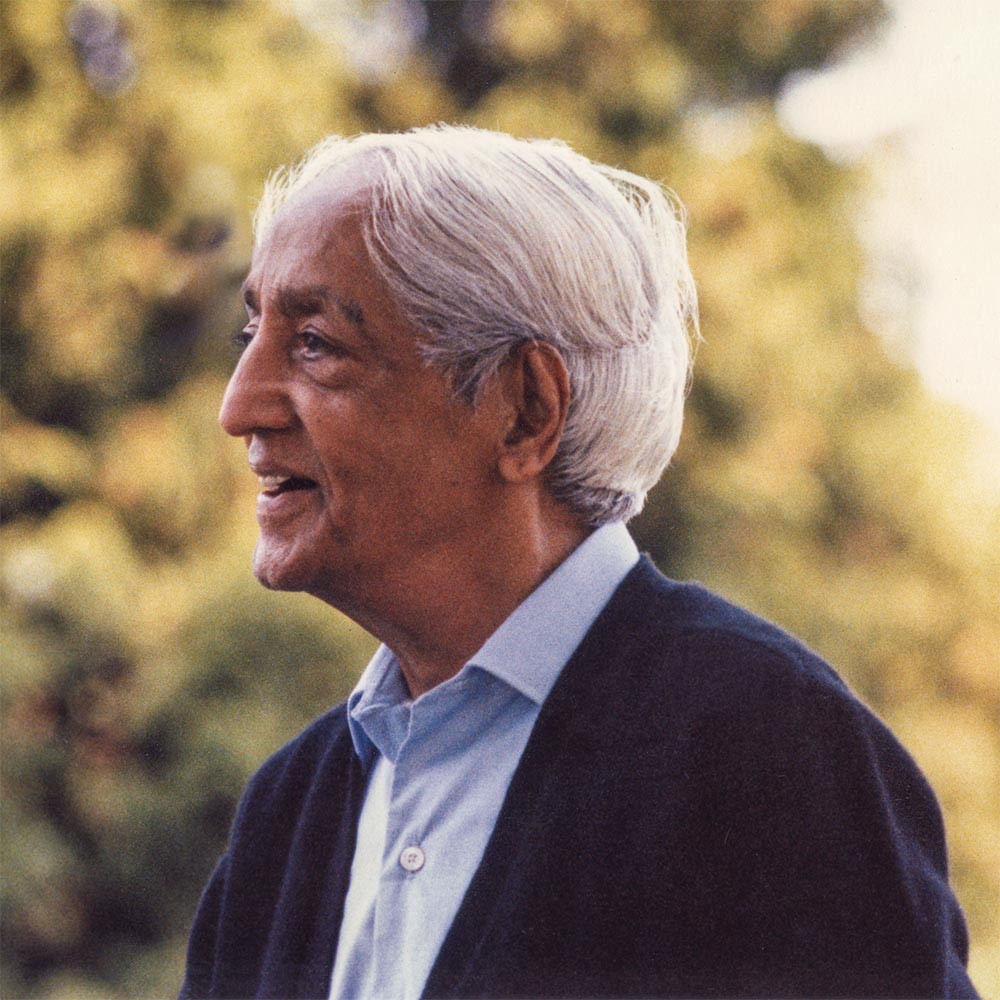
Krishnamurti outdoors smiling

Who Was Krishnamurti?

J. Krishnamurti (1895-1986) is widely regarded as one of the greatest thinkers and religious teachers of all time. He spoke throughout the world to large audiences and to individuals, including writers, scientists, philosophers and educators, about the need for a radical change in mankind. Referring to himself, Krishnamurti said:

He is acting as a mirror for you to look into. That mirror is not an authority. It has no authority, it’s just a mirror. And when you see it clearly, understand what you see in that mirror, then throw it away, break it up.

Krishnamurti was concerned with all humanity and held no nationality or belief and belonged to no particular group or culture. In the latter part of his life, along with continuing to give public talks, he travelled mainly between the schools he had founded in India, Britain and the United States, which educate for the total understanding of man and the art of living. He stressed that only this profound understanding can create a new generation that will live in peace.

Krishnamurti reminded his listeners again and again that we are all human beings first and not Hindus, Muslims or Christians, that we are like the rest of humanity and are not different from one another. He asked that we tread lightly on this earth without destroying ourselves or the environment. He communicated to his listeners a deep sense of respect for nature. His teachings transcend man-made belief systems, nationalistic sentiment and sectarianism. At the same time, they give new meaning and direction to mankind’s search for truth. His teaching is timeless, universal and increasingly relevant to the modern age.

I am nobody. It is as simple as that. I am nobody. But what is important is who you are, what you are.

Krishnamurti

Krishnamurti spoke not as a guru but as a friend. His talks and discussions are based not on tradition-based knowledge but on his own insights into the human mind and his vision of the sacred, so he always communicated a sense of freshness and directness, although the essence of his message remained unchanged over the years. When Krishnamurti addressed large audiences, people felt that he was talking to each of them personally, addressing their own particular problem. In his private interviews, he was a compassionate teacher, listening attentively to those who came to him in sorrow, and encouraging them to heal themselves through their own understanding. Religious scholars found that his words threw new light on traditional concepts. Krishnamurti took on the challenge of modern scientists and psychologists and went with them step by step, discussing their theories and sometimes enabling them to discern the limitations of their theories.

Krishnamurti left a large body of literature in the form of public talks, writings, discussions with teachers and students, scientists, psychologists and religious figures, conversations with individuals, television and radio interviews, and letters. Many of these have been published as books, in over 60 languages, along with hundreds of audio and video recordings.
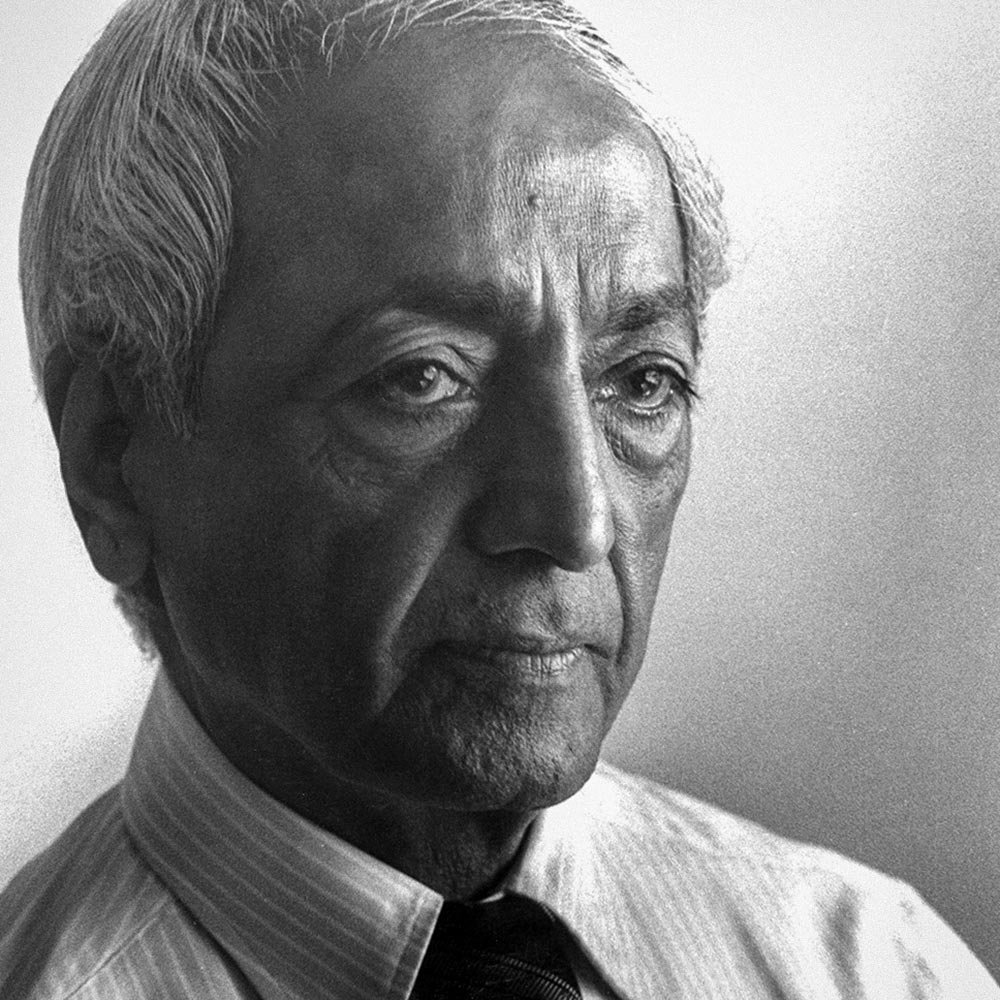
Three-quarters portrait photo of Krishnamurti

The Krishnamurti Foundation

Established in 1968 as a registered charity, and located at The Krishnamurti Centre, Krishnamurti Foundation Trust exists to preserve and make available Krishnamurti’s teachings.

The Foundation serves a global audience by providing worldwide free access to Krishnamurti videos, audio and texts to those who may be interested in pursuing an understanding of Krishnamurti’s work in their own lives.

In describing his intentions for the Foundations, Krishnamurti said: 

The Foundations will see to it that these teachings are kept whole, are not distorted, are not made corrupt.