
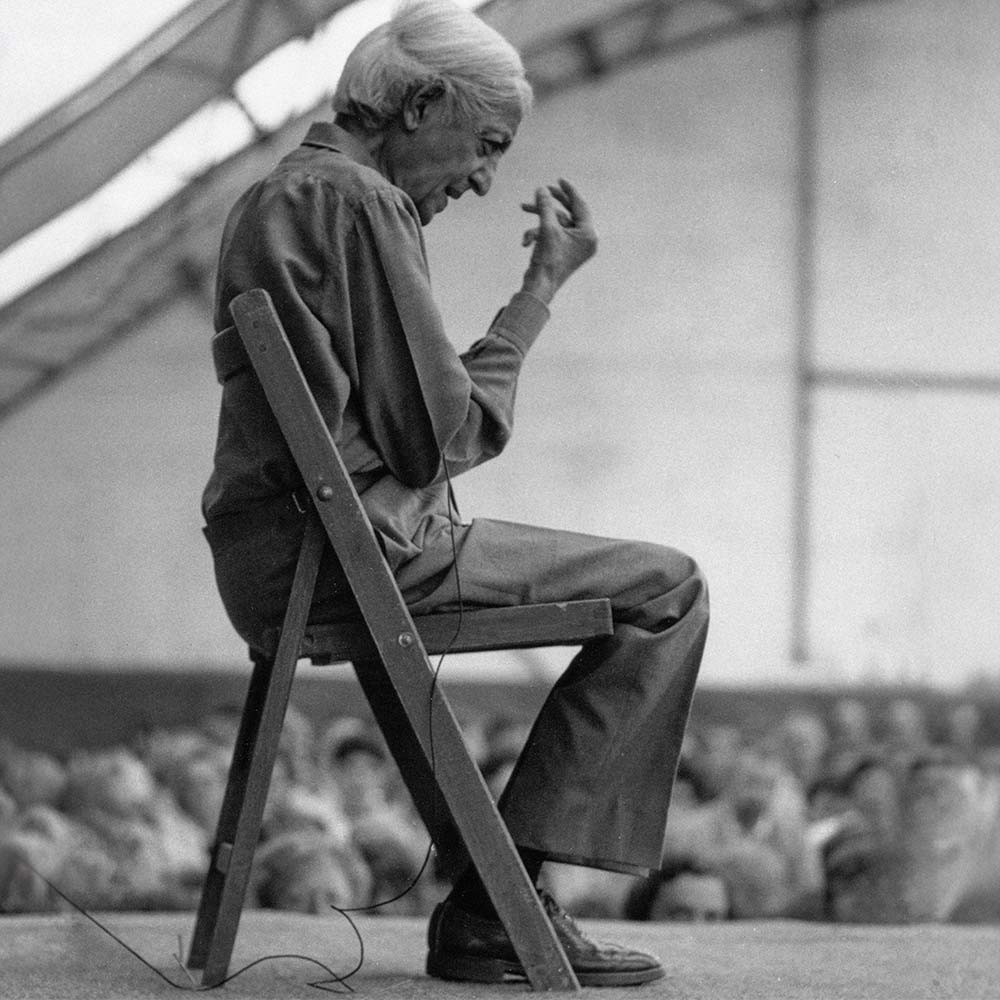
Photo of J. Krishnamurti

Passion has gone out of our lives. The passion that cares, that works, that gives, that creates, simply is not there.

Read More

Nobody seems to care. Many explanations are given for why there is poverty, why people are what they are – climate, lack of food, overpopulation. There are many peripheral explanations, but passion has gone out of our lives. The passion that cares, that works, that gives, that creates, simply is not there. Governments squabble over their theories, their systems, and the poor are forgotten. They will live and die in poverty, in squalor, ignorant, diseased, for they have no hope anymore. There is only the dark despair and the flash of the sunlight on the water.

For most of us, passion is employed with regard to one thing only: sex.

Krishnamurti, To Be Human

Read More

For most of us, passion is employed with regard to one thing only: sex. Or we suffer passionately and try to resolve that suffering. But I am using the word ‘passion’ in the sense of a state of mind, a state of being, a state of your inward core – if there is such a thing – that feels very strongly, that is highly sensitive – sensitive alike to dirt, squalor, poverty, to enormous riches and corruption, and to the beauty of a tree, a bird, the flow of water, a pond that has the evening sky reflected on it. To feel all this intensely, strongly, is necessary, because without such passion, life becomes empty, shallow and without much meaning. If you cannot see the beauty of a tree and love that tree, if you cannot care for it intensely, you are not living.

Very few of us are passionate. We have sensual pleasures – lust, enjoyment – but the sense of passion, most of us have not.

Read More

Only a mind that is learning is very passionate. We are using the word ‘passionate’ not in a sense of heightened pleasure but rather that state of mind that is always learning, always eager, alive, moving, vital, vigorous, young – and therefore is passionate. Very few of us are passionate. We have sensual pleasures – lust, enjoyment – but the sense of passion, most of us have not. Without passion, how can you learn, how can you discover new things, how can you inquire, how can you run with the movement of inquiry? And a mind that is very passionate is always in danger. Perhaps most of us are aware of this passionate mind, which is learning and therefore acting, and have failed unconsciously, and probably that is one of the reasons why we are never passionate. We are respectable, we conform; we accept, we obey. There is respectability, duty, and all the rest of those words we use to smother the act of learning.

Passion is a rather frightening thing because you don’t know where it will take you.

Read More

You cannot find any truth without passion – passion with a fury behind it, passion in which there is no hidden want. Passion is a rather frightening thing because if you have passion, you don’t know where it will take you. So is fear perhaps the reason why you have not got the energy of that passion to find out for yourself why the quality of love is missing in you, why there is not this flame in your heart? If you have examined your own mind and heart very closely, you will know why you haven’t got it. If you are passionate in your discovery to find why you haven’t got it, you will know it is there. Through complete negation alone, which is the highest form of passion, that thing which is love comes into being.

If you have no passion, how can you be sensitive to the ugly, to the beautiful, to the whispering leaves, to the sunset, to a smile, to a cry? How can you be sensitive without a sense of passion?

Read More

You cannot be sensitive if you are not passionate. Do not be afraid of the word ‘passion’. Most religious books, most gurus, swamis, leaders, and all the rest of them say, ‘Don’t have passion.’ But if you have no passion, how can you be sensitive to the ugly, to the beautiful, to the whispering leaves, to the sunset, to a smile, to a cry? How can you be sensitive without a sense of passion in which there is abandonment? Do not ask how to acquire passion. I know you are all passionate enough in getting a good job, or hating some poor chap, or being jealous of someone, but I am talking of something entirely different: a passion that loves. Love is a state in which there is no ‘me’, love is a state in which there is no condemnation, no saying that sex is right or wrong, that this is good and something else is bad. Love is none of these contradictory things. Contradiction does not exist in love. And how can one love if one is not passionate?

One needs a great deal of passion, great energy, and most of us waste our energies in conflict.

Read More

One needs a great deal of passion, great energy, and most of us waste our energies in conflict. When we are examining the whole business of existence, we need energy. Energy comes with the possibility of change; if there is no possibility of change, energy wastes away. We think we cannot possibly change. We accept things as they are and thereby become rather dispirited, depressed, uncertain and confused. It is possible to change radically, and that is what we are examining. Do not follow exactly what I am saying, but use my words as a mirror to observe yourself and inquire with passion, with interest, with vitality and a great deal of energy. Then perhaps we can come to a point where it will be obvious that without any kind of effort, without any kind of motive, a radical change takes place.

To understand and to be free of any problem, we need a great deal of passionate and sustained energy.

Read More

To understand and to be free of any problem, we need a great deal of passionate and sustained energy, not only physical and intellectual energy but an energy that is not dependent on any motive, any psychological stimulus or drug. If we are dependent on any stimulus, that very stimulus makes the mind dull and insensitive. By taking some form of drug, we may find enough energy temporarily to see things very clearly, but we revert to our former state and therefore become dependent on that drug more and more. So all stimulation, whether of the church or of alcohol or of drugs or of the written or spoken word, will inevitably bring about dependence, and that dependence prevents us from seeing clearly for ourselves and therefore from having vital energy.

Passion is the summation of energy, which is not the outcome of any kind of stimulation. Passion is beyond the self.

Read More

Passion is wholly different from lust, interest or enthusiasm. Interest in something can be very deep, and you can use that interest for profit or for power, but that interest is not passion. Interest may be stimulated by an object or idea. Interest is self-indulgence; passion is free of the self. Enthusiasm is always about something; passion is a flame in itself. Enthusiasm can be aroused by another, something outside of you; passion is the summation of energy, which is not the outcome of any kind of stimulation. Passion is beyond the self.

In passion, there is no demand and therefore no struggle. In passion, there is not the slightest shadow of fulfilment, therefore there can be neither frustration nor pain.

Krishnamurti, The Urgency of Change

Read More

In pleasure there is always a subtle form of effort – striving, demanding, struggling to keep it or to get it. In passion, there is no demand and therefore no struggle. In passion, there is not the slightest shadow of fulfilment, therefore there can be neither frustration nor pain. Passion is the freedom from the ‘me’, which is the centre of all fulfilment and pain. Passion does not demand because it ‘is’, and I am not speaking of something static. Passion is the austerity of self-abnegation in which the ‘you’ and the ‘me’ are not. Therefore, passion is the essence of life. It is this that moves and lives.

In the state of passion without a cause, there is intensity free from all attachment; when passion has a cause, there is attachment, and attachment is the beginning of sorrow.

Krishnamurti, To Be Human

Read More

When you fall in love with someone, you are in a great state of emotion. This is the effect of that particular cause. But passion is without a cause. It is to be passionate about everything, not just one thing. Most of us are passionate about a particular person or thing. We must see this distinction very clearly. In the state of passion without a cause, there is intensity free from all attachment. When passion has a cause, there is attachment, and attachment is the beginning of sorrow.

One who is passionate about the world and the necessity for change must be free from political activity, religious conformity and tradition.

Krishnamurti, The Urgency of Change

Read More

One who is passionate about the world and the necessity for change must be free from political activity, religious conformity and tradition. This means free from the weight of time, free from the burden of the past, free from all the action of will. This is the new human being. This, only, is the social, psychological, and even political revolution.

If you observe passionately, with intensity, the mind inevitably becomes quiet. You don’t have to force it.

Read More

To observe actually ‘what is’, in oneself and in the world, without any distortion, a quiet mind is necessary. A very still mind is necessary. And one knows it is necessary, therefore we try to discipline and control – and there are various systems to help you to control, but that is all friction. If you observe passionately, with intensity, the mind inevitably becomes quiet. You don’t have to force it. The moment you force it, it is not quiet – it is dead. Whereas, if you see the truth that to perceive anything you must look, and if you look with prejudice you cannot see, then your mind is quiet.

We can have vital passion only when there is a total revolution in our thinking, in our whole being.

Krishnamurti, Think on These Things

Read More

Can we have the creative joy of living, be expansive in our feeling, wide in our thinking, and yet be precise, clear and orderly in our lives? Most of us are not like that because we never feel anything intensely; we never give our hearts and minds to anything completely. I remember watching two red squirrels, with long bushy tails and lovely fur, chase each other up and down a tall tree for about ten minutes without stopping – just for the joy of living. But you and I cannot know that joy if we do not feel things deeply, if there is no passion in our lives – passion, not for doing good or bringing about reform, but passion in the sense of feeling things very strongly. We can have that vital passion only when there is a total revolution in our thinking, in our whole being.

Without passion, there is no creation. Total abandonment brings this unending passion.

Read More

Without passion, there is no creation. Total abandonment brings this unending passion. Abandonment with a motive is one thing, and without a purpose, without calculation, it is another. That which has an end, a direction, is short-lived, becomes mischievous, commercial and vulgar. The other, not driven by any cause, intention or gain, has no beginning and no end. This abandonment is the emptying of the mind of the ‘me’, the self. This ‘me’ can lose itself in activity, in some comforting belief or fanciful dream, but such loss is the continuing of the self in another form, identifying with another ideology and action. The abandonment of the self is not an act of will, for the will is the self. Any movement of the self, horizontally, vertically, or in any direction, is still within the field of time and sorrow.

With the abandonment of the self, the passion of beauty comes into being.

Read More

The movement of thought is not beauty. Thought can create what appears to be beautiful – the painting, the marble figure or a lovely poem – but this is not beauty. Beauty is supreme sensitivity, not to the sense of one’s own pains and anxieties, but encompassing the whole existence of humanity. There is beauty only when the current of the ‘me’ has completely dried up. When the ‘me’ is not, beauty is. With the abandonment of the self, the passion of beauty comes into being.

These quotes only touch on the many subjects Krishnamurti inquired into during his lifetime. His timeless and universal teachings can be explored using the Index of Topics where you will find texts, audio and video related on many themes. Another option is to browse our selection of curated articles or more short quotes. Krishnamurti’s reply when asked what lies at the heart of his teachings can be found here. Many Krishnamurti books are available, a selection of which can be explored here. To find out more about Krishnamurti’s life, please see our introduction and the biography. We also host a weekly podcast, and offer free downloads. Please visit our YouTube channel for hundreds of specially selected shorter clips. Below, you can learn more about Krishnamurti and our charity which he founded in 1968.
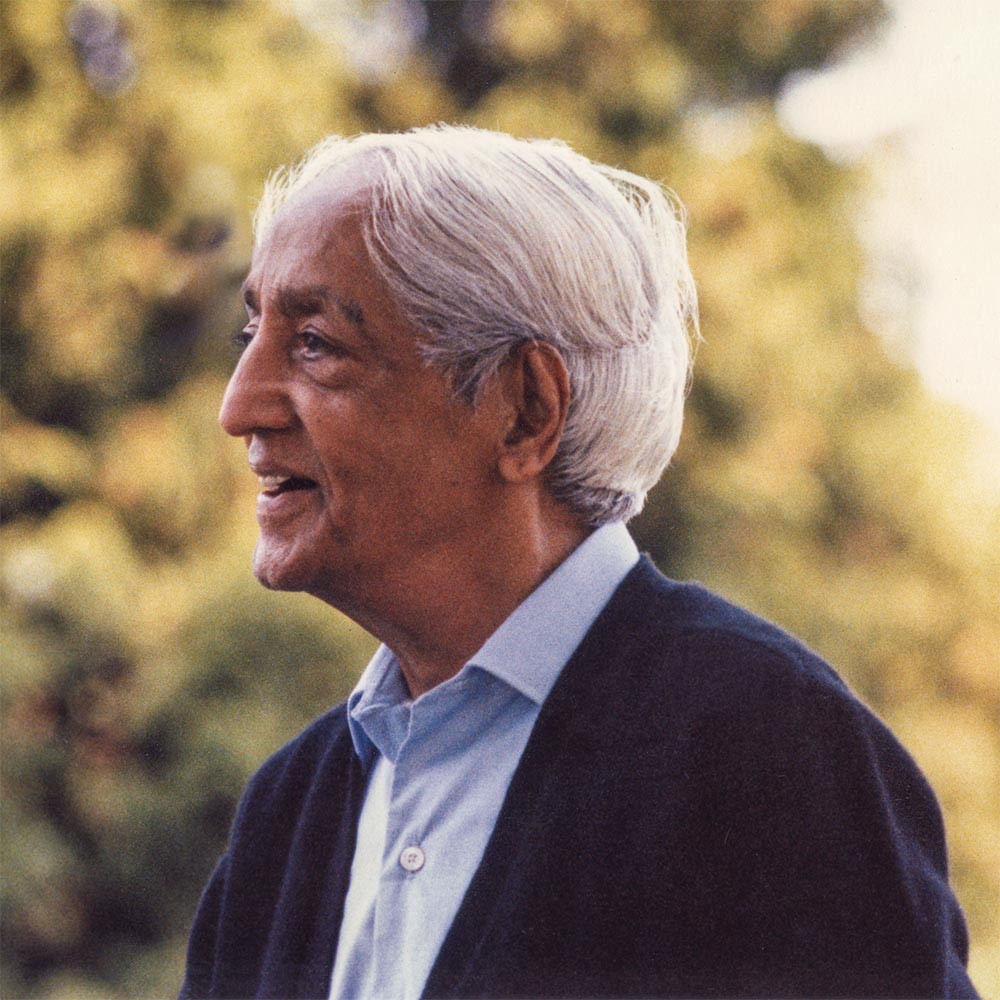
Krishnamurti outdoors smiling

Who Was Krishnamurti?

J. Krishnamurti (1895-1986) is widely regarded as one of the greatest thinkers and religious teachers of all time. He spoke throughout the world to large audiences and to individuals, including writers, scientists, philosophers and educators, about the need for a radical change in mankind. Referring to himself, Krishnamurti said:

He is acting as a mirror for you to look into. That mirror is not an authority. It has no authority, it’s just a mirror. And when you see it clearly, understand what you see in that mirror, then throw it away, break it up.

Krishnamurti was concerned with all humanity and held no nationality or belief and belonged to no particular group or culture. In the latter part of his life, along with continuing to give public talks, he travelled mainly between the schools he had founded in India, Britain and the United States, which educate for the total understanding of man and the art of living. He stressed that only this profound understanding can create a new generation that will live in peace.

Krishnamurti reminded his listeners again and again that we are all human beings first and not Hindus, Muslims or Christians, that we are like the rest of humanity and are not different from one another. He asked that we tread lightly on this earth without destroying ourselves or the environment. He communicated to his listeners a deep sense of respect for nature. His teachings transcend man-made belief systems, nationalistic sentiment and sectarianism. At the same time, they give new meaning and direction to mankind’s search for truth. His teaching is timeless, universal and increasingly relevant to the modern age.

I am nobody. It is as simple as that. I am nobody. But what is important is who you are, what you are.

Krishnamurti

Krishnamurti spoke not as a guru but as a friend. His talks and discussions are based not on tradition-based knowledge but on his own insights into the human mind and his vision of the sacred, so he always communicated a sense of freshness and directness, although the essence of his message remained unchanged over the years. When Krishnamurti addressed large audiences, people felt that he was talking to each of them personally, addressing their own particular problem. In his private interviews, he was a compassionate teacher, listening attentively to those who came to him in sorrow, and encouraging them to heal themselves through their own understanding. Religious scholars found that his words threw new light on traditional concepts. Krishnamurti took on the challenge of modern scientists and psychologists and went with them step by step, discussing their theories and sometimes enabling them to discern the limitations of their theories.

Krishnamurti left a large body of literature in the form of public talks, writings, discussions with teachers and students, scientists, psychologists and religious figures, conversations with individuals, television and radio interviews, and letters. Many of these have been published as books, in over 60 languages, along with hundreds of audio and video recordings.
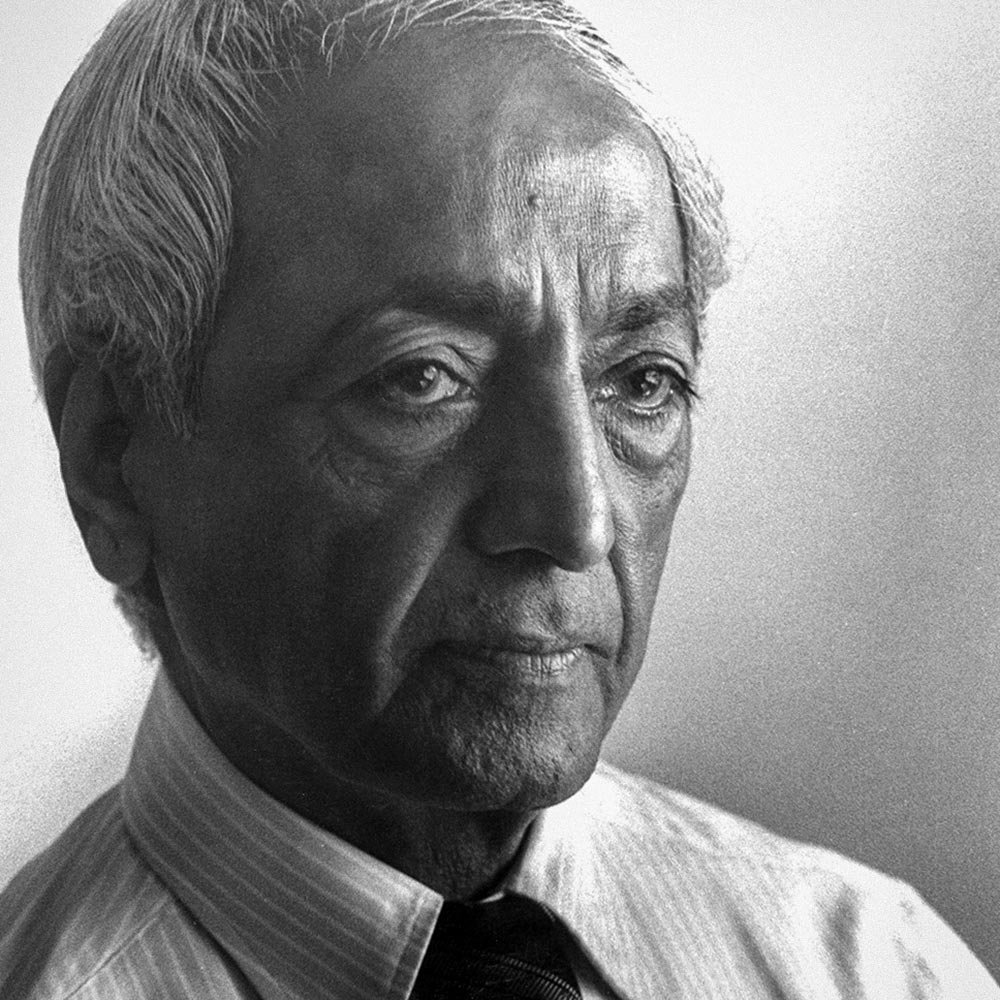
Three-quarters portrait photo of Krishnamurti

The Krishnamurti Foundation

Established in 1968 as a registered charity, and located at The Krishnamurti Centre, Krishnamurti Foundation Trust exists to preserve and make available Krishnamurti’s teachings.

The Foundation serves a global audience by providing worldwide free access to Krishnamurti videos, audio and texts to those who may be interested in pursuing an understanding of Krishnamurti’s work in their own lives.

In describing his intentions for the Foundations, Krishnamurti said: 

The Foundations will see to it that these teachings are kept whole, are not distorted, are not made corrupt.