
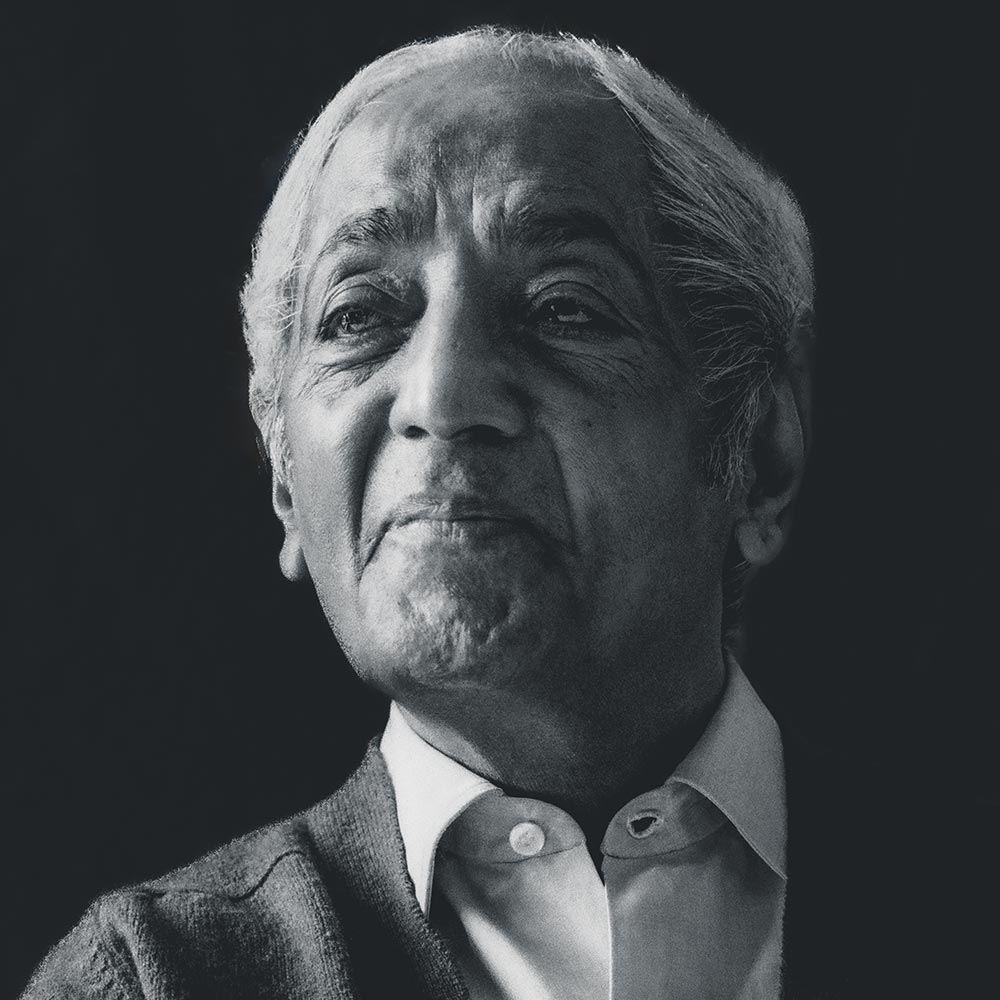
It is very important to smile, to be happy, because without a song in one’s heart, life becomes very dull.
Krishnamurti, Think on These Things
Read More
Most people are unhappy because there is no love in their hearts. Love will arise in your heart when you have no barrier between yourself and another.
Krishnamurti, Think on These Things
Read More
To fill your heart with the things of the mind is to leave no room for love.
Krishnamurti, Commentaries on Living 1
Read More
Love is a strange thing, and how easily we lose its warm flame! The flame is lost, and the smoke remains. The smoke fills our hearts and minds, and we spend our days in tears and bitterness.
Krishnamurti, Commentaries on Living 2
Read More
The man who is empty of heart writes a great deal about love; the man who is unhappy composes music on love and beauty.
Krishnamurti, Can the Mind be Quiet?
Read More
Although you apparently cry because your heart is touched, it is not touched, except by self-pity.
Krishnamurti, Meeting Life
Read More
Simplicity of heart is far more important and significant than simplicity of possessions.
Krishnamurti, Commentaries on Living 1
Read More
Total order in one’s being: order in the mind, order in one’s heart, order in one’s physical activities – the harmony between the three is goodness.
Krishnamurti, The Awakening of Intelligence
Read More
Not to hurt and not to be hurt, that is the innocence of the heart.
Krishnamurti, The Awakening of Intelligence
Read More
If you listen with your heart, with care, with attention, that very listening is like a flowering.
Krishnamurti, Meeting Life
Read More
Without meditation, the heart becomes a desert, a wasteland.
Read More
Meditation is the understanding of the heart. When the heart cleanses the mind of all its tricks and absurd devices, its conceits and stratagems, meditation flows as clearly as the fresh waters of a river.
Krishnamurti, Can the Mind be Quiet?
Read More
Benediction doesn’t come to you because you lead a systematised life or follow a routine or morality. It comes only when your heart is really open.
Krishnamurti, The Only Revolution
Read More
You were innocent, without striving and without thought. Everything about you was new; you had never seen them before. Your eyes were washed clean, and you had not a spot in your heart.
Read More
If you are seeking the highest, you will not find it; it must come to you, if you are lucky – and luck is the open window of your heart.
Krishnamurti, The Only Revolution
Read More
These quotes only touch on the many subjects Krishnamurti inquired into during his lifetime. His timeless and universal teachings can be explored using the Index of Topics where you will find texts, audio and video related on many themes. Another option is to browse our selection of curated articles or more short quotes. Krishnamurti’s reply when asked what lies at the heart of his teachings can be found here. Many Krishnamurti books are available, a selection of which can be explored here. To find out more about Krishnamurti’s life, please see our introduction and the biography. We also host a weekly podcast, and offer free downloads. Please visit our YouTube channel for hundreds of specially selected shorter clips. Below, you can learn more about Krishnamurti and our charity which he founded in 1968.
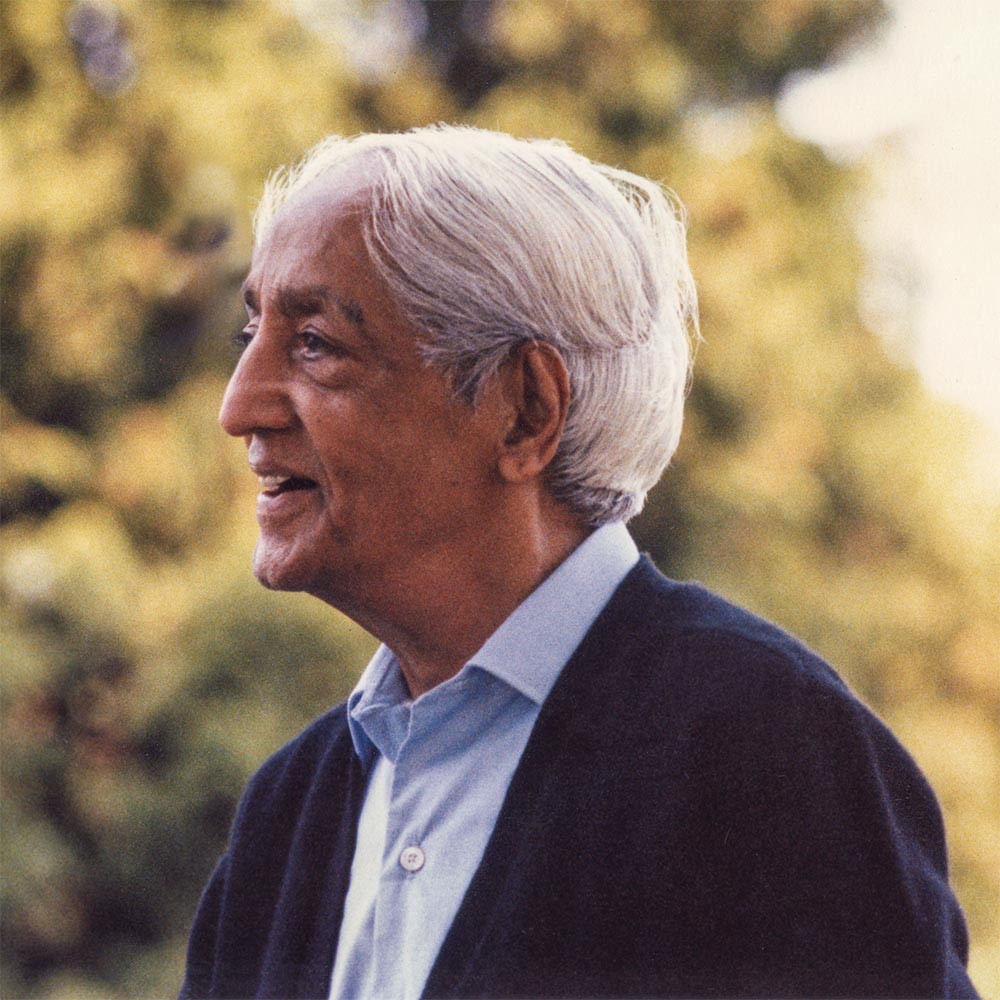
Who Was Krishnamurti?
J. Krishnamurti (1895-1986) is widely regarded as one of the greatest thinkers and religious teachers of all time. He spoke throughout the world to large audiences and to individuals, including writers, scientists, philosophers and educators, about the need for a radical change in mankind. Referring to himself, Krishnamurti said:
He is acting as a mirror for you to look into. That mirror is not an authority. It has no authority, it’s just a mirror. And when you see it clearly, understand what you see in that mirror, then throw it away, break it up.
Krishnamurti was concerned with all humanity and held no nationality or belief and belonged to no particular group or culture. In the latter part of his life, along with continuing to give public talks, he travelled mainly between the schools he had founded in India, Britain and the United States, which educate for the total understanding of man and the art of living. He stressed that only this profound understanding can create a new generation that will live in peace.
Krishnamurti reminded his listeners again and again that we are all human beings first and not Hindus, Muslims or Christians, that we are like the rest of humanity and are not different from one another. He asked that we tread lightly on this earth without destroying ourselves or the environment. He communicated to his listeners a deep sense of respect for nature. His teachings transcend man-made belief systems, nationalistic sentiment and sectarianism. At the same time, they give new meaning and direction to mankind’s search for truth. His teaching is timeless, universal and increasingly relevant to the modern age.
I am nobody. It is as simple as that. I am nobody. But what is important is who you are, what you are.
Krishnamurti
Krishnamurti spoke not as a guru but as a friend. His talks and discussions are based not on tradition-based knowledge but on his own insights into the human mind and his vision of the sacred, so he always communicated a sense of freshness and directness, although the essence of his message remained unchanged over the years. When Krishnamurti addressed large audiences, people felt that he was talking to each of them personally, addressing their own particular problem. In his private interviews, he was a compassionate teacher, listening attentively to those who came to him in sorrow, and encouraging them to heal themselves through their own understanding. Religious scholars found that his words threw new light on traditional concepts. Krishnamurti took on the challenge of modern scientists and psychologists and went with them step by step, discussing their theories and sometimes enabling them to discern the limitations of their theories.
Krishnamurti left a large body of literature in the form of public talks, writings, discussions with teachers and students, scientists, psychologists and religious figures, conversations with individuals, television and radio interviews, and letters. Many of these have been published as books, in over 60 languages, along with hundreds of audio and video recordings.
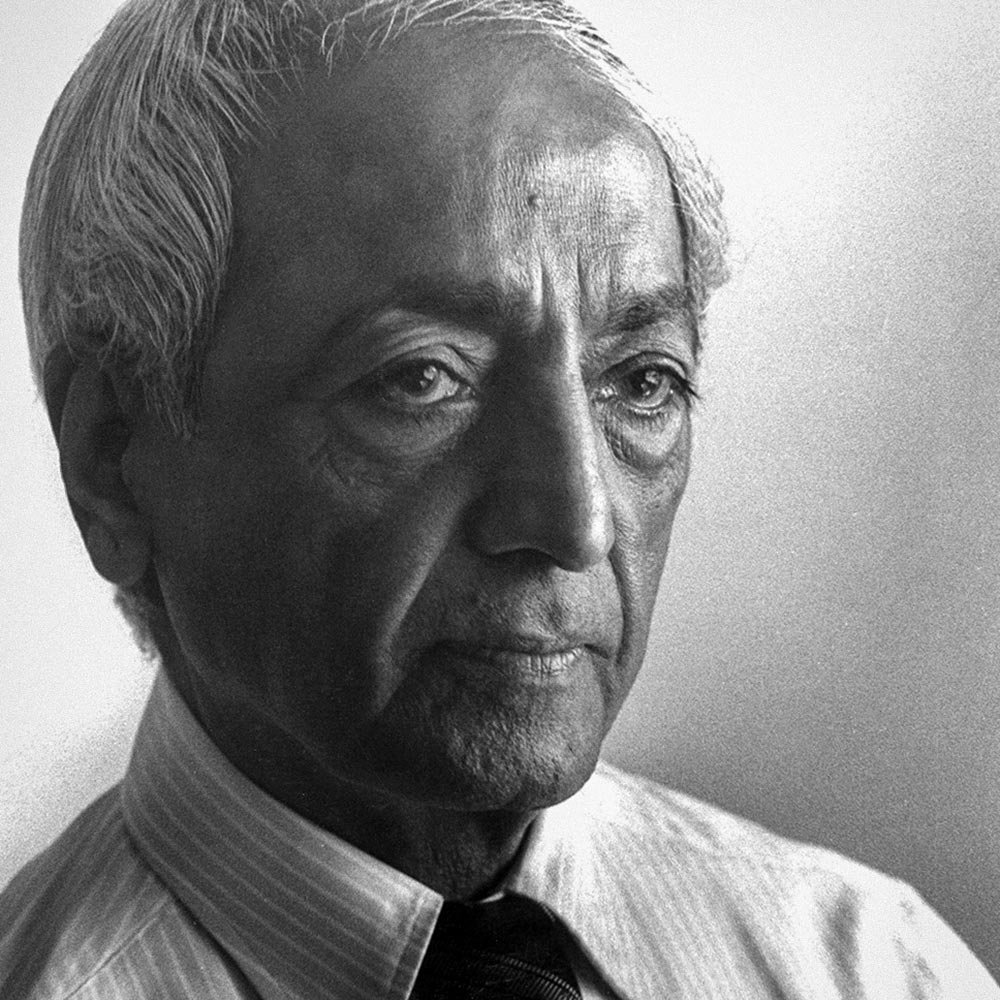
The Krishnamurti Foundation
Established in 1968 as a registered charity, and located at The Krishnamurti Centre, Krishnamurti Foundation Trust exists to preserve and make available Krishnamurti’s teachings.
The Foundation serves a global audience by providing worldwide free access to Krishnamurti videos, audio and texts to those who may be interested in pursuing an understanding of Krishnamurti’s work in their own lives.
In describing his intentions for the Foundations, Krishnamurti said:
The Foundations will see to it that these teachings are kept whole, are not distorted, are not made corrupt.