
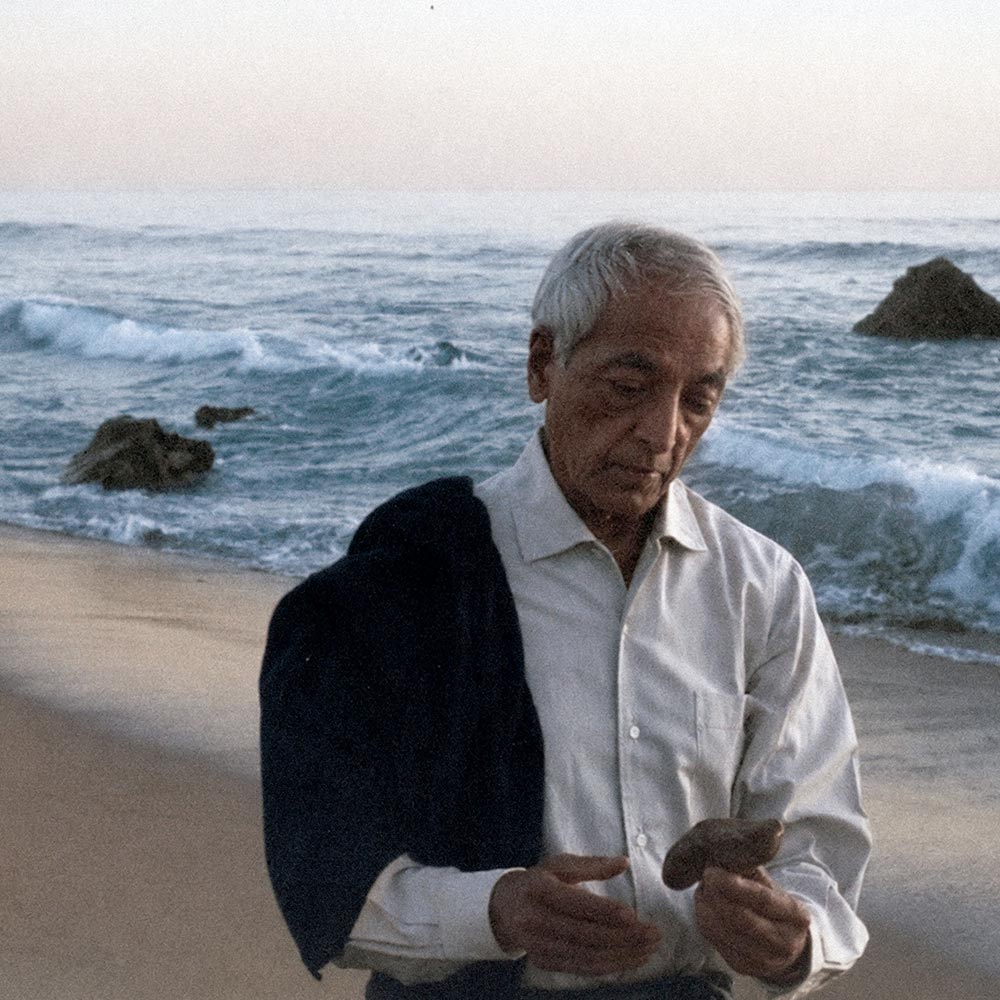
Photo of J. Krishnamurti

Either everything is sacred, or nothing is sacred.

Krishnamurti, The Only Revolution

Read More

What is sacred? Is the image in the temple, the symbol, the word, sacred? Where does sacredness lie? In that tree, or in that woman carrying that heavy load? You invest sacredness, don’t you, in things you consider holy, worthwhile, meaningful? But what value has the image, carved by the hand or by the mind? That woman, that tree, that bird, the living things, seem to have but a passing importance for you. You divide life into that which is sacred and that which is not, that which is immoral and that which is moral. This division begets misery and violence. Either everything is sacred, or nothing is sacred. Either what you say, your words, your thoughts, your chants are serious, or they are there to beguile the mind into some kind of enchantment, which becomes illusion, and therefore not serious at all. There is something sacred, but it is not in the word, not in the statue or in the image that thought has built.

The temple, the mosque or the church are not holy, not sacred, nor the images therein.

Read More

We are the result of propaganda. Do you realise what it means? Words and the influence of others mean there is nothing whatsoever original. To find out the origin of anything, we must have order. Order can come about only when there is a total cessation of disorder in oneself. All of us, at least those who are a little serious and thoughtful and earnest, must have asked whether there is anything sacred at all, anything holy. Of course the answer is that the temple, the mosque, or the church are not holy, not sacred, nor the images therein.

There is nothing sacred about tradition, however ancient or modern.

Krishnamurti, The Only Revolution

Read More

Carrying the past into the present, translating the movement of the present in terms of the past, destroys the living beauty of the present. Almost every land is burdened with tradition, entrenched in high places and village huts. There is nothing sacred about tradition, however ancient or modern. The brain carries the memory of yesterday, which is tradition, and is frightened to let go, because it cannot face something new. Tradition becomes our security, and when the mind is secure, it decays. One must take the journey unburdened, sweetly, without any effort, never stopping at any shrine, at any monument, or for any hero, social or religious, alone with beauty and love.

The brutal austerity of the monk or sannyasi cannot lead to the sacred.

Read More

Would you say religion is a way of life that, in its very activity, reveals what is sacred? That which is holy is not a thing of the mind, nor a calculated righteous activity. Surely it is not a life of vows and harsh abstinence. The brutal austerity of the monk or sannyasi cannot possibly lead to the sacred. One needs a mind that is free and sensitive, full of incalculable joy, to come upon the ecstasy which is not pleasure. So we had better start at the beginning, denying and setting aside everything man has invented, in the hope of discovering that which is not measurable. Negation is the greatest act of reality.

Man throughout the ages has sought something sacred, not corrupted by time, by all the travails of thought; he has sought it, longed for it, sacrificed, tortured himself physically, fasted, but he has not found it.

Krishnamurti, Meeting Life

Read More

Please don’t ask for help. If you do, then the priests, the gurus, the interpreters, all smother you with their outpourings. But if you look at the problem, the problem is this: man, throughout the ages, has sought something sacred, not corrupted by time, by all the travails of thought. He has sought it, longed for it, sacrificed, tortured himself physically, fasted, but he has not found it. So somebody comes along and says, ‘I’ll show it to you, I’ll help you.’ Then you are lost. When you ask if something profoundly mysterious and sacred exists, the mystery exists only as a concept; but if you uncover it, it is no longer a mystery. Truth isn’t a mystery; it is something far beyond all concept of mystery.

Religion is the feeling of sacredness, of compassion, of love.

Read More

Belief is not the way to reality. Belief and non-belief are matters of influence and pressure; a mind under pressure, open or hidden, can never fly straight. The mind must be free from influence, from inward compulsions and urges, so that it is alone, untrammelled by the past; only then can that which is timeless come into being. There is no path to it. Religion is not a matter of dogma, orthodoxy and ritual; it is not organised belief. Organised belief kills love and friendliness. Religion is the feeling of sacredness, of compassion, of love.

The earth is beautiful, and its soil, around the temple and in the arid desert, is sacred.

Read More

How beautiful is the earth with its deserts and rich fields, its forests, rivers and mountains, its untold birds and animals and human beings! There are villages filthy and diseased, where it has not rained enough for many seasons. The wells are all but dry, and the cattle are skin and bones. The fields are cracked, and the groundnut is withering away. The sugarcane is no longer planted, and the river has not flowed for several years. They beg, they steal, and go hungry; they die waiting for the rains. Then there are the opulent cities with their clean streets and shiny new cars, their washed and well-dressed people, their endless shops filled with things, their libraries, universities and slums. The earth is beautiful, and its soil, around the temple and in the arid desert, is sacred.

It is a sacred river, as all rivers are, but here, a part of the long, winding river, there is a gentleness of immense depth and destruction.

Read More

The river curves majestically as it flows east, past villages, towns and deep woods. But here, just below the town and the bridge, the river and its opposite bank are the essence of all rivers and banks. Every river has its own song, its own delight and mischief, but here, out of its very silence, it contains the earth and the heavens. It is a sacred river, as all rivers are, but here, a part of the long, winding river, there is a gentleness of immense depth and destruction. Looking at it now, you would be enchanted by its mellow age and tranquillity. And you would lose all earth and heaven. In that quiet silence, that strange otherness came, and meditation lost its meaning. It was like a wave, coming from afar, gathering momentum as it came, crashing on the shore, sweeping everything before it. Only there was no time and distance; it was there with impenetrable strength, with destructive vitality, and so the essence of beauty which is love.

There was in the air a feeling of something sacred, to which one’s whole being responded. The quality of the blessing was strange and healing.

Read More

It was beautiful country, and dew still lay on the fields and on the leaves of the spreading trees. We travelled for some distance beside a full-flowing river, and the countryside seemed to open out into endless beauty and life. Here and there were small, smoky villages, with cattle roaming about the fields, or pulling water from a well. A boy in dirty rags drove two or three cows before him along a path; he waved, smiling, as the train roared by. On that morning the sky was intensely blue, the trees were washed, and the fields well watered by the recent rains, and people were going about their work; but it wasn’t for this reason that heaven was very close to the earth. There was in the air a feeling of something sacred, to which one’s whole being responded. The quality of the blessing was strange and healing; the solitary man walking along that road, and the hovel by the wayside, were bathed in it. You would never find it in churches, temples or mosques, for these are hand-made and their gods handwrought. But there, in the open country and in that rattling train, was inexhaustible life, a blessing that can neither be sought nor given.

Suddenly, most unexpectedly, that sacred benediction came upon us; the other felt it too, without our saying anything.

Read More

We were going up the path of a steep wooded side of a mountain and presently sat on a bench. Suddenly, most unexpectedly, that sacred benediction came upon us; the other felt it too, without our saying anything. Just as it several times had filled a room, this time it seemed to cover the mountainside across the wide, extending valley and beyond the mountains. It was everywhere. All space seemed to disappear; what was far, the wide gap, the distant snow-covered peaks, and the person sitting on the bench, faded away. There was not one or two or many, but only this immensity. The brain had lost all its responses; it was only an instrument of observation. It was seeing, not as a brain belonging to a particular person, but as a brain not conditioned by time-space, as the essence of all brains.

That which is sacred cannot live without space. You have no space when you hold, when there is sorrow, when you become the centre of the universe.

Read More

In the great cathedrals and lovely mosques, the chants and the intoning of their sacred books, it is the sound that opens the heart to tears and beauty. Without space, there is no beauty; without space, you have only walls and measurement; without space, there is no depth; without space, there is poverty, inner and outer. You have so little space in your mind; it is so crammed full of words and remembrances, knowledge, experiences and problems. There is hardly any space left, only the endless chatter of thought. And so your museums are filled, and every shelf with books. Then you fill the places of entertainment, religious or otherwise. Or you build a wall around yourself, a narrow space of mischief and pain. Without space, inner and outer, you become violent and ugly. Everything needs space to live, to play and to chant. That which is sacred cannot live without space. You have no space when you hold, when there is sorrow, when you become the centre of the universe.

There is sacredness which is not touched by thought. That can only come about naturally, easily and happily when we have brought about complete order in our daily life.

Krishnamurti, Meeting Life

Read More

Silence can come, not through practice, not through control, not between two noises, not the peace between two wars. Silence comes only when the body and the mind are in complete harmony without any friction. Then, in that silence, there is a total movement which is the end of time. That means time has come to an end. There is much more in meditation: to find that which is most sacred – not the sacredness of the idols of the temples or in the churches or the mosques; those are man-made, handmade, made by the mind, by thought. There is sacredness which is not touched by thought. That can only come about naturally, easily and happily when we have brought about complete order in our daily life. When there is such order in our daily life – order means no conflict – then out of that comes this quality of love, compassion and clarity. And meditation is all this – not an escape from life, from your daily living. And those who know the quality of this meditation are blessed.

Out of meditation comes a life that is holy, a life that is sacred, and therefore you treat all things as sacred.

Krishnamurti, This Light in Oneself

Read More

Until you find that which is the highest form of holiness, life is dull and meaningless. That is why right meditation is absolutely necessary, so that the mind is made young, fresh and innocent. Innocent means not able to be hurt. All this is implied in meditation that is not divorced from our daily living. In understanding our daily living, meditation is necessary. That is, to attend completely to what you are doing – when you talk to somebody, the way you walk, the way you think, what you think – to give your attention to that is part of meditation. Meditation is not an escape. It is not something mysterious. Out of meditation comes a life that is holy, a life that is sacred, and therefore you treat all things as sacred.

Suddenly, as you are walking along, without a single thought but only observing without the observer, you become aware of a sacredness that thought has never been able to conceive.

Read More

There is neither the outer nor the inner but only the whole. The experiencer is the experienced. Fragmentation is insanity. This wholeness is not merely a word; it is when the division as the outer and inner utterly ceases. The thinker is the thought. Suddenly, as you are walking along, without a single thought but only observing without the observer, you become aware of a sacredness that thought has never been able to conceive. You stop, you observe the trees, the birds and the passer-by; it is not an illusion or something with which the mind deludes itself. It is there in your eyes, in your whole being. The colour of the butterfly is the butterfly.

Only where there is space and silence can something new be that is untouched by time and thought. That may be the most holy, the most sacred.

Krishnamurti, This Light in Oneself

Read More

Thought comes to an end. Then there is that sense of absolute silence in the brain. All the movement of thought has ended. It has ended, but it can be brought into activity when there is necessity in the physical world. Now it is quiet. It is silent. And where there is silence, there must be space, immense space, because there is no self. The self has its own limited space; it creates its own little space. But when the self is not, which means when the activity of thought is not, there is vast silence in the brain because it is now free from all its conditioning. And only where there is space and silence can something new be that is untouched by time and thought. That may be the most holy, the most sacred – may be; you cannot give it a name. It is perhaps the unnameable. And when there is that, then there is intelligence, compassion and love.

These quotes only touch on the many subjects Krishnamurti inquired into during his lifetime. His timeless and universal teachings can be explored using the Index of Topics where you will find texts, audio and video related on many themes. Another option is to browse our selection of curated articles or more short quotes. Krishnamurti’s reply when asked what lies at the heart of his teachings can be found here. Many Krishnamurti books are available, a selection of which can be explored here. To find out more about Krishnamurti’s life, please see our introduction and the biography. We also host a weekly podcast, and offer free downloads. Please visit our YouTube channel for hundreds of specially selected shorter clips. Below, you can learn more about Krishnamurti and our charity which he founded in 1968.
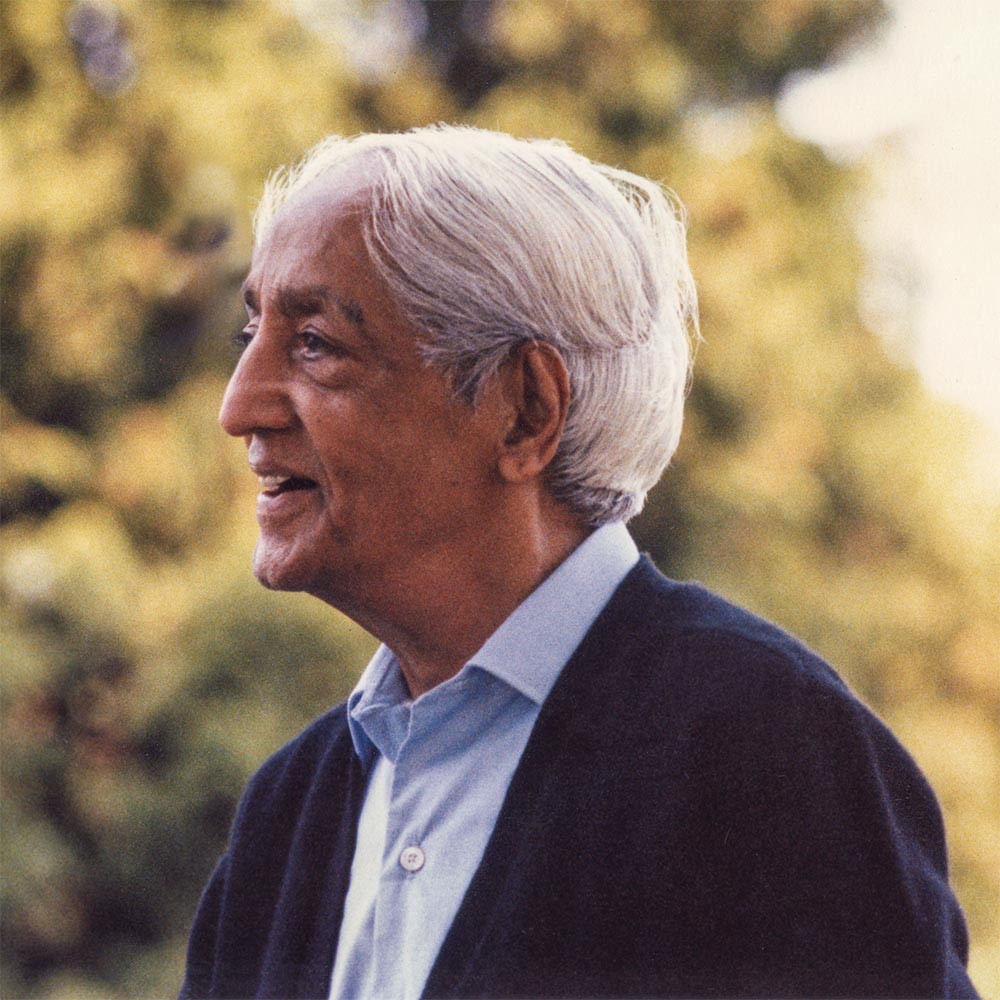
Krishnamurti outdoors smiling

Who Was Krishnamurti?

J. Krishnamurti (1895-1986) is widely regarded as one of the greatest thinkers and religious teachers of all time. He spoke throughout the world to large audiences and to individuals, including writers, scientists, philosophers and educators, about the need for a radical change in mankind. Referring to himself, Krishnamurti said:

He is acting as a mirror for you to look into. That mirror is not an authority. It has no authority, it’s just a mirror. And when you see it clearly, understand what you see in that mirror, then throw it away, break it up.

Krishnamurti was concerned with all humanity and held no nationality or belief and belonged to no particular group or culture. In the latter part of his life, along with continuing to give public talks, he travelled mainly between the schools he had founded in India, Britain and the United States, which educate for the total understanding of man and the art of living. He stressed that only this profound understanding can create a new generation that will live in peace.

Krishnamurti reminded his listeners again and again that we are all human beings first and not Hindus, Muslims or Christians, that we are like the rest of humanity and are not different from one another. He asked that we tread lightly on this earth without destroying ourselves or the environment. He communicated to his listeners a deep sense of respect for nature. His teachings transcend man-made belief systems, nationalistic sentiment and sectarianism. At the same time, they give new meaning and direction to mankind’s search for truth. His teaching is timeless, universal and increasingly relevant to the modern age.

I am nobody. It is as simple as that. I am nobody. But what is important is who you are, what you are.

Krishnamurti

Krishnamurti spoke not as a guru but as a friend. His talks and discussions are based not on tradition-based knowledge but on his own insights into the human mind and his vision of the sacred, so he always communicated a sense of freshness and directness, although the essence of his message remained unchanged over the years. When Krishnamurti addressed large audiences, people felt that he was talking to each of them personally, addressing their own particular problem. In his private interviews, he was a compassionate teacher, listening attentively to those who came to him in sorrow, and encouraging them to heal themselves through their own understanding. Religious scholars found that his words threw new light on traditional concepts. Krishnamurti took on the challenge of modern scientists and psychologists and went with them step by step, discussing their theories and sometimes enabling them to discern the limitations of their theories.

Krishnamurti left a large body of literature in the form of public talks, writings, discussions with teachers and students, scientists, psychologists and religious figures, conversations with individuals, television and radio interviews, and letters. Many of these have been published as books, in over 60 languages, along with hundreds of audio and video recordings.
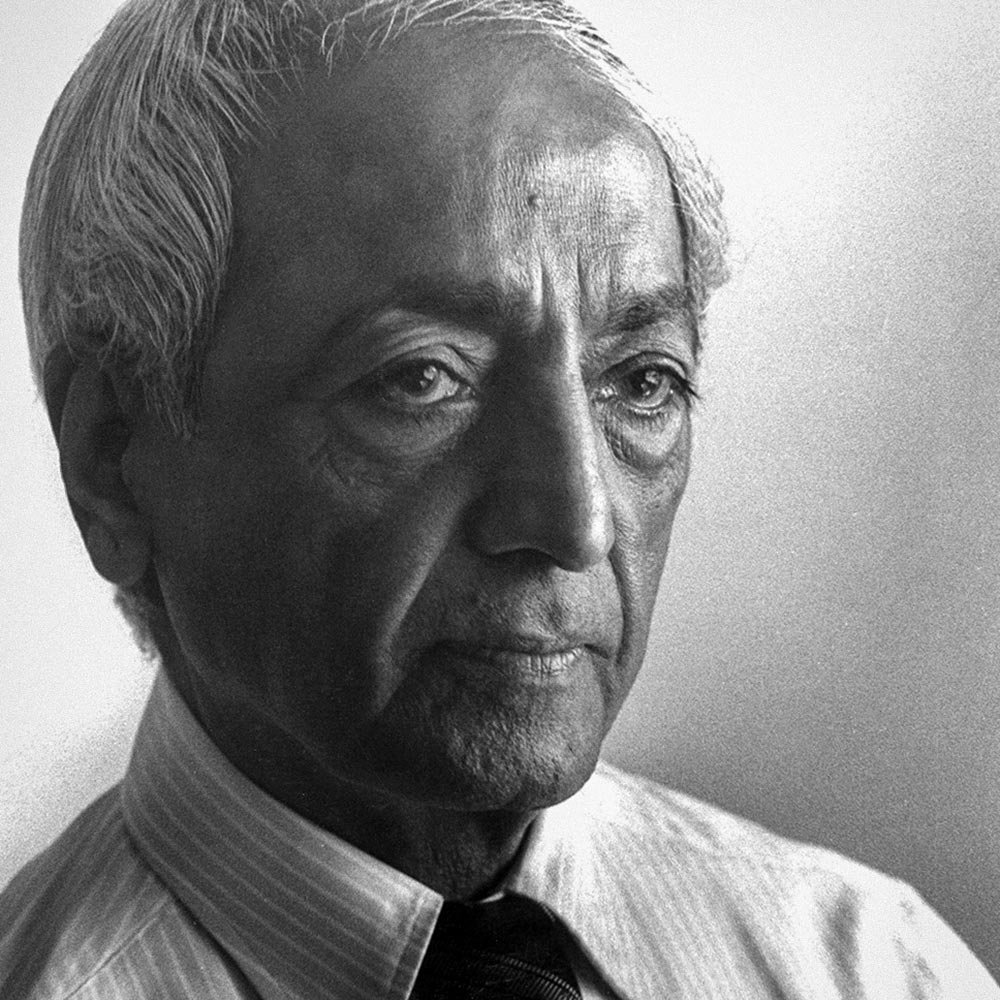
Three-quarters portrait photo of Krishnamurti

The Krishnamurti Foundation

Established in 1968 as a registered charity, and located at The Krishnamurti Centre, Krishnamurti Foundation Trust exists to preserve and make available Krishnamurti’s teachings.

The Foundation serves a global audience by providing worldwide free access to Krishnamurti videos, audio and texts to those who may be interested in pursuing an understanding of Krishnamurti’s work in their own lives.

In describing his intentions for the Foundations, Krishnamurti said: 

The Foundations will see to it that these teachings are kept whole, are not distorted, are not made corrupt.